
1. Introduction
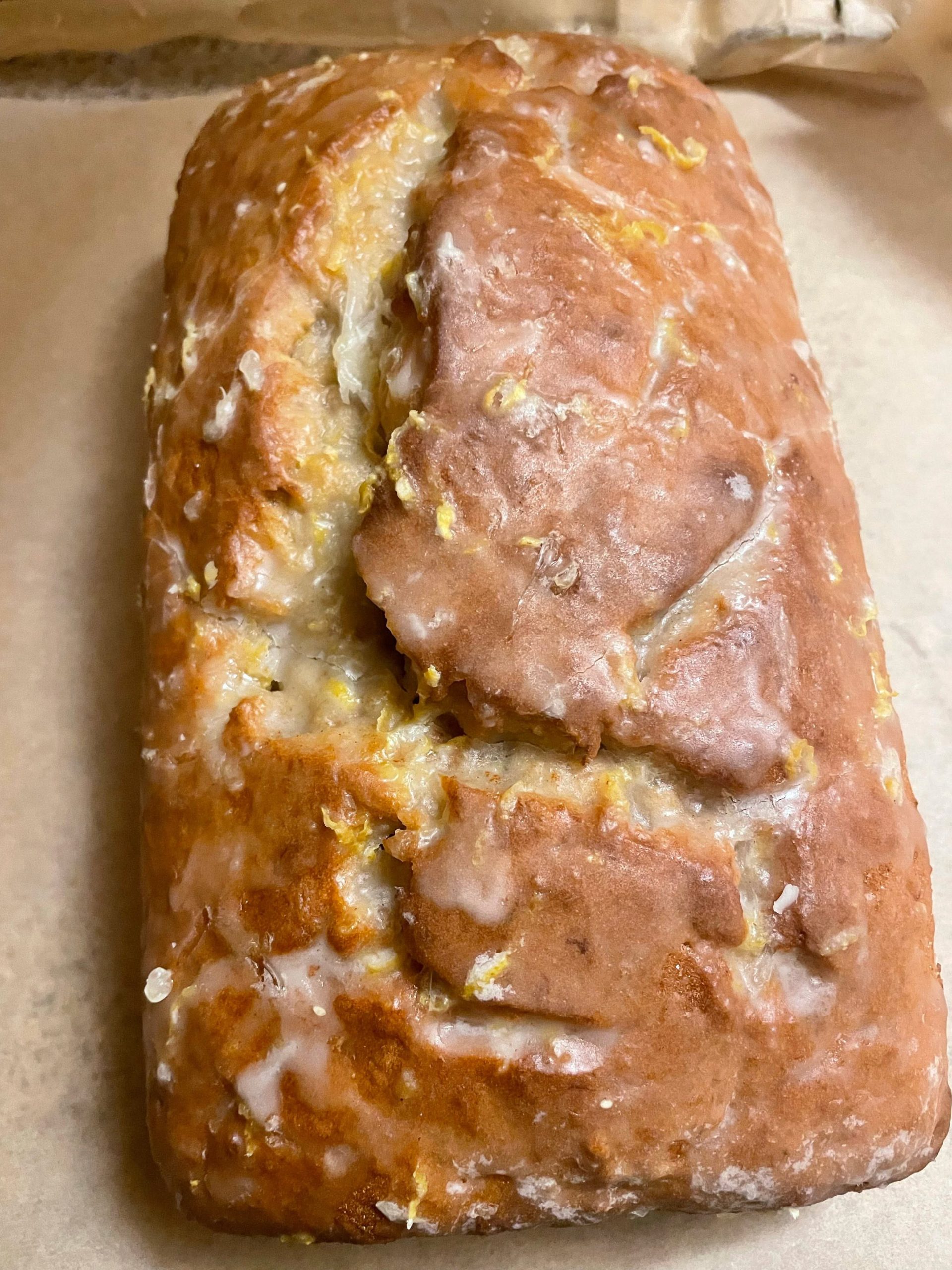
Glazed Lemon Loaf is a delicious, soft, and buttery cake featuring a tender crumb, refreshing lemon flavor, and a smooth citrus glaze.
This bakery-style lemon pound cake combines fresh lemon zest, lemon juice, butter, sour cream, and vanilla to create a rich yet refreshing dessert.
The loaf is baked until golden brown, then finished with a sweet and tangy lemon glaze that gently coats the surface.
Fresh lemon zest adds a beautiful finishing touch and enhances the natural citrus aroma.
Perfect for breakfast, afternoon tea, family gatherings, or a simple homemade dessert, this lemon loaf offers a delightful balance of sweetness and tanginess.
2. Origin and Cultural Significance
Lemon loaf cake is closely related to traditional European pound cakes and butter cakes.
Classic pound cake originated in Europe and was traditionally made using equal weights of flour, butter, sugar, and eggs.
Over time, bakers developed lighter variations by incorporating baking powder, dairy products, and different flavorings.
Lemon became a popular addition because its bright acidity and fragrant zest complement rich butter-based cakes.
Modern glazed lemon loaf is especially popular in American bakeries and coffee shops, where it is commonly served with tea or coffee.
Its simple rectangular shape, moist texture, and sweet citrus glaze make it a familiar homemade favorite.
3. Ingredients
Yield: One 9 × 5-inch loaf, approximately 10 slices
A. Lemon Loaf Cake
| Ingredient | Quantity |
|---|---|
| All-purpose flour | 1½ cups (190 g) |
| Baking powder | 1 teaspoon |
| Baking soda | ¼ teaspoon |
| Salt | ½ teaspoon |
| Unsalted butter, softened | ½ cup (113 g) |
| Granulated sugar | 1 cup (200 g) |
| Large eggs, room temperature | 3 |
| Sour cream or plain Greek yogurt | ½ cup (120 g) |
| Fresh lemon zest | 2 tablespoons |
| Fresh lemon juice | 2 tablespoons |
| Vanilla extract | 1 teaspoon |
Use alcohol-free vanilla extract or vanilla flavoring if preferred.
B. Lemon Zest Glaze
| Ingredient | Quantity |
|---|---|
| Powdered sugar, sifted | 1 cup (120 g) |
| Fresh lemon juice | 2 tablespoons |
| Fresh lemon zest | 1 teaspoon |
4. Optional Additions
Extra Lemon Zest: Add another teaspoon of zest to the batter for a stronger citrus aroma.
Greek Yogurt: Substitute plain Greek yogurt for sour cream to create a slightly tangier flavor.
Poppy Seeds: Add 1 tablespoon of poppy seeds for a classic lemon-poppy seed variation.
Fresh Blueberries: Fold in a small handful of blueberries for a fruity twist.
Almond Extract: Add a few drops of alcohol-free almond flavoring for a delicate nutty note.
Thicker Glaze: Reduce the lemon juice slightly for a more opaque icing.
Candied Lemon Peel: Decorate the finished loaf with thin pieces of candied lemon peel.
5. Tips for Success
- Use fresh lemons: Fresh juice and zest provide the brightest flavor.
- Zest before juicing: It is easier to zest a whole lemon.
- Avoid the white pith: The white layer beneath the peel can taste bitter.
- Use room-temperature ingredients: Butter, eggs, and sour cream combine more evenly.
- Cream the butter and sugar thoroughly: This helps create a lighter cake texture.
- Avoid overmixing: Excessive mixing after adding flour can make the loaf dense.
- Measure flour accurately: Too much flour can produce a dry cake.
- Check doneness carefully: The center should be fully baked without becoming dry.
- Cool before glazing: A cooled loaf produces a more defined glaze.
- Store properly: Keeping the loaf covered helps maintain moisture.
6. Instructions
Prepare the Oven and Pan
Preheat the oven to 350°F (175°C).
Grease a 9 × 5-inch loaf pan with butter or nonstick cooking spray.
Line the pan with parchment paper, leaving a little overhang on the longer sides for easy removal.
Combine the Dry Ingredients
In a medium mixing bowl, whisk together the all-purpose flour, baking powder, baking soda, and salt.
Mix until evenly combined.
Set aside.
Cream the Butter, Sugar, and Lemon Zest
Place the softened butter and granulated sugar in a large mixing bowl.
Add the fresh lemon zest.
Beat with an electric mixer on medium speed for approximately 2–3 minutes until light and fluffy.
This process helps release the fragrant oils from the lemon zest.
Add the Eggs
Add the eggs one at a time, beating briefly after each addition.
Scrape down the sides of the bowl as needed to ensure even mixing.
Incorporate the Remaining Wet Ingredients
Add the sour cream or plain Greek yogurt, fresh lemon juice, and vanilla extract.
Mix on low speed until combined.
The mixture may appear slightly curdled because of the lemon juice, but it should come together when the flour is added.
Combine the Batter
Gradually add the dry ingredients to the wet mixture.
Using a spatula or mixer on low speed, fold gently until no visible streaks of flour remain.
Avoid overmixing to maintain a soft, tender crumb.
Bake the Lemon Loaf
Pour the prepared batter into the lined loaf pan.
Smooth the surface with a spatula.
Place the pan in the preheated oven.
Bake for approximately 45–55 minutes, or until the top is golden brown and a toothpick inserted into the center comes out clean or with a few moist crumbs.
If the surface begins browning too quickly, loosely cover it with aluminum foil during the final part of baking.
Cool the Cake
Remove the loaf from the oven.
Allow it to cool in the pan for approximately 15 minutes.
Carefully lift the cake out using the parchment paper.
Transfer it to a wire rack and allow it to cool completely.
Prepare the Lemon Glaze
In a small bowl, combine the sifted powdered sugar, fresh lemon juice, and lemon zest.
Whisk until smooth and free of lumps.
The glaze should be thick enough to coat the loaf while still flowing slowly from a spoon.
Glaze the Lemon Loaf
Place the cooled loaf on a serving plate or wire rack.
Drizzle the lemon glaze evenly over the top.
Allow some of the glaze to run gently down the sides.
Let the glaze set for approximately 15–20 minutes before slicing.
Slice and Serve
Using a sharp serrated knife, cut the lemon loaf into even slices.
Serve with tea, coffee, or your favorite beverage.
7. Description
Glazed Lemon Loaf features a golden-brown exterior and a soft, pale-yellow interior with a fine, tender crumb.
The cake has a rich buttery flavor balanced by the fresh acidity of lemon juice and the fragrant aroma of lemon zest.
Sour cream or Greek yogurt adds moisture and a subtle tanginess that complements the citrus.
The powdered sugar glaze forms a smooth, sweet coating over the loaf.
Fresh lemon zest scattered across the surface provides a beautiful finishing touch.
Each slice delivers a satisfying combination of moist cake, buttery richness, and bright lemon flavor.
8. Nutritional Information
Approximate values per slice, assuming 10 slices:
| Nutrient | Estimated Amount |
|---|---|
| Calories | 330–390 kcal |
| Protein | 4–6 g |
| Carbohydrates | 45–55 g |
| Total Fat | 14–18 g |
| Saturated Fat | 8–11 g |
| Fiber | Less than 1 g |
| Sugar | 30–38 g |
| Sodium | 180–250 mg |
| Calcium | Present |
These values are estimates and depend on ingredient brands, glaze quantity, and slice size.
9. Recipe Details
| Category | Details |
|---|---|
| Recipe Name | Glazed Lemon Loaf |
| Alternative Name | Lemon Pound Cake |
| Cuisine | American / European-Inspired |
| Course | Dessert, Sweet Snack |
| Preparation Time | 15–20 Minutes |
| Baking Time | 45–55 Minutes |
| Cooling Time | Approximately 1 Hour |
| Glaze Setting Time | 15–20 Minutes |
| Total Time | Approximately 2–2½ Hours |
| Yield | One 9 × 5-Inch Loaf |
| Servings | 10 Slices |
| Difficulty | Easy |
| Main Flavor | Fresh Lemon |
| Main Ingredients | Flour, Butter, Eggs, Lemon |
| Topping | Lemon Zest Glaze |
| Cooking Method | Baking |
| Oven Temperature | 350°F (175°C) |
| Texture | Moist, Soft, Tender |
| Best Served | Room Temperature |
10. Conclusion
Glazed Lemon Loaf is a simple yet elegant homemade cake that combines buttery richness with refreshing citrus flavor.
The combination of fresh lemon zest, lemon juice, and sour cream creates a moist, tender crumb with a pleasant balance of sweetness and tanginess.
The smooth lemon glaze adds an attractive bakery-style finish while enhancing the citrus flavor.
With straightforward preparation and everyday ingredients, this recipe is ideal for afternoon tea, family gatherings, or a homemade dessert.
11. Serving and Storage Recommendations
Serve at Room Temperature: The loaf has a particularly soft texture when served at room temperature.
Tea or Coffee: Pair with hot tea, coffee, or a mild herbal infusion.
Fresh Berries: Serve alongside strawberries, raspberries, or blueberries.
Extra Lemon Zest: Sprinkle additional zest over the glaze before it sets.
Room-Temperature Storage: Keep the fully cooled loaf in an airtight container for up to 2 days in a cool environment.
Refrigeration: Store in the refrigerator for approximately 5–6 days, tightly wrapped to prevent drying.
Freezing: Freeze individual slices, preferably without glaze, for up to 2–3 months for best quality.
Thawing: Thaw frozen slices in the refrigerator or at room temperature before serving.
Avoid Overheating: Excessive reheating can dry out the cake and melt the glaze.
12. Embracing Healthful Indulgence
Glazed Lemon Loaf is a sweet baked dessert made with flour, butter, eggs, sugar, and dairy.
Eggs contribute protein and several essential nutrients, while sour cream or Greek yogurt provides moisture and some calcium.
Fresh lemon juice and zest add flavor and small amounts of vitamin C and aromatic plant compounds.
However, the cake also contains added sugar and saturated fat from butter and the glaze.
Enjoying moderate portions can help make it part of a balanced eating pattern.
For a lighter variation, plain Greek yogurt can replace sour cream, and a thinner layer of glaze can reduce the overall sugar content.
Serving a smaller slice alongside fresh fruit is another way to enjoy the dessert.
With its soft buttery crumb, bright lemon aroma, and smooth citrus glaze, Glazed Lemon Loaf is a delightful homemade treat for any occasion.