
1. Introduction
Homemade Creamy Salted Caramel Cake Filling is a rich, smooth, and delicious cake filling made from caramelized sugar, butter, cream, and a touch of salt. It has a beautiful golden-brown color, a silky consistency, and a deep buttery caramel flavor.
This filling is ideal for layering between chocolate cakes, vanilla sponge cakes, cupcakes, and other homemade desserts. Its thick yet spreadable consistency makes it particularly suitable for filling celebration cakes and creating bakery-style desserts.
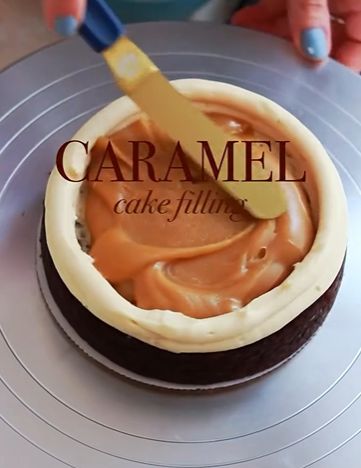
As shown in the photograph, the caramel is spread generously inside a buttercream border placed around the edge of a chocolate cake layer. This technique creates a secure filling that helps prevent the caramel from leaking out when additional cake layers are stacked.
2. Origin and Cultural Significance
Caramel has a long history in confectionery and dessert preparation. It is produced by heating sugar until it melts and develops a characteristic golden-brown color and rich flavor.
Caramel-based desserts became particularly popular in European confectionery traditions, where caramelized sugar was used in sauces, custards, candies, and pastry fillings.
Salted caramel gained widespread popularity through French pastry traditions, particularly in Brittany, France, where salted butter is an important regional ingredient.
Modern bakeries have adapted caramel into numerous fillings, including buttercream, caramel ganache, cake sauces, and layered dessert fillings.
Today, caramel cake filling is widely used in professional cake decorating because it pairs exceptionally well with chocolate, vanilla, coffee, nuts, and cream-based desserts.
3. Ingredients and Quantities
Рецепт бананового торта с соленой карамелью с фото пошагово на Вкусном Блоге
Preparation time: 10 minutes
Cooking time: 15 minutes
Cooling time: 1–2 hours
Total time: Approximately 2 hours
Yield: Enough to fill one 6–8 inch layered cake, depending on the amount used.
A. For the caramel filling
| Ingredient | Quantity |
|---|---|
| Granulated white sugar | 200 g |
| Unsalted butter | 90 g |
| Heavy whipping cream | 150 ml |
| Vanilla extract | 1 teaspoon |
| Fine sea salt | ½ teaspoon |
| Sweetened condensed milk (optional) | 2 tablespoons |
B. For a thicker caramel filling
| Ingredient | Quantity |
|---|---|
| Prepared caramel sauce | 250 g |
| Unsalted butter | 50 g |
| White chocolate | 80 g |
| Heavy cream | 30 ml |
The additional ingredients help produce a thicker, more stable filling suitable for layered cakes.
C. For the buttercream border
| Ingredient | Quantity |
|---|---|
| Unsalted butter, softened | 150 g |
| Powdered sugar | 300 g |
| Vanilla extract | 1 teaspoon |
| Milk or cream | 1–2 tablespoons |
The buttercream border is optional but recommended when using softer caramel fillings between cake layers.
4. Optional Additions
Caramel filling can be customized with additional ingredients to create different flavors.
- Dark chocolate: Add 50 g of melted dark chocolate for a chocolate caramel filling.
- Milk chocolate: Incorporate 50 g for a sweeter, creamier variation.
- Espresso powder: Add ½ teaspoon for a coffee caramel flavor.
- Chopped pecans: Add ¼ cup for a crunchy caramel pecan filling.
- Chopped walnuts: Include ¼ cup for a nutty texture.
- Cinnamon: Add ¼ teaspoon for a warm, aromatic flavor.
- Sea salt flakes: Sprinkle a small quantity into the finished caramel for a salted caramel variation.
- Peanut butter: Add 1–2 tablespoons for a peanut butter caramel filling.
- Coconut cream: Replace part of the heavy cream for a subtle coconut flavor.
- Almond extract: Add a few drops for a delicate almond aroma.
- Toffee pieces: Fold in small pieces for additional texture.
5. Tips for Success
- Use a heavy-bottomed saucepan: This distributes heat more evenly and reduces the risk of burning the sugar.
- Avoid excessive stirring: Once the sugar begins melting, gently swirl the saucepan instead of constantly stirring.
- Watch the caramel color: Remove it from the heat when it reaches a deep amber color.
- Use warm cream: Slightly warming the cream reduces the temperature difference when it is added to the hot caramel.
- Add butter carefully: The mixture will bubble vigorously when butter is introduced.
- Use unsalted butter: This gives you better control over the final saltiness.
- Allow sufficient cooling: Hot caramel will be too runny for cake assembly.
- Check the consistency: The caramel should be thick enough to hold its shape without flowing rapidly.
- Refrigerate when necessary: Cooling helps the filling become firmer and more manageable.
- Use a buttercream dam: Pipe a circular buttercream border around the cake layer before adding caramel.
- Avoid overfilling: Excessive filling can cause the upper cake layers to slide or squeeze outward.
- Use a piping bag: This makes it easier to distribute the caramel evenly.
6. Instructions
How To Caramelize Sugar Flawlessly
How To Make Caramel Sauce – Food.com
EASY BISCOFF CARAMEL SAUCE – Amazing Caramel Recipe! — Prep My Recipe
8
Step 1: Prepare the ingredients
- Measure the sugar, butter, and heavy cream.
- Cut the butter into small cubes.
- Slightly warm the heavy cream in a separate saucepan or microwave.
- Prepare a heat-resistant mixing bowl.
- Keep all ingredients within reach before beginning.
Step 2: Melt the sugar
- Place the granulated sugar in a heavy-bottomed saucepan.
- Heat over medium heat.
- Allow the sugar to begin melting around the edges.
- Gently swirl the saucepan as the sugar melts.
- Continue until the sugar becomes completely liquid.
- Watch carefully until it develops a deep golden-amber color.
Avoid allowing the sugar to become excessively dark because burnt caramel develops a bitter flavor.
Step 3: Add the butter
- Reduce the heat to low.
- Carefully add the cubed butter.
- Whisk continuously until the butter melts.
- Continue mixing until the mixture becomes smooth and combined.
The caramel will bubble vigorously during this stage, so use caution.
Step 4: Add the heavy cream
EASY BISCOFF CARAMEL SAUCE – Amazing Caramel Recipe! — Prep My Recipe
- Slowly pour the warm heavy cream into the caramel.
- Whisk continuously.
- Allow the mixture to bubble gently.
- Continue stirring until the cream is completely incorporated.
- Simmer for approximately 2–3 minutes.
The caramel should become smooth, glossy, and evenly colored.
Step 5: Add the remaining ingredients
- Remove the saucepan from the heat.
- Add vanilla extract.
- Add fine sea salt.
- Stir until everything is thoroughly combined.
- Add condensed milk if a sweeter, creamier filling is desired.
Step 6: Thicken the caramel
- Return the saucepan to low heat if necessary.
- Simmer gently for another 1–2 minutes.
- Stir continuously.
- Remove from the heat once the mixture reaches a slightly thick consistency.
Remember that caramel becomes thicker as it cools.
Step 7: Cool the caramel
Copertura al Caramello Salato | Italiana Dolci
- Transfer the caramel into a clean heat-resistant bowl.
- Allow it to cool at room temperature.
- Cover the surface with plastic wrap if storing for later use.
- Refrigerate for approximately 1–2 hours or until sufficiently thick.
Before using, stir gently to restore a smooth consistency.
Step 8: Prepare the buttercream border
- Place softened butter in a mixing bowl.
- Beat until smooth and creamy.
- Gradually add powdered sugar.
- Add vanilla extract.
- Add milk or cream gradually.
- Beat until the buttercream becomes thick and spreadable.
The buttercream should be firm enough to maintain its shape when piped.
Step 9: Assemble the caramel-filled cake
9
- Place a cooled chocolate or vanilla cake layer on a cake board or turntable.
- Transfer the prepared buttercream into a piping bag.
- Pipe a thick circular border around the outer edge of the cake.
- Spoon the cooled caramel into the center.
- Spread gently using an offset spatula.
- Keep the caramel slightly below the height of the buttercream border.
- Place the next cake layer carefully on top.
- Press gently to secure the layers.
The buttercream border acts as a barrier, helping keep the caramel inside the cake.
Step 10: Finish the cake
- Refrigerate the assembled cake for approximately 20–30 minutes to help the filling stabilize.
- Continue decorating with buttercream or ganache.
- Smooth the exterior using a cake scraper.
- Add caramel drips or decorative toppings if desired.
- Refrigerate until ready to serve.
7. Description
Homemade Creamy Salted Caramel Cake Filling is a rich confectionery preparation characterized by its smooth texture, glossy golden-brown appearance, and deep buttery flavor.
The caramel develops a silky consistency as the sugar melts and combines with butter and cream. Once cooled, it becomes thick enough to spread between cake layers while maintaining a soft, creamy interior.
When paired with chocolate cake and vanilla buttercream, the filling creates a delicious contrast between sweet chocolate, creamy frosting, and rich caramel.
Appearance: Smooth, glossy, golden-brown caramel filling surrounded by a white buttercream border.
Texture: Thick, creamy, silky, and spreadable.
Flavor: Sweet, buttery, rich, and slightly salty with deep caramel notes.
Aroma: Caramelized sugar, butter, vanilla, and warm cream.
Serving style: Used between cake layers, inside cupcakes, or as a filling for pastries and other desserts.
8. Nutritional Information
The following nutritional values are approximate estimates based on the caramel filling ingredients alone.
Estimated nutrition per 30 g serving
| Nutrient | Approximate amount |
|---|---|
| Calories | 125–145 kcal |
| Protein | 0.5–1 g |
| Carbohydrates | 17–20 g |
| Total fat | 6–8 g |
| Saturated fat | 4–5 g |
| Dietary fiber | 0 g |
| Sugar | 16–19 g |
| Sodium | 60–100 mg |
Actual values depend on the amount of butter, cream, salt, and condensed milk used.
Nutritional considerations
- Sugar: Provides carbohydrates and contributes to caramelization.
- Butter: Contributes fat and the rich buttery flavor.
- Heavy cream: Adds richness and small amounts of calcium.
- Vanilla: Enhances flavor without requiring additional sugar.
- Sea salt: Balances the sweetness and intensifies the caramel flavor.
Caramel filling is an energy-dense dessert ingredient and is best enjoyed in moderate quantities.
9. Conclusion
Homemade Creamy Salted Caramel Cake Filling is a delicious and versatile addition to homemade cakes and desserts.
Its rich buttery flavor, smooth consistency, and beautiful golden color make it an excellent filling for chocolate cakes, vanilla cakes, cupcakes, and layered celebration desserts.
The combination of caramelized sugar, butter, cream, and vanilla creates a luxurious filling that adds depth and sweetness to baked goods.
Using a buttercream border during cake assembly also provides better filling stability and helps create clean, professional-looking cake layers.
10. Recommendation
For the best results, prepare the caramel using good-quality butter and heavy cream. Allow it to cool completely before using it between cake layers.
I recommend pairing this caramel filling with:
- Chocolate sponge cake.
- Vanilla butter cake.
- Chocolate ganache.
- Coffee-flavored cake.
- Pecan cake.
- Brown sugar cake.
- Banana cake.
For a bakery-style result, use a piping bag to create an even buttercream border and spread the caramel smoothly inside it.
Additional recommendations:
- Use dark chocolate cake to balance the sweetness.
- Add toasted pecans for a caramel pecan variation.
- Sprinkle a little sea salt over the filling.
- Refrigerate the assembled cake before applying the final exterior frosting.
- Keep the caramel layer moderate to prevent cake layers from sliding.
11. Embracing Healthful Indulgence
Caramel filling is naturally rich in sugar and fat, but it can still be enjoyed as part of a balanced eating pattern when used thoughtfully.
Consider these modifications:
- Reduce the sugar slightly while maintaining enough sugar for proper caramelization.
- Use smaller quantities of filling between cake layers.
- Avoid adding unnecessary condensed milk.
- Use a moderate amount of butter.
- Pair the caramel with fresh strawberries, raspberries, or sliced bananas.
- Choose a less-sweet chocolate sponge to balance the filling.
- Use a thinner caramel layer rather than filling the entire cake excessively.
- Serve smaller cake portions.
These adjustments help manage added sugar and calorie intake without eliminating the distinctive caramel flavor.
Final serving recommendation: Use the cooled caramel to fill the center of a chocolate cake layer, surrounded by a thick white buttercream border. Spread the caramel evenly with an offset spatula, leaving the buttercream visible around the edges. Stack the next cake layer carefully and refrigerate before decorating. The result is a beautiful layered cake with a smooth, rich caramel center and a professional bakery-style finish.