
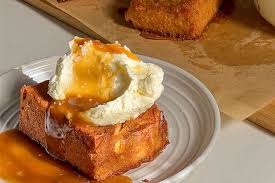
Extra-thick Japanese milk bread soaked in rich vanilla custard, slowly pan-seared in butter until golden, and topped with creamy vanilla ice cream and warm maple syrup.
Japanese Café-Style Dessert
Rich & Custardy
Serves 2
Imagine cutting into an extra-thick slice of golden French toast, revealing a soft, creamy center that almost melts in your mouth.
Now add a scoop of cold vanilla ice cream, warm maple syrup, and a lightly caramelized buttery crust.
That’s what makes Japanese Shokupan French Toast so irresistible.
Unlike ordinary French toast, this Japanese café-style version uses thick slices of exceptionally soft milk bread. The bread absorbs a rich egg-and-cream custard before being cooked gently until the outside becomes golden and the inside develops a tender, pudding-like texture.
Served warm in a small skillet with melting vanilla ice cream, it’s a beautiful dessert that feels like something from a specialty café.
1. Introduction
Japanese Shokupan French Toast takes a familiar breakfast favorite and transforms it into an indulgent café-style experience.
The secret is the bread.
Shokupan, also known as Japanese milk bread, is famous for its pillowy softness, delicate crumb, and slightly sweet flavor.
When cut into extra-thick slices, it can absorb a generous amount of custard while maintaining its shape.
The bread is soaked in a mixture of eggs, milk, heavy cream, sugar, and vanilla.
It’s then cooked slowly in butter until the exterior develops a golden crust.
A little sugar helps create a caramelized finish, while the center remains soft and creamy.
The final presentation is simple but impressive:
- One thick, golden slice of French toast
- A scoop of vanilla ice cream
- Warm maple syrup or honey
- A glossy caramelized crust
- A soft, custardy interior
This recipe is perfect for a special breakfast, weekend brunch, or restaurant-style dessert at home.
2. Origin and Cultural Significance
French toast has appeared in different forms across European cooking traditions for centuries.
The basic preparation involves soaking bread in an egg-and-milk mixture before cooking it in fat.
Japanese cafés have developed their own interpretations, often emphasizing exceptional softness, generous thickness, and elegant presentation.
One of the ingredients that makes these versions distinctive is shokupan.
Shokupan is a popular Japanese bread known for its fine, fluffy texture and mild sweetness.
Its soft crumb makes it especially suitable for thick toast, sandwiches, and café-style desserts.
Japanese cooking publications such as Just One Cookbook describe shokupan as an important everyday bread in Japan. Just One Cookbook
Japanese café-style French toast builds on this familiar bread by combining a custardy interior with a beautifully golden exterior.
The addition of ice cream and syrup creates a dessert-style presentation that has become especially popular in food videos and café-inspired recipes.
3. Ingredients
For the French Toast
| Ingredient | Quantity |
|---|---|
| Japanese shokupan or unsliced brioche | 2 thick slices, 2–2½ inches each |
| Large eggs | 2 |
| Whole milk | ½ cup (120 ml) |
| Heavy cream | ¼ cup (60 ml) |
| Granulated sugar | 2 tablespoons |
| Alcohol-free vanilla extract | ½ teaspoon |
| Salt | A small pinch |
| Unsalted butter | 2–3 tablespoons |
| Extra granulated sugar | 1 tablespoon |
For Serving
| Ingredient | Quantity |
|---|---|
| Vanilla ice cream | 2 scoops |
| Maple syrup or honey | 2–4 tablespoons, or to taste |
Why These Ingredients Matter
Japanese Shokupan
The soft, fine crumb absorbs custard while retaining a tender structure.
Eggs
Eggs help the custard set as the toast cooks, giving the center its rich texture.
Whole Milk
Milk provides moisture and helps the custard penetrate the bread.
Heavy Cream
Cream adds richness and creates a softer, more indulgent center.
Sugar
Sugar sweetens the custard and helps the outside develop a golden appearance.
Butter
Butter contributes flavor and supports the formation of a lightly crisp crust.
Vanilla Ice Cream
The cold ice cream melts slowly against the hot toast, creating a creamy sauce when combined with syrup.
4. Optional Additions
Japanese French toast is delicious with classic vanilla ice cream, but there are many ways to customize it.
Matcha French Toast
Add ½ teaspoon matcha powder to the custard mixture.
Serve with vanilla or matcha ice cream.
The mild bitterness of matcha balances the sweetness of the syrup.
Strawberry Café-Style Toast
Top the finished toast with:
- Fresh sliced strawberries
- Vanilla ice cream
- A little strawberry sauce
This creates a colorful, refreshing variation.
Caramel Banana French Toast
Add sliced bananas and warm caramel sauce.
The banana flavor complements the buttery bread and vanilla custard.
Chocolate Hazelnut French Toast
Drizzle the toast with warm chocolate hazelnut spread.
Finish with chopped toasted hazelnuts.
Cinnamon Vanilla French Toast
Add ¼ teaspoon ground cinnamon to the custard.
This creates a warmer, more traditional French toast flavor.
Honey Butter French Toast
Replace the maple syrup with warm honey mixed with a small amount of melted butter.
5. Tips for Success
Use extra-thick bread.
The thickness is essential for achieving the signature soft, custardy center.
Choose slightly stale bread if possible.
Bread that is a day old often holds its shape better during soaking.
Whisk the custard thoroughly.
The eggs, milk, and cream should be evenly combined.
Allow enough soaking time.
Thick bread needs time to absorb custard.
The exact duration depends on the bread’s texture and thickness.
Avoid squeezing the bread.
Handle soaked shokupan gently because it can tear.
Cook over medium-low heat.
High heat can burn the outside before the custard in the center is cooked.
Use a lid.
Covering the skillet helps the heat circulate around the thick slice.
Check the center.
The interior should be tender and custardy but fully cooked.
Add ice cream immediately before serving.
This creates the beautiful contrast between hot toast and cold ice cream.
6. Step-by-Step Instructions
Step 1: Prepare the Bread
Cut the Japanese milk bread into two thick slices.
Each slice should be approximately 2–2½ inches thick.
If using an unsliced loaf, use a sharp serrated knife to create clean, even cuts.
Avoid compressing the bread while slicing.
Step 2: Make the Vanilla Custard
In a wide, shallow baking dish, combine:
- 2 large eggs
- ½ cup whole milk
- ¼ cup heavy cream
- 2 tablespoons granulated sugar
- ½ teaspoon alcohol-free vanilla extract
- A pinch of salt
Whisk until completely smooth.
Make sure no large streaks of egg remain.
Step 3: Soak the Bread
Place the thick bread slices into the custard mixture.
Allow them to soak for approximately 5–10 minutes.
Carefully flip each slice.
Soak the second side for another 5–10 minutes.
If the bread is especially thick or dense, it may require additional time.
The goal is for the custard to penetrate toward the center without causing the bread to collapse.
If soaking for longer than a brief preparation period, cover and refrigerate the bread rather than leaving the egg mixture at room temperature.
Step 4: Prepare the Skillet
Place a large nonstick skillet or well-seasoned cast-iron pan over medium-low heat.
Add approximately half of the unsalted butter.
Allow it to melt gently.
Swirl the pan so the butter evenly coats the cooking surface.
Avoid letting the butter turn dark brown.
Step 5: Cook the First Side
Carefully lift one soaked slice from the custard.
Allow excess custard to drip back into the dish.
Place the bread into the warm skillet.
Cover with a lid.
Cook gently for approximately 5–8 minutes, checking occasionally.
The bottom should develop a beautiful golden-brown crust.
Step 6: Caramelize the Second Side
Sprinkle a small amount of the extra granulated sugar over the uncooked top.
Add a little more butter to the pan.
Carefully flip the toast.
Cover again.
Cook for another 5–8 minutes until golden and the custard has set.
Because these slices are unusually thick, the center may need additional cooking time.
Step 7: Check for Doneness
The exterior should be golden and lightly caramelized.
The center should feel soft but not contain uncooked egg mixture.
For a reliable safety check, use a food thermometer inserted into the center.
Egg-based dishes should reach 160°F (71°C). FoodSafety.gov
If the exterior is already golden but the center has not reached that temperature, transfer the toast to a 325°F (165°C) oven for approximately 5–10 minutes, checking until cooked through.
This gentle finishing method helps protect the crust from burning.
Step 8: Sear the Edges
For an evenly golden finish, carefully hold each side of the toast against the skillet for approximately 20–30 seconds.
This step is optional but adds an attractive café-style appearance.
Step 9: Warm the Syrup
Place the maple syrup or honey in a small heat-safe container.
Warm it gently.
The syrup should be fluid and warm, not boiling.
Step 10: Plate the French Toast
Transfer each cooked slice to a warm serving plate or small oven-safe skillet.
If serving directly in a hot skillet, place it on a heatproof trivet and warn diners that the pan is hot.
Step 11: Add Vanilla Ice Cream
Place one scoop of vanilla ice cream directly on top of each hot slice.
The ice cream will begin melting slowly.
Step 12: Finish with Syrup
Drizzle warm maple syrup or honey over the toast and ice cream.
Serve immediately.
As the ice cream melts, it combines with the syrup to create a creamy sauce around the bread.
7. Description
Japanese Shokupan French Toast has a beautiful golden exterior with lightly caramelized edges.
The bread is unusually thick, giving it an impressive, almost cake-like appearance.
When cut open, the interior reveals a soft, creamy texture.
The warm custard creates a delicate pudding-like center that contrasts with the lightly crisp surface.
A scoop of vanilla ice cream sits on top, slowly melting into the warm bread.
The syrup creates a glossy finish and collects around the toast.
Flavor Profile
- Buttery: From the pan-seared crust.
- Creamy: From the milk-and-egg custard.
- Sweet: From sugar, syrup, and ice cream.
- Vanilla-rich: From the custard and topping.
- Caramelized: From the lightly browned exterior.
Texture
The outside is lightly crisp and golden.
The inside remains extremely soft, tender, and custardy.
Together, these textures create a luxurious café-style dessert.
8. Nutritional Information
The following values are approximate and based on one thick slice with vanilla ice cream and syrup.
| Nutrient | Approximate Amount Per Serving |
|---|---|
| Calories | 700–1,000 kcal |
| Protein | 15–22 g |
| Carbohydrates | 75–110 g |
| Total fat | 35–55 g |
| Dietary fiber | 1–3 g |
| Total sugars | 35–60 g |
| Sodium | 300–500 mg |
Actual nutrition depends significantly on the size and weight of the bread slices, amount of custard absorbed, butter used, and topping portions.
For a lighter version, use thinner bread, less butter, and smaller portions of ice cream and syrup.
9. Recipe Details
| Detail | Information |
|---|---|
| Recipe Name | Japanese Shokupan French Toast |
| Alternative Name | Japanese Café-Style Milk Bread French Toast |
| Cuisine | Japanese-Inspired |
| Course | Breakfast / Brunch / Dessert |
| Preparation Time | 10 minutes |
| Soaking Time | 10–20 minutes |
| Cooking Time | 15–25 minutes |
| Total Time | Approximately 35–55 minutes |
| Servings | 2 |
| Difficulty | Easy to Intermediate |
| Cooking Method | Pan-Seared |
| Main Ingredient | Japanese Milk Bread |
| Best Served | Hot with Ice Cream |
10. Conclusion
Japanese Shokupan French Toast transforms a simple breakfast recipe into an impressive café-style dessert.
The extra-thick milk bread provides the perfect foundation for a rich vanilla custard.
Slow cooking in butter creates a beautiful golden crust while keeping the center soft and tender.
The combination of hot toast, cold vanilla ice cream, and warm syrup creates a particularly delicious contrast.
Although the preparation requires patience, especially during soaking and cooking, the result is well worth the effort.
Whether served for a special brunch or an indulgent dessert, this Japanese-inspired French toast is sure to impress.
11. Serving and Storage Recommendations
Best Ways to Serve
1. With Vanilla Ice Cream
The classic café-style combination.
2. With Fresh Strawberries
Fresh berries help balance the richness of the custard.
3. With Caramelized Bananas
Warm bananas add natural sweetness and a soft texture.
4. With Matcha
Serve alongside unsweetened matcha tea for a Japanese-inspired pairing.
5. With Freshly Brewed Coffee
Coffee provides a pleasant contrast to the rich, sweet toast.
Storage Instructions
Refrigerator: Store cooked French toast without ice cream or syrup in an airtight container for up to 2 days for best texture.
Freezer: Freeze individual cooked slices without toppings for up to 1–2 months for best quality.
Reheating: Warm in a covered skillet over low heat or in a preheated oven until thoroughly heated.
Add fresh ice cream and syrup only when ready to serve.
Make-Ahead Tips
The custard mixture can be prepared ahead and kept refrigerated.
The bread can also be soaked in advance in a covered container in the refrigerator.
Avoid leaving egg-soaked bread at room temperature for extended periods.
For the best presentation, cook the toast shortly before serving.
12. Embracing Healthful Indulgence
Japanese Shokupan French Toast is an indulgent dish made with enriched bread, eggs, milk, cream, butter, and sweet toppings.
Its rich texture and sweetness make it especially suitable for occasional treats.
However, homemade preparation allows you to adjust the recipe to your preferences.
For a lighter variation:
- Use 1-inch-thick bread instead of extra-thick slices.
- Replace heavy cream with additional milk.
- Reduce the added sugar.
- Use less butter.
- Serve with fresh berries.
- Replace a full scoop of ice cream with a smaller portion.
- Limit the amount of syrup.
The dish also provides protein from eggs and dairy, although it is relatively high in calories and added sugar when prepared with all the toppings.
The key is to enjoy satisfying portions while appreciating the flavors and textures that make the recipe special.
With its golden caramelized crust, creamy vanilla center, and melting ice cream topping, Japanese Shokupan French Toast is a delicious way to bring the experience of a Japanese café into your own kitchen.
#JapaneseFrenchToast #ShokupanFrenchToast #JapaneseMilkBread #CafeStyleDesserts #EasyBrunchRecipes