
1. Introduction
If you enjoy bold flavors, chewy textures, and comforting noodle dishes, this Korean Spicy Tteokbokki with Ramen, also known as Rabokki, is a recipe worth trying. It combines soft, chewy Korean rice cakes with springy ramen noodles, savory fish cakes, and a rich, spicy-sweet sauce made with gochujang and gochugaru.
The sauce is the heart of this dish. Korean red chili paste provides depth and a gentle fermented flavor, while Korean red pepper flakes add extra heat. Brown sugar and honey balance the spice, and garlic, soy sauce, and sesame oil bring everything together.
Ready in approximately 30 minutes, Rabokki is an excellent choice for a comforting lunch, a casual dinner, or a homemade Korean-inspired snack. Every rice cake and noodle strand becomes coated in the glossy sauce, creating a satisfying combination of sweetness, spice, and savory flavor.
2. Origin
Tteokbokki is a popular Korean dish made with cylindrical rice cakes cooked in a seasoned sauce. Although earlier versions existed with different ingredients and milder seasonings, the spicy red version became especially popular in Korea during the twentieth century.
Modern spicy tteokbokki is closely associated with Korean street-food culture. It is commonly prepared in large pans and served hot, often with fish cakes, boiled eggs, and other additions.
Rabokki is a combination of the words ramyeon and tteokbokki. It brings instant ramen noodles into the traditional rice cake dish, creating a heartier meal with two distinctive textures.
This recipe follows that popular combination by simmering rice cakes, fish cakes, and ramen noodles together in a flavorful gochujang-based sauce.
3. Cultural Significance
Tteokbokki is one of Korea’s best-known street foods. It is commonly enjoyed at street stalls, casual restaurants, and snack shops, where it is often served in generous portions for sharing.
Its popularity comes from its bold flavor, satisfying texture, and adaptability. Some versions are mild and sweet, while others are particularly spicy. Ingredients such as fish cakes, boiled eggs, vegetables, and noodles can be added to make the dish more substantial.
Rabokki takes this familiar street-food favorite one step further by combining rice cakes with ramen. The rice cakes provide a pleasantly chewy bite, while the noodles absorb the sauce and make the dish especially filling.
Today, Rabokki is enjoyed by people who appreciate Korean food and want to recreate the experience of Korean-style comfort food at home.
4. Ingredients and Quantities
For the Rabokki
- 1 lb Korean cylindrical rice cakes (tteok)
- 1 package instant ramen noodles
- 4 Korean fish cake slices, cut into bite-sized pieces
- 2 cups water or anchovy broth
For the Spicy-Sweet Sauce
- 2 tablespoons gochujang (Korean red chili paste)
- 1 tablespoon gochugaru (Korean red pepper flakes)
- 1 1/2 tablespoons soy sauce
- 1 tablespoon brown sugar
- 1 tablespoon honey or corn syrup
- 2 garlic cloves, minced
- 1/2 teaspoon black pepper
For Finishing and Garnishing
- 1 teaspoon sesame oil
- 2 tablespoons chopped green onions
- 1 teaspoon sesame seeds
5. Optional Additions
Rabokki is easy to customize, and several additional ingredients can make the dish even more satisfying.
- Boiled eggs: Add halved boiled eggs for extra protein and a classic Korean-inspired topping.
- Cabbage: Add sliced cabbage to introduce sweetness and a little crunch.
- Onions: Thinly sliced onions soften during simmering and add natural sweetness.
- Carrots: Add thin carrot strips for color, texture, and freshness.
- Korean dumplings: Include cooked dumplings for a more substantial meal.
- Extra fish cakes: Increase the amount of fish cakes if you enjoy their savory flavor.
- Mozzarella cheese: Sprinkle shredded mozzarella over the finished Rabokki for a creamy, mild contrast to the spicy sauce.
- Toasted sesame oil: A few extra drops can provide a stronger nutty aroma.
- Fresh chili: Add sliced fresh chili if you prefer additional heat.
For a more traditional street-food-inspired presentation, serve the Rabokki with boiled eggs and extra fish cakes.
6. Tips for Success
Prepare the Rice Cakes Properly
Rice cakes can become firm when refrigerated or frozen. If they are hard, soak them in warm water for approximately 10 to 15 minutes before cooking. This helps soften them and allows them to cook more evenly.
Some fresh or refrigerated rice cakes may already be soft enough to use without soaking. Follow the package instructions when available.
Adjust the Spice Level
Gochujang and gochugaru provide different types of heat and flavor. Gochujang gives the sauce depth and a fermented chili taste, while gochugaru adds a more direct peppery heat.
For a milder dish, reduce the gochugaru. For a stronger spicy flavor, add a little more gradually.
Mix the Sauce Before Cooking
Combining the sauce ingredients in a separate bowl helps distribute the seasonings evenly. It also makes it easier to dissolve the gochujang into the broth.
Stir Frequently
Rice cakes can stick to the bottom of the pan as the sauce thickens. Stir regularly, especially during the final cooking stages.
Use a wooden spoon or silicone spatula to move the rice cakes gently without breaking them.
Add the Ramen at the Right Time
Ramen noodles cook much faster than rice cakes. Add them only when the rice cakes are nearly tender.
This prevents the noodles from becoming overly soft while the rice cakes finish cooking.
Monitor the Sauce Consistency
The sauce should become glossy and thick enough to coat the rice cakes and noodles. If it becomes too thick before everything is cooked, add a small amount of water.
Remember that the sauce will continue thickening slightly as the dish cools.
Serve Immediately
Rabokki is best enjoyed fresh because the rice cakes and noodles continue absorbing the sauce as they stand. Serving immediately gives you the best combination of chewy rice cakes, springy noodles, and a rich coating.
7. Instructions
Step 1: Prepare the Rice Cakes
Place the Korean rice cakes in a bowl of warm water and soak for approximately 10 to 15 minutes if they are refrigerated or frozen and firm.
Once softened, drain the rice cakes and set them aside.
If using fresh, soft rice cakes, check the package directions and skip soaking if it is unnecessary.
Step 2: Prepare the Spicy Sauce
In a small mixing bowl, combine the gochujang, gochugaru, soy sauce, brown sugar, honey, minced garlic, and black pepper.
Mix thoroughly until the ingredients form a smooth, thick sauce.
Taste a small amount and adjust the sweetness or spice level according to your preference.
Step 3: Prepare the Cooking Liquid
Pour the water or anchovy broth into a large skillet or wide saucepan.
Add the prepared sauce and stir until the gochujang mixture is fully dissolved into the liquid.
Place the pan over medium heat and bring the mixture to a gentle boil.
Step 4: Cook the Rice Cakes
Add the prepared rice cakes to the simmering sauce.
Cook for approximately 8 to 10 minutes, stirring regularly to prevent sticking.
The rice cakes should gradually soften and become pleasantly chewy as the sauce begins to thicken.
Cooking time may vary depending on the size and condition of the rice cakes.
Step 5: Add the Fish Cakes
Add the bite-sized fish cake pieces to the pan.
Stir gently so that they become coated in the spicy sauce.
Continue cooking for a few minutes until the fish cakes are heated through and have absorbed some of the sauce’s flavor.
Step 6: Add the Ramen Noodles
Place the ramen noodles directly into the skillet.
Use chopsticks or a fork to gently separate the noodles as they soften. Cook for approximately 3 to 4 minutes, or according to the package directions.
If the sauce becomes too thick before the noodles are fully cooked, add a small splash of water and stir.
Avoid overcooking the ramen, as the noodles should remain springy rather than mushy.
Step 7: Finish with Sesame Oil
Once the rice cakes are tender and the ramen noodles are cooked, reduce the heat to low.
Stir in the sesame oil and gently toss everything together.
Make sure the rice cakes, fish cakes, and noodles are evenly coated in the glossy sauce.
Taste and adjust the seasoning if necessary.
Step 8: Garnish and Serve
Transfer the Rabokki to a large serving bowl or divide it between individual bowls.
Sprinkle with chopped green onions and sesame seeds.
Serve immediately while hot, with the rice cakes chewy, the noodles springy, and the spicy-sweet sauce freshly prepared.
8. Description
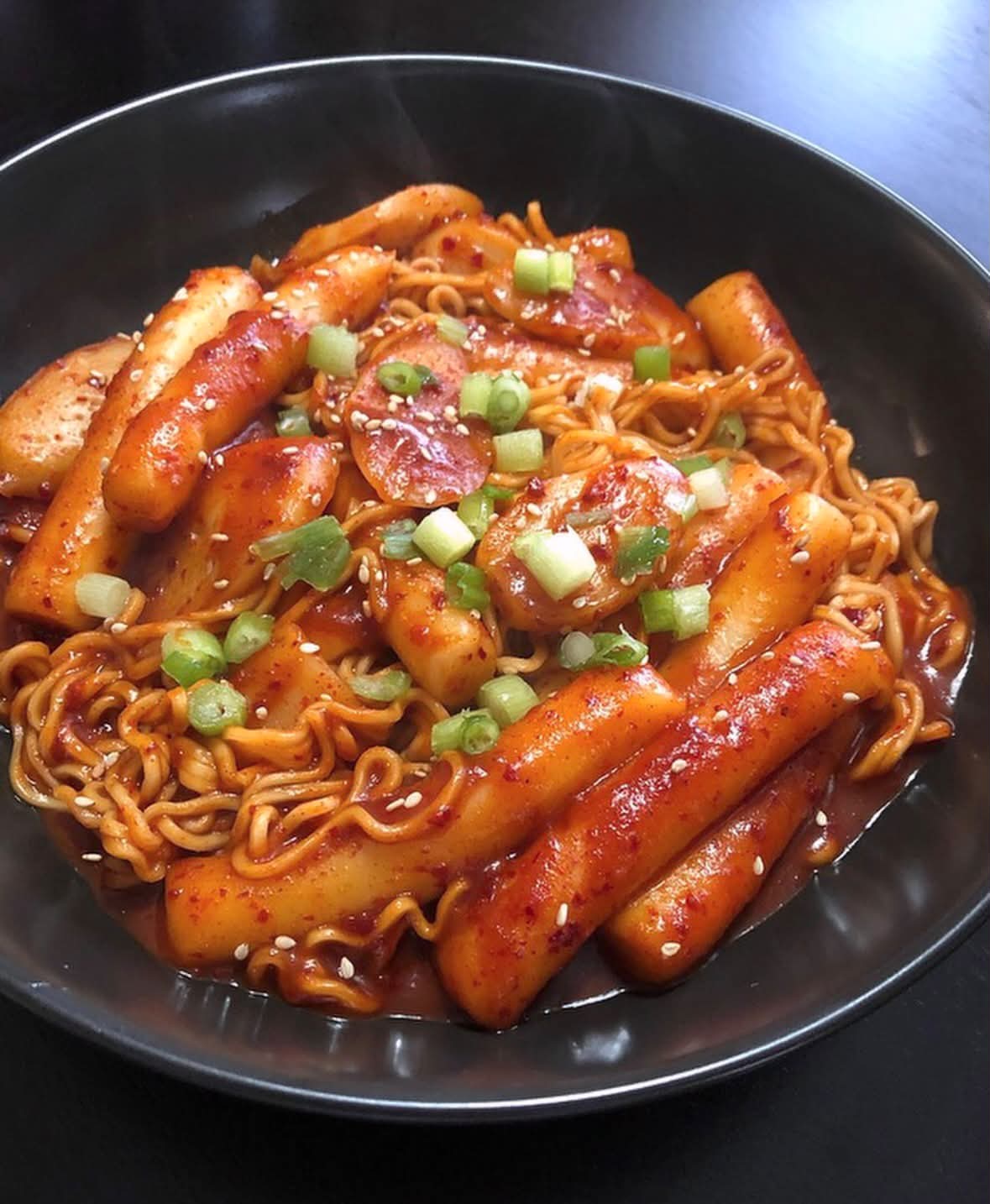
Korean Spicy Tteokbokki with Ramen is a delicious combination of chewy rice cakes, soft fish cakes, and springy noodles covered in a rich red sauce.
The gochujang creates a deep, savory chili flavor, while gochugaru adds a noticeable spicy kick. Brown sugar and honey provide sweetness that balances the heat, and garlic and soy sauce add extra depth.
The rice cakes have a distinctive chewy texture that contrasts with the tender ramen noodles. Fish cakes contribute a savory flavor, while green onions and sesame seeds add freshness and a subtle nutty finish.
The sauce becomes thick and glossy as it simmers, coating every ingredient with its bold Korean-inspired flavor.
It is a colorful, satisfying dish that brings the comforting character of Korean street food into your kitchen.
9. Nutritional Information
The following nutritional values are approximate and depend on the ramen brand, rice cake ingredients, fish cakes, and amount of sauce consumed.
Estimated nutrition per serving, assuming three servings:
- Calories: approximately 620
- Protein: approximately 15 g
- Carbohydrates: approximately 105 g
- Fat: approximately 14 g
- Fiber: approximately 3 g
- Sodium: varies considerably depending on the instant ramen seasoning, soy sauce, broth, and fish cakes
These figures are estimates rather than exact nutritional measurements. The dish may contain more sodium if the ramen seasoning packet is added. Since this recipe does not require that packet, you can leave it out or use only a portion if desired.
10. Storage and Food Safety
Rabokki tastes best immediately after cooking because rice cakes and ramen noodles gradually absorb the sauce and become softer as they sit.
If you have leftovers:
- Transfer them to a clean, airtight container.
- Refrigerate within two hours of cooking, or within one hour if the surrounding temperature is above 90°F (32°C).
- Store in the refrigerator for up to 3 to 4 days.
- Reheat in a saucepan over low to medium heat with a splash of water to loosen the thickened sauce.
- Stir frequently until the dish is steaming hot throughout.
- Avoid repeatedly reheating the same portion.
For the best texture, store any additional toppings separately. If preparing the dish in advance, it is often better to cook the rice cakes and sauce first, then add freshly cooked ramen shortly before serving.
If using fish cakes, follow their package storage instructions and keep them refrigerated until needed.
11. Conclusion
Korean Spicy Tteokbokki with Ramen, or Rabokki, is a comforting dish that combines some of the most enjoyable elements of Korean street food.
The chewy rice cakes, springy ramen noodles, savory fish cakes, and rich gochujang sauce create a satisfying combination of textures and flavors. The balance of chili, garlic, sweetness, and sesame makes every bite delicious.
With simple preparation and approximately 30 minutes of cooking time, this recipe is a wonderful option for anyone who wants to explore Korean-inspired cooking at home.
12. Recommendation
For an even more complete Rabokki meal, serve it with halved boiled eggs, extra fish cakes, and a sprinkle of green onions.
If you enjoy creamy and spicy combinations, add a little shredded mozzarella during the final cooking stage. Allow it to melt over the noodles and rice cakes for a richer variation.
You can also serve the dish with a simple cucumber salad or lightly seasoned vegetables to provide a refreshing contrast to the spicy sauce.
For the most enjoyable texture, prepare only what you plan to serve and add the ramen noodles shortly before eating.
13. Embracing Healthful Indulgence
Rabokki is a hearty, carbohydrate-rich comfort food, and it can be enjoyed as part of a varied eating routine. The rice cakes and ramen provide energy, while fish cakes contribute some protein.
You can customize the recipe by adding cabbage, carrots, mushrooms, or other vegetables. These additions introduce more variety in texture and flavor while making the dish more colorful.
You can also adjust the gochujang, gochugaru, and soy sauce to control the spice and sodium levels. Choosing a broth without added salt and leaving out the instant ramen seasoning packet can help reduce sodium.
The goal is to enjoy the bold, comforting flavors while creating a version that suits your preferences. With its chewy rice cakes, springy noodles, and delicious spicy-sweet sauce, homemade Rabokki is a satisfying way to experience a popular Korean-inspired favorite.