
1. Introduction
Lemon Custard Puff Pastry Cups and Soft Lemon Cream Cake Cups are two elegant homemade desserts that combine a rich, tangy lemon pastry cream with contrasting pastry textures.
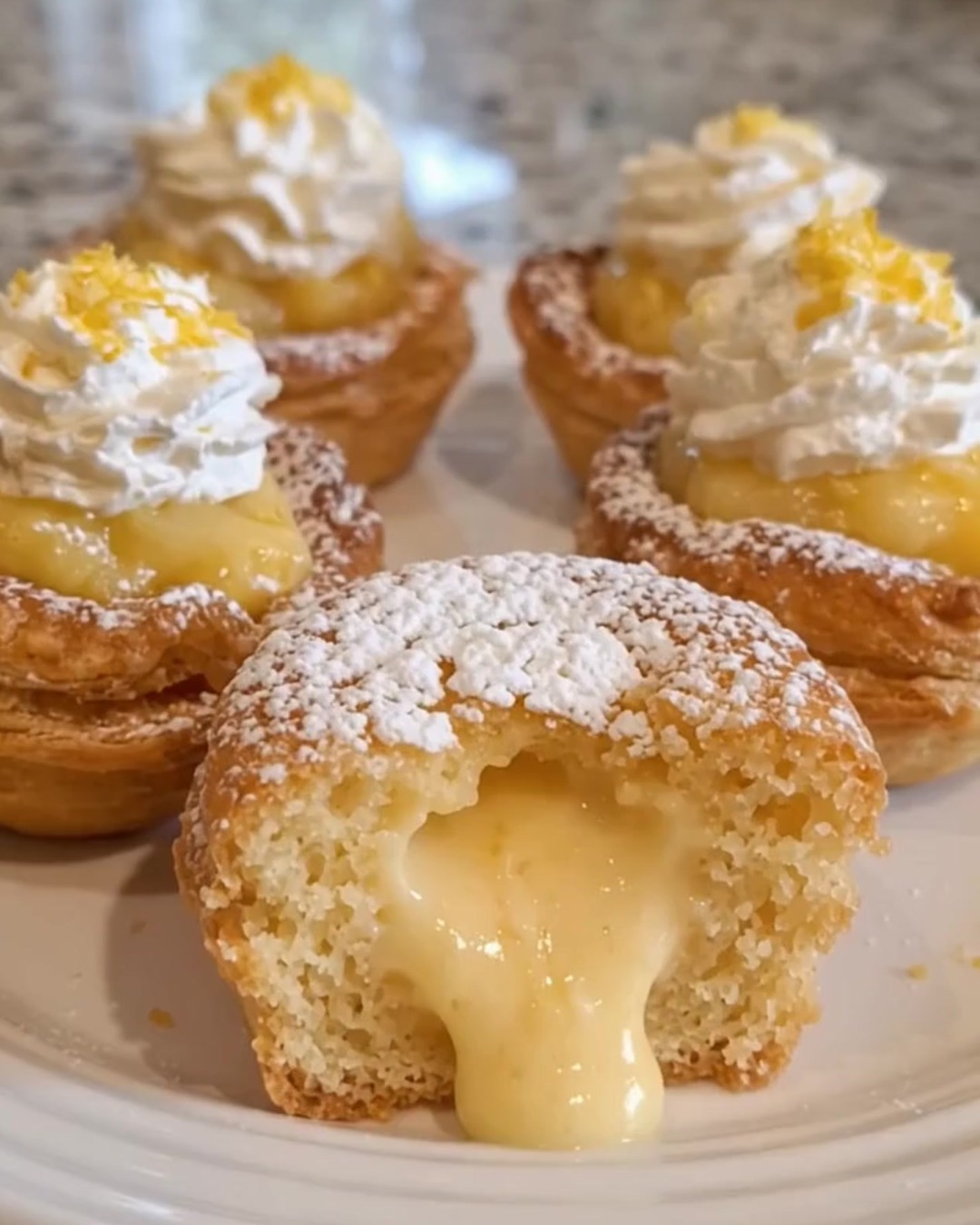
The first version features crisp, golden puff pastry shells filled with smooth lemon custard and topped with fluffy whipped cream. The second version uses tender, miniature vanilla cake cups filled with the same refreshing lemon cream and finished with a delicate dusting of powdered sugar.
Both desserts share a creamy lemon filling made with whole milk, fresh lemon juice, lemon zest, egg yolks, sugar, cornstarch, butter, and vanilla extract.
The custard has a vibrant citrus flavor balanced by the richness of butter and milk. Its smooth, thick consistency makes it suitable for piping into delicate pastry shells or soft cakes.
The puff pastry version offers a delightful combination of crisp, flaky layers and silky custard. A swirl of lightly sweetened whipped cream adds an airy finish, while fresh lemon zest enhances the citrus aroma.
The soft cake version provides a different experience. Instead of flaky pastry, each portion has a moist, tender vanilla cake exterior surrounding a creamy lemon center.
These desserts are ideal for spring celebrations, afternoon tea, family gatherings, brunch tables, and special occasions.
One of the advantages of this recipe is its versatility. The lemon pastry cream can be prepared in advance and used to fill either version shortly before serving.
Whether you prefer buttery, flaky pastry or soft miniature cakes, these lemon-filled cups offer a refreshing combination of sweetness, tanginess, and creamy texture.
2. Origin and Cultural Significance
These desserts draw inspiration from several established European pastry traditions rather than representing one specific historical recipe.
The Tradition of Pastry Cream
Pastry cream, known in French as crème pâtissière, is a classic preparation used in many European desserts.
It is commonly made with milk, eggs or egg yolks, sugar, and a starch-based thickener.
Pastry cream can be flavored with vanilla, chocolate, coffee, citrus, or other ingredients.
Its thick, smooth consistency makes it suitable for filling tarts, cakes, cream puffs, and layered pastries.
Lemon-Flavored Custards
Lemon custards and lemon creams are popular in European and American baking.
Fresh lemon juice contributes acidity, while lemon zest provides fragrant citrus oils.
The combination creates a refreshing contrast to rich pastry and dairy ingredients.
Puff Pastry Traditions
Puff pastry is especially associated with French pastry-making.
Its characteristic layers are produced by folding butter into dough through a process known as lamination.
During baking, steam helps separate the layers, creating a crisp, flaky texture.
Individual Pastry Cups
Small pastry shells filled with cream or custard are common in modern bakery assortments.
Their individual size makes them convenient for serving at celebrations and dessert tables.
Miniature Filled Cakes
Soft cake cups are inspired by cupcakes, muffins, and filled sponge cakes.
Removing a small portion from the center allows the cake to hold a creamy filling.
A Modern Combination
The two versions in this recipe combine familiar pastry techniques with a shared lemon custard filling.
They offer different textures while maintaining a consistent flavor profile.
3. Ingredients
This recipe includes one batch of lemon pastry cream and two alternative bases.
The pastry cream can be used for either version or divided between both. If preparing full batches of both desserts, consider doubling the custard.
A. Homemade Lemon Pastry Cream
| Ingredient | Quantity |
|---|---|
| Whole milk | 1 cup (240 ml) |
| Fresh lemon juice | ½ cup (120 ml) |
| Finely grated lemon zest | 1 tablespoon |
| Granulated sugar | ½ cup (100 g) |
| Large egg yolks | 3 |
| Cornstarch | 2 tablespoons |
| Unsalted butter, cubed | 2 tablespoons |
| Vanilla extract | 1 teaspoon |
B. Flaky Puff Pastry Cups
| Ingredient | Quantity |
|---|---|
| Frozen puff pastry, thawed | 1 sheet |
| Cold heavy whipping cream | 1 cup (240 ml) |
| Powdered sugar | 2 tablespoons |
| Extra lemon zest | For garnish |
| Additional powdered sugar | For dusting |
C. Soft Lemon Cream Cake Cups
| Ingredient | Quantity |
|---|---|
| All-purpose flour | 1 cup (approximately 125 g) |
| Granulated sugar | ½ cup (100 g) |
| Baking powder | 1 teaspoon |
| Salt | ¼ teaspoon |
| Milk | ½ cup (120 ml) |
| Unsalted butter, melted | ¼ cup (approximately 57 g) |
| Large egg | 1 |
| Vanilla extract | 1 teaspoon |
| Prepared lemon pastry cream | As needed for filling |
| Powdered sugar | For dusting |
D. Equipment
- Medium saucepan
- Mixing bowls
- Whisk
- Rubber spatula
- Electric hand mixer or stand mixer
- 12-cup muffin tin
- Measuring cups and spoons
- Kitchen scale
- Rolling pin
- Sharp knife or pastry cutter
- Fork
- Piping bag
- Piping tip, optional
- Small spoon or apple corer
- Wire cooling rack
- Parchment paper or food-safe plastic wrap
- Oven
- Refrigerator
4. Optional Additions
These lemon desserts can be customized with several complementary ingredients.
Extra Lemon Zest: Sprinkle finely grated zest over the finished pastries for a stronger citrus aroma.
Vanilla Bean: Replace vanilla extract with vanilla bean seeds.
Fresh Raspberries: Add one raspberry to the top of each pastry cup.
Blueberries: Decorate the whipped cream with fresh blueberries.
Strawberries: Add finely chopped strawberries as a garnish.
White Chocolate: Drizzle a small amount of melted white chocolate over the finished pastries.
Toasted Coconut: Sprinkle lightly over the whipped cream.
Crushed Pistachios: Add finely chopped pistachios for color and crunch.
Almond Extract: Add a few drops to the cake batter.
Orange Zest: Combine a small amount with the lemon zest.
Powdered Sugar: Add an extra light dusting immediately before serving.
Mint Leaves: Use small fresh mint leaves for decoration.
Candied Lemon Peel: Add a small piece to each finished cup.
Lemon Curd: Use a thicker lemon curd as an alternative filling if preferred.
These additions are optional and are not part of the original ingredient quantities.
5. Tips for Success
Use Fresh Lemon Juice
Fresh lemon juice provides a bright, clean citrus flavor.
Grate Only the Yellow Zest
Avoid the bitter white pith beneath the lemon peel.
Whisk the Egg Yolks Thoroughly
A smooth egg mixture helps prevent lumps in the finished custard.
Temper the Eggs Slowly
Gradually adding warm milk reduces the risk of scrambling the egg yolks.
Stir Continuously
Constant whisking prevents the custard from sticking to the saucepan.
Add Lemon Juice After Cooking
Following the supplied method, stir in the lemon juice after removing the thickened custard from the heat.
Because this recipe contains a relatively large amount of lemon juice, the custard may loosen after the juice is added. Chill it thoroughly and check that it is thick enough for piping before filling the pastries.
Cool the Custard Safely
Transfer the custard to a shallow container, cover the surface, and refrigerate promptly.
Keep Puff Pastry Cold
Cold puff pastry expands more reliably and is easier to shape.
Avoid Stretching the Pastry
Stretching can distort the layers and cause uneven baking.
Prick the Pastry Bases
Piercing the bottoms helps reduce excessive puffing.
Cool Pastry Shells Completely
Warm shells can melt the custard or whipped cream.
Whip Cold Cream
Cold heavy cream is easier to whip and generally produces a more stable texture.
Avoid Overwhipping
Stop once the whipped cream holds stiff peaks.
Do Not Overmix Cake Batter
Mix only until the dry ingredients are incorporated.
Hollow Cakes Carefully
Leave enough cake around the sides and bottom to support the filling.
Fill Shortly Before Serving
This helps preserve the crispness of puff pastry and prevents the cake cups from becoming overly moist.
6. Step-by-Step Instructions
Part A: Preparing the Lemon Pastry Cream Ingredients
Step 1: Gather the custard ingredients and equipment.
Step 2: Measure 1 cup whole milk.
Step 3: Prepare three large egg yolks.
Step 4: Measure ½ cup granulated sugar.
Step 5: Measure 2 tablespoons cornstarch.
Step 6: Wash and dry the lemons.
Step 7: Finely grate 1 tablespoon lemon zest.
Step 8: Squeeze approximately ½ cup fresh lemon juice.
Step 9: Remove any seeds from the juice.
Step 10: Measure 2 tablespoons unsalted butter.
Step 11: Cut the butter into small cubes.
Step 12: Measure 1 teaspoon vanilla extract.
Part B: Mixing the Egg Yolk Base
Step 13: Place the egg yolks in a medium mixing bowl.
Step 14: Add the granulated sugar.
Step 15: Whisk until combined.
Step 16: Continue whisking until the mixture becomes slightly pale.
Step 17: Add the cornstarch.
Step 18: Add the finely grated lemon zest.
Step 19: Whisk thoroughly.
Step 20: Break apart any lumps.
Step 21: Set the mixture aside.
Part C: Heating the Milk
Step 22: Pour the whole milk into a medium saucepan.
Step 23: Place the saucepan over medium heat.
Step 24: Warm the milk gradually.
Step 25: Stir occasionally.
Step 26: Watch for small bubbles around the edges.
Step 27: Remove the saucepan from the heat when the milk reaches a gentle simmer.
Part D: Tempering the Egg Yolks
Step 28: Begin whisking the egg yolk mixture.
Step 29: Slowly pour in a small amount of warm milk.
Step 30: Whisk continuously.
Step 31: Add another small amount of milk.
Step 32: Continue whisking.
Step 33: Gradually add the remaining milk.
Step 34: Ensure the mixture is smooth and evenly combined.
Part E: Cooking the Custard
Step 35: Pour the mixture back into the saucepan.
Step 36: Place over medium-low heat.
Step 37: Begin whisking immediately.
Step 38: Scrape the bottom and sides of the saucepan.
Step 39: Continue stirring as the mixture warms.
Step 40: Watch for the first signs of thickening.
Step 41: Continue cooking for approximately 3–4 minutes, or until thickened.
Step 42: Allow the custard to begin bubbling while whisking.
Step 43: Continue briefly to cook the starch thoroughly.
Step 44: Remove from the heat.
Part F: Adding the Lemon and Butter
Step 45: Pour the fresh lemon juice into the thickened custard.
Step 46: Whisk until incorporated.
Step 47: Add the cubed butter.
Step 48: Stir until completely melted.
Step 49: Add the vanilla extract.
Step 50: Whisk until glossy and smooth.
Step 51: Check that the custard is evenly mixed.
Part G: Cooling the Custard
Step 52: Transfer the custard to a clean, shallow bowl.
Step 53: Spread it into an even layer.
Step 54: Press food-safe plastic wrap directly onto the surface.
Step 55: Allow steam to subside briefly.
Step 56: Refrigerate promptly.
Step 57: Chill for at least 1 hour, or until thoroughly cold.
Step 58: Check that the custard has thickened sufficiently for filling.
Part H: Preparing the Puff Pastry Cups
Step 59: Preheat the oven to 400°F (200°C).
Step 60: Position a rack near the center of the oven.
Step 61: Lightly grease a muffin tin.
Step 62: Remove the thawed puff pastry from its packaging.
Step 63: Place it on a lightly floured work surface.
Step 64: Unfold the pastry carefully.
Step 65: Roll it slightly to even the thickness.
Step 66: Avoid pressing too firmly.
Part I: Cutting the Pastry
Step 67: Prepare a sharp knife or pastry cutter.
Step 68: Cut the pastry into approximately 9–12 squares.
Step 69: Alternatively, use a round biscuit cutter.
Step 70: Keep the pieces as evenly sized as possible.
Step 71: Avoid stretching the dough.
Part J: Forming the Pastry Cups
Step 72: Pick up one pastry square.
Step 73: Position it over a muffin cavity.
Step 74: Gently press the center downward.
Step 75: Allow the corners to extend upward.
Step 76: Shape the dough into a small cup.
Step 77: Avoid compressing the layers excessively.
Step 78: Repeat with the remaining pastry pieces.
Part K: Preparing the Pastry for Baking
Step 79: Use a fork to prick the bottom of each pastry cup.
Step 80: Make several small holes in the base.
Step 81: Avoid piercing the sides excessively.
Step 82: Check that the cups are evenly shaped.
Step 83: Keep the pastry cold until baking.
Part L: Baking the Puff Pastry Shells
Step 84: Place the muffin tin in the preheated oven.
Step 85: Bake at 400°F (200°C).
Step 86: Allow the pastry layers to expand.
Step 87: Check after approximately 12 minutes.
Step 88: Look for a deep golden-brown color.
Step 89: Continue baking if necessary.
Step 90: The suggested baking time is approximately 12–15 minutes.
Step 91: Make sure the pastry is crisp and fully baked.
Step 92: Remove the tin from the oven.
Part M: Cooling the Pastry Shells
Step 93: Place the muffin tin on a cooling rack.
Step 94: Allow the shells to cool briefly.
Step 95: Carefully remove them from the tin.
Step 96: Transfer to a wire rack.
Step 97: If the centers have puffed excessively, gently press them down while still warm.
Step 98: Allow the shells to cool completely.
Part N: Preparing the Whipped Cream
Step 99: Measure 1 cup cold heavy whipping cream.
Step 100: Measure 2 tablespoons powdered sugar.
Step 101: Place the cream in a chilled mixing bowl.
Step 102: Add the powdered sugar.
Step 103: Begin whipping on low speed.
Step 104: Gradually increase to medium-high speed.
Step 105: Continue until the cream thickens.
Step 106: Watch for soft peaks.
Step 107: Continue whipping until stiff peaks form.
Step 108: Stop before the cream becomes grainy.
Part O: Filling the Puff Pastry Cups
Step 109: Remove the chilled lemon custard from the refrigerator.
Step 110: Stir gently if needed to smooth it.
Step 111: Arrange the cooled pastry shells on a clean surface.
Step 112: Prepare a spoon or piping bag.
Step 113: Spoon or pipe custard into the first pastry shell.
Step 114: Fill the center generously without overflowing.
Step 115: Repeat with the remaining shells.
Part P: Adding the Whipped Cream
Step 116: Transfer the whipped cream to a piping bag.
Step 117: Fit with a decorative piping tip if desired.
Step 118: Pipe a swirl onto the first filled pastry.
Step 119: Repeat with the remaining pastries.
Step 120: Keep the whipped cream centered over the custard.
Part Q: Decorating the Puff Pastry Cups
Step 121: Finely grate a little fresh lemon zest.
Step 122: Sprinkle over the whipped cream.
Step 123: Dust lightly with powdered sugar.
Step 124: Arrange the pastries on a serving plate.
Step 125: Refrigerate until serving.
Part R: Preparing the Soft Lemon Cream Cake Cups
Step 126: Preheat the oven to 350°F (175°C).
Step 127: Lightly grease a 12-cup muffin tin.
Step 128: Prepare the cake ingredients.
Step 129: Measure 1 cup all-purpose flour.
Step 130: Measure ½ cup granulated sugar.
Step 131: Measure 1 teaspoon baking powder.
Step 132: Measure ¼ teaspoon salt.
Step 133: Measure ½ cup milk.
Step 134: Melt ¼ cup unsalted butter.
Step 135: Allow the butter to cool slightly.
Step 136: Prepare one large egg.
Step 137: Measure 1 teaspoon vanilla extract.
Part S: Mixing the Dry Ingredients
Step 138: Place the flour in a large mixing bowl.
Step 139: Add the sugar.
Step 140: Add the baking powder.
Step 141: Add the salt.
Step 142: Whisk until evenly combined.
Part T: Mixing the Wet Ingredients
Step 143: Pour the milk into a separate bowl.
Step 144: Add the melted butter.
Step 145: Crack in the egg.
Step 146: Add the vanilla extract.
Step 147: Whisk until smooth.
Part U: Preparing the Cake Batter
Step 148: Pour the wet ingredients into the dry mixture.
Step 149: Stir gently with a spatula.
Step 150: Continue until the flour is incorporated.
Step 151: Scrape the sides of the bowl.
Step 152: Avoid overmixing.
Step 153: The batter should be smooth with no large pockets of dry flour.
Part V: Filling the Muffin Tin
Step 154: Divide the batter evenly among the prepared muffin cavities.
Step 155: Avoid filling them to the rim.
Step 156: Smooth the tops gently if necessary.
Step 157: Tap the pan lightly to settle the batter.
Part W: Baking the Cake Cups
Step 158: Place the muffin tin in the preheated oven.
Step 159: Bake at 350°F (175°C).
Step 160: Allow the cakes to rise.
Step 161: Check after approximately 14 minutes.
Step 162: Look for lightly golden tops.
Step 163: Insert a toothpick into the cake portion.
Step 164: Check that it comes out clean or with a few moist crumbs.
Step 165: Continue baking if necessary.
Step 166: The suggested baking time is approximately 14–16 minutes.
Step 167: Remove the muffin tin from the oven.
Part X: Cooling the Cake Cups
Step 168: Place the tin on a wire rack.
Step 169: Allow the cakes to cool briefly.
Step 170: Carefully remove them from the tin.
Step 171: Transfer to a cooling rack.
Step 172: Allow them to cool completely.
Part Y: Hollowing the Cake Centers
Step 173: Place one cooled cake on a cutting board.
Step 174: Use a small spoon or apple corer.
Step 175: Carefully remove a small portion from the center.
Step 176: Leave enough cake at the bottom to hold the filling.
Step 177: Avoid cutting through the base.
Step 178: Repeat with the remaining cakes.
Part Z: Filling the Cake Cups
Step 179: Prepare the chilled lemon custard.
Step 180: Transfer it to a piping bag or use a spoon.
Step 181: Fill the hollowed center of the first cake.
Step 182: Continue until the cavity is filled.
Step 183: Repeat with the remaining cakes.
Step 184: Avoid overfilling.
Part AA: Decorating the Cake Cups
Step 185: Arrange the filled cakes on a serving plate.
Step 186: Place powdered sugar in a fine-mesh sieve.
Step 187: Dust the tops generously.
Step 188: Keep the custard filling visible if desired.
Step 189: Refrigerate until serving.
Part AB: Final Presentation
Step 190: Arrange the puff pastry cups and cake cups on separate serving plates.
Step 191: Check that the whipped cream remains stable.
Step 192: Add a final touch of lemon zest if desired.
Step 193: Serve chilled or slightly cool.
Step 194: Enjoy the contrast between flaky pastry, soft cake, and creamy lemon filling.
7. Description
These lemon-filled desserts offer two distinct textures built around the same bright, creamy filling.
Lemon Custard Puff Pastry Cups
The puff pastry cups feature crisp, golden layers that create a delicate, flaky shell.
The center contains smooth, pale-yellow lemon custard.
The custard has a rich, creamy texture with a refreshing citrus flavor.
A swirl of whipped cream adds lightness and balances the tanginess of the lemon.
Fresh lemon zest provides a fragrant finishing touch.
The contrast between the crisp pastry, silky custard, and airy whipped cream makes each bite particularly satisfying.
Soft Lemon Cream Cake Cups
The cake cups have a tender, lightly golden exterior.
Inside, the vanilla cake is soft and moist.
The hollowed center holds a generous portion of lemon pastry cream.
The custard creates a smooth contrast to the cake’s delicate crumb.
A dusting of powdered sugar gives the cakes a simple, elegant appearance.
Overall Flavor
Both versions are sweet, buttery, creamy, and citrusy.
The lemon provides brightness, while the vanilla and dairy ingredients add warmth and richness.
8. Nutritional Information
The following values are broad estimates per piece and depend on the size of the pastries, the amount of filling, and the final yield.
| Nutrient | Puff Pastry Cup | Cake Cup |
|---|---|---|
| Calories | 250–350 kcal | 170–250 kcal |
| Protein | 3–5 g | 3–5 g |
| Carbohydrates | 20–30 g | 22–32 g |
| Total Fat | 16–24 g | 7–13 g |
| Saturated Fat | 9–14 g | 4–7 g |
| Sugar | 9–16 g | 12–20 g |
| Fiber | 0–1 g | 0–1 g |
These estimates assume the lemon custard is divided among the finished pastries. If preparing both full batches, the amount of custard used per piece may differ. Exact nutritional values require the actual pastry weight and filling quantities.
9. Recipe Details
| Category | Details |
|---|---|
| Recipe Name | Lemon Custard Puff Pastry Cups & Soft Lemon Cream Cake Cups |
| Cuisine | European-Inspired |
| Course | Dessert / Sweet Pastry |
| Difficulty | Easy to Intermediate |
| Main Filling | Homemade Lemon Pastry Cream |
| Custard Preparation | Approximately 15 Minutes |
| Custard Chilling | At Least 1 Hour |
| Puff Pastry Preparation | Approximately 10–15 Minutes |
| Puff Pastry Baking | 12–15 Minutes |
| Puff Pastry Oven Temperature | 400°F (200°C) |
| Puff Pastry Yield | 9–12 Cups |
| Cake Preparation | Approximately 10–15 Minutes |
| Cake Baking | 14–16 Minutes |
| Cake Oven Temperature | 350°F (175°C) |
| Cake Yield | Up to 12 Small Cups |
| Total Time | Approximately 1½–2 Hours, Including Chilling |
| Main Flavor | Lemon and Vanilla |
| Puff Pastry Texture | Crisp, Flaky, Creamy |
| Cake Cup Texture | Soft, Tender, Creamy |
| Toppings | Whipped Cream, Lemon Zest, Powdered Sugar |
| Best Served | Chilled |
| Storage | Refrigerated |
| Potential Allergens | Wheat, Eggs, Milk |
10. Conclusion
Lemon Custard Puff Pastry Cups and Soft Lemon Cream Cake Cups are two delicious desserts that highlight the refreshing flavor of homemade lemon pastry cream.
The custard is prepared with whole milk, egg yolks, sugar, cornstarch, lemon juice, lemon zest, butter, and vanilla.
Once cooked and chilled, it becomes the filling for both variations.
The puff pastry version uses golden, flaky shells filled with lemon custard and topped with sweetened whipped cream.
The cake version features soft vanilla cakes with hollowed centers filled with the same creamy lemon mixture.
Both desserts are attractive, flavorful, and suitable for a variety of occasions.
They can be prepared for family gatherings, afternoon tea, brunch celebrations, or dessert tables.
Their individual serving size makes them convenient to present and enjoy.
Whether you prefer crisp pastry or soft cake, these lemon-filled cups offer a satisfying combination of tangy citrus, creamy filling, and delicate sweetness.
11. Serving and Storage Recommendations
Serve Chilled: Both versions taste especially refreshing when the lemon custard is cold.
Assemble Shortly Before Serving: Puff pastry shells retain their crispness best when filled close to serving time.
Prepare Custard in Advance: Make the lemon custard ahead and keep refrigerated.
Store Empty Pastry Shells Separately: Keep fully cooled, unfilled shells in an airtight container for short-term storage.
Whip Cream Fresh: Freshly whipped cream generally gives the best texture.
Coffee: Serve with espresso or cappuccino.
Tea: Pair with black tea, green tea, or herbal tea.
Fresh Berries: Add raspberries, blueberries, or strawberries.
Powdered Sugar: Dust shortly before serving.
Refrigeration: Store assembled pastries in an airtight container in the refrigerator.
Storage Duration: For best quality, enjoy assembled desserts within approximately 1–2 days.
Custard Storage: Refrigerate homemade custard promptly and use within approximately 3–4 days.
Freezing: Unfilled puff pastry shells may be frozen, but freezing assembled custard-filled pastries is not recommended for best texture.
Food Safety: Because the filling contains milk and eggs, refrigerate promptly and avoid leaving the finished desserts at room temperature for more than 2 hours.
12. Embracing Healthful Indulgence
Lemon Custard Puff Pastry Cups and Soft Lemon Cream Cake Cups are rich desserts made with dairy, eggs, flour, butter, sugar, and fresh lemon.
They can be enjoyed as part of a varied eating pattern.
Fresh Lemons
Lemon juice and zest provide bright citrus flavor.
Fresh lemons also contain vitamin C, although the amount remaining in the finished custard depends on preparation and serving size.
Egg Yolks
Egg yolks contribute richness and nutrients such as choline and vitamin B12.
They also help create the custard’s smooth texture.
Whole Milk
Whole milk provides protein, calcium, and moisture.
It contributes to the creamy consistency of the filling.
Butter
Butter adds richness and flavor to the custard and cake.
Because it contains saturated fat, portion size may be considered when enjoying these desserts.
Heavy Cream
Heavy cream creates the light, whipped topping used for the puff pastry version.
It adds richness and a smooth mouthfeel.
Puff Pastry
Puff pastry provides carbohydrates and fat.
Its laminated structure creates the characteristic flaky texture.
Cake Base
The soft cake version contains flour, milk, eggs, butter, and sugar.
It offers a tender alternative to puff pastry.
Managing Sweetness
Both desserts contain added sugar.
The lemon’s acidity helps balance the sweetness, reducing the need for overly sweet toppings.
Portion Awareness
Individual dessert cups provide convenient portions.
One or two pieces can be enjoyed according to appetite and dietary needs.
Pairing with Fresh Fruit
Fresh berries add color, flavor, and fiber.
They also complement the lemon filling.
Homemade Preparation
Making these desserts at home allows control over ingredient quality, portion size, and decoration.
Enjoying a Special Treat
These lemon-filled pastries are particularly suitable for celebrations, gatherings, and occasional indulgence.
Their combination of tangy custard, buttery pastry or tender cake, and delicate sweetness makes them an enjoyable homemade dessert.
Whether served as crisp Lemon Custard Puff Pastry Cups or soft Lemon Cream Cake Cups, both versions offer a refreshing and elegant way to enjoy the classic flavor of lemon pastry cream.