
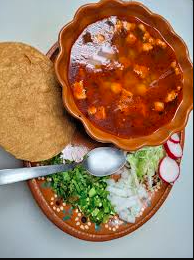
Description
Pozole Rojo is a traditional Mexican soup made with tender meat, hominy, and a rich red chile broth. It is deeply savory, slightly smoky, and warming, with a balance of hearty texture and fresh toppings such as shredded cabbage, chopped onion, radishes, cilantro, and lime. It is often served with tostadas on the side for crunch.
Introduction
Pozole Rojo is one of Mexico’s most beloved and iconic dishes. Known for its vibrant red broth and comforting depth of flavor, it is both a festive meal and a nourishing everyday soup in many households. The dish combines slow-cooked meat with hominy, which gives pozole its signature heartiness and satisfying texture.
This soup is especially appreciated for how it blends bold chile flavor with refreshing garnishes, creating a meal that feels both rich and fresh at the same time.
Origin and Cultural Significance
Pozole has ancient roots in Mexican culinary history and is widely associated with pre-Hispanic traditions. Over time, it evolved into the modern dish enjoyed throughout Mexico today. Different regions developed their own styles, including Pozole Rojo, Pozole Verde, and Pozole Blanco.
Pozole Rojo is especially popular in central and western Mexico, particularly in states such as Jalisco, Guerrero, and Michoacán. It is commonly prepared for celebrations, holidays, birthdays, family gatherings, and special weekends. Because it is usually made in a large pot and shared among many people, it is considered a dish of hospitality, community, and tradition.
Ingredients Quantity
For the Soup
- 2 lbs pork shoulder or pork butt, cut into large chunks
- 1 lb pork ribs or additional pork shoulder, optional
- 10 cups water
- 1 medium onion, halved
- 5 cloves garlic
- 2 bay leaves
- 2 teaspoons salt, or to taste
- 1 teaspoon black pepper
For the Red Chile Sauce
- 5 dried guajillo chiles, stemmed and seeded
- 3 dried ancho chiles, stemmed and seeded
- 2 cloves garlic
- 1/2 teaspoon dried oregano
- 1/2 teaspoon ground cumin
- 1 to 1 1/2 cups warm water or broth for blending
For the Hominy
- 2 cans white hominy, 25 oz each, drained and rinsed
or - 5 to 6 cups cooked hominy
For Garnishes
- 2 cups shredded cabbage or lettuce
- 1 cup finely chopped white onion
- 1 bunch radishes, thinly sliced
- 1/2 cup chopped fresh cilantro
- 2 to 3 limes, cut into wedges
- 1 to 2 avocados, sliced, optional
- Dried oregano, for sprinkling
- Crushed chile flakes or chile powder, optional
For Serving
- Tostadas or tortilla chips
- Sour cream, optional
- Crumbled queso fresco, optional
Optional Additions
- Chicken instead of pork for a lighter version
- Beef for a deeper and more robust flavor
- Extra dried chiles for a spicier broth
- Avocado slices for creaminess
- Queso fresco for a mild salty finish
- Sour cream for richness
- Chopped jalapeños for heat
- Mexican crema for a smooth topping
Tips for Success
- Use dried chiles that are soft and flexible, not brittle, for the best flavor.
- Do not burn the chiles while toasting, or the broth may become bitter.
- Simmer the meat slowly so it becomes very tender.
- Blend the chile sauce until completely smooth for a velvety broth.
- Strain the chile sauce before adding it to the pot for a smoother texture.
- Let the soup simmer after adding the red sauce so the flavors fully develop.
- Taste and adjust the salt at the end, especially after adding the hominy.
- Serve with plenty of fresh garnishes, since they brighten the richness of the soup.
Instructions
Step 1: Cook the Meat
- Place the pork, water, onion, garlic, bay leaves, salt, and black pepper in a large pot or Dutch oven.
- Bring to a boil, then reduce the heat to a gentle simmer.
- Skim off any foam that rises to the top.
- Cover partially and cook for 1 1/2 to 2 hours, or until the meat is fork-tender.
- Remove the meat, shred it into bite-sized pieces, and set aside.
- Strain the broth if desired, then return the broth to the pot.
Step 2: Prepare the Chile Sauce
- Rinse the dried chiles.
- Place them in a bowl and cover with hot water for 15 to 20 minutes until softened.
- Transfer the softened chiles to a blender with garlic, oregano, cumin, and 1 to 1 1/2 cups of soaking liquid or broth.
- Blend until very smooth.
- Strain the sauce through a fine mesh sieve.
Step 3: Build the Pozole
- Add the red chile sauce to the broth in the pot.
- Stir well and simmer for 10 minutes.
- Add the shredded pork and hominy.
- Continue simmering for 20 to 30 minutes so the flavors combine.
- Taste and adjust with more salt if needed.
Step 4: Serve
- Ladle the hot pozole into bowls.
- Top with shredded cabbage, onion, radishes, cilantro, and oregano.
- Serve with lime wedges and tostadas on the side.
- Add avocado, crema, or queso fresco if desired.
Nutritional Information
Approximate values per serving, based on 8 servings:
- Calories: 380 to 470
- Protein: 26 to 32 g
- Carbohydrates: 24 to 30 g
- Fat: 18 to 24 g
- Fiber: 4 to 6 g
- Sodium: varies depending on broth and canned hominy
These values may change based on the cut of meat and garnishes used.
Embracing Healthful Indulgence
Pozole Rojo can be both comforting and balanced when prepared thoughtfully. To make it a bit lighter while still preserving its traditional character:
- Use leaner pork or chicken
- Trim visible fat from the meat
- Choose low-sodium broth
- Use plenty of fresh toppings like cabbage, radishes, and cilantro
- Limit rich add-ons such as crema and cheese if desired
- Serve with baked tostadas instead of fried ones
These simple adjustments help preserve the soul of the dish while making it fit more easily into a balanced eating pattern.
Conclusion
Pozole Rojo is a deeply rooted Mexican dish that brings together history, comfort, and bold flavor in one bowl. Its rich chile broth, tender meat, and chewy hominy make it a memorable meal, while the fresh toppings add color, texture, and brightness.
It is a dish that feels both festive and nourishing, making it suitable for large gatherings as well as cozy family meals.
Recommendation
If you want the closest version to the dish shown, I recommend preparing Pozole Rojo with pork and white hominy, then serving it with chopped onion, cilantro, shredded cabbage, radishes, lime, and tostadas. That combination best matches the classic appearance and flavor profile of the image.
If you want, I can also give you:
- a Menudo version,
- a shorter easy Pozole Rojo recipe, or
- a French version of this full recipe.