
1. Introduction
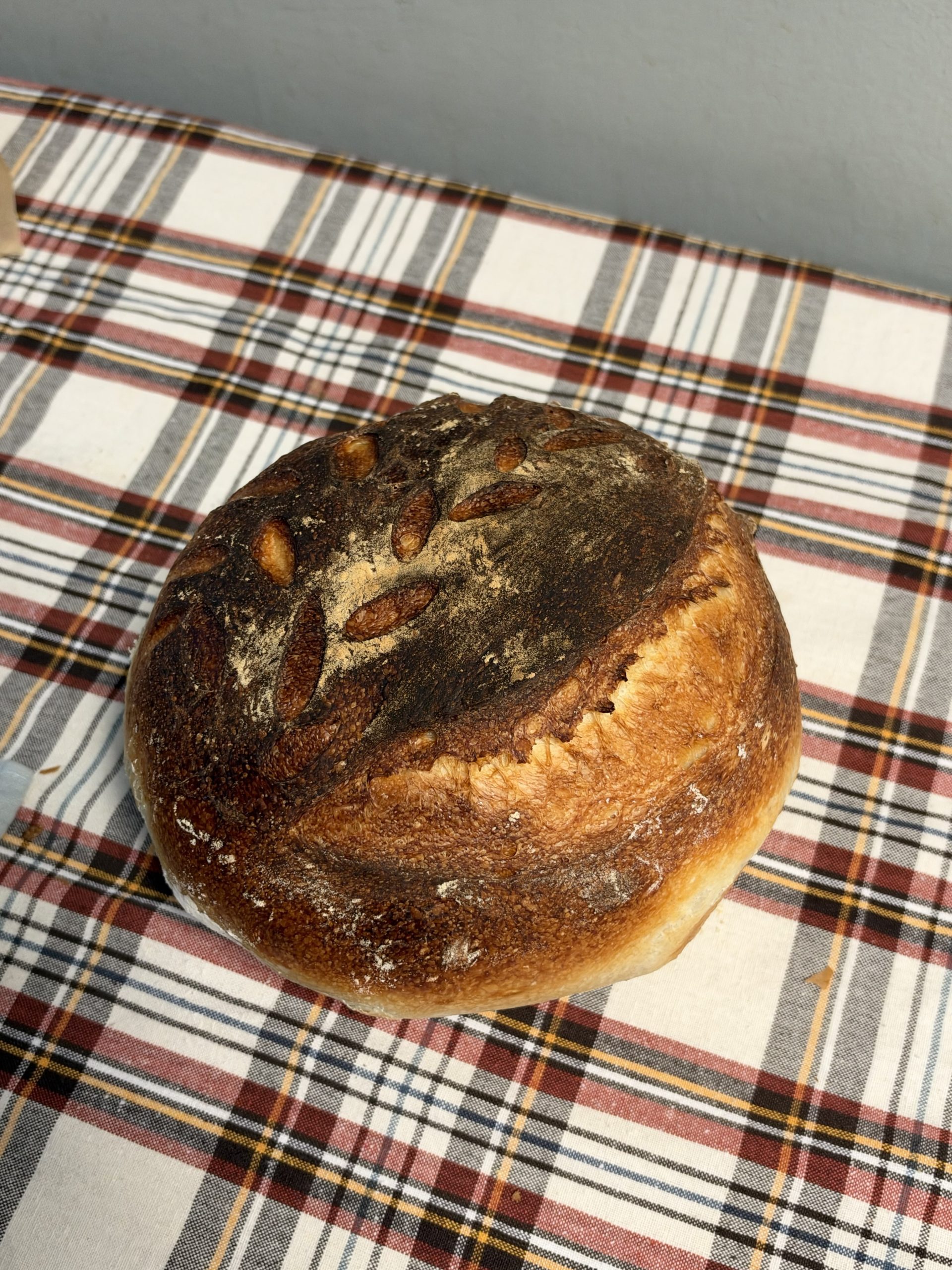
Rustic Artisan Sourdough Bread is a traditional homemade loaf featuring a deeply caramelized, crackling crust and a soft, chewy interior with a naturally tangy flavor.
Made with an active sourdough starter, bread flour, whole wheat flour, water, and salt, this recipe relies on natural fermentation rather than commercial yeast.
The overnight cold-proofing method develops rich flavor, while baking in a Dutch oven creates a beautiful, blistered crust with a rustic bakery-style appearance.
2. Origin and Cultural Significance
Sourdough is one of the oldest forms of leavened bread, with roots extending back thousands of years.
Before commercial yeast became widely available, bakers relied on naturally fermented flour-and-water starters to make bread rise.
Today, artisan sourdough remains popular for its distinctive flavor, chewy texture, and traditional preparation methods. The deeply baked bien cuit crust, meaning “well baked” in French, is especially appreciated for its complex, toasted flavor.
3. Ingredients
For the Sourdough Bread
- 100 g active, bubbly sourdough starter (100% hydration)
- 350 g lukewarm water
- 450 g bread flour
- 50 g whole wheat flour
- 10 g fine sea salt
For Dusting
– Rice flour or all-purpose flour, as needed
Optional Additions
- 1 teaspoon honey for subtle sweetness
- 1 tablespoon mixed seeds for added texture
- Fresh rosemary for an aromatic variation
4. Optional Additions
- Sesame seeds: Sprinkle over the shaped loaf for a nutty crust.
- Sunflower seeds: Add crunch and flavor.
- Roasted garlic: Fold into the dough for a savory variation.
- Fresh rosemary: Adds a fragrant herbal note.
- Olives: Create a Mediterranean-inspired sourdough loaf.
- Extra whole wheat flour: Replace a little more bread flour for a heartier flavor, adjusting water if needed.
5. Tips for Success
- Use a starter that has recently peaked or is near its peak after feeding.
- Measure ingredients with a digital kitchen scale for accuracy.
- Keep the dough covered during fermentation to prevent drying.
- Use wet hands during stretch-and-folds to reduce sticking.
- Watch the dough’s rise and texture rather than relying only on the clock.
- Avoid overproofing, which can cause the loaf to spread during baking.
- Score the dough while cold for cleaner cuts.
- Preheat the Dutch oven thoroughly for strong oven spring.
- Allow the bread to cool completely before slicing.
6. Instructions
Step 1: Feed the Sourdough Starter
Feed your sourdough starter several hours before mixing the dough.
Use it when it is bubbly, active, and has risen significantly after feeding.
Step 2: Mix the Dough
In a large mixing bowl, combine the active starter and lukewarm water.
Add the bread flour and whole wheat flour.
Mix until no dry flour remains and a shaggy dough forms.
Cover and rest for 30 minutes.
Step 3: Add the Salt
Sprinkle the sea salt over the dough.
With damp hands, gently pinch and fold the dough until the salt is evenly incorporated.
Cover and rest for another 30 minutes.
Step 4: Perform Stretch-and-Folds
Over the next 2 hours, complete four sets of stretch-and-folds, approximately 30 minutes apart.
For each set, lift one side of the dough, stretch it upward gently, and fold it over the center.
Rotate the bowl and repeat on all four sides.
The dough should gradually become smoother and stronger.
Step 5: Bulk Ferment the Dough
After the final stretch-and-fold, cover the bowl and let the dough ferment at room temperature.
Allow it to increase approximately 30–50% in volume, develop visible bubbles, and become noticeably puffy.
Depending on temperature and starter activity, total bulk fermentation from mixing may take approximately 4–8 hours or longer.
Step 6: Shape the Loaf
Transfer the dough onto a lightly floured work surface.
Gently shape it into a round loaf by folding the edges toward the center.
Turn the dough seam-side down and pull it gently across the counter to create surface tension.
Step 7: Cold-Proof Overnight
Dust a proofing basket or towel-lined bowl with rice flour.
Place the shaped dough seam-side up into the basket.
Cover and refrigerate for approximately 12–15 hours.
Step 8: Preheat the Dutch Oven
The following day, preheat the oven to 450°F (230°C).
Place a Dutch oven with its lid inside and heat for approximately 45 minutes.
Ensure the Dutch oven and lid are rated for this temperature.
Step 9: Score the Dough
Remove the cold dough from the refrigerator.
Carefully turn it onto a sheet of heat-resistant parchment paper.
Lightly dust with flour and score using a sharp bread lame or razor blade.
For a rustic artisan appearance, make one deeper crescent-shaped expansion cut and several shallow decorative cuts.
Step 10: Bake the Sourdough
Carefully lower the dough into the preheated Dutch oven.
Cover with the lid and bake for 20 minutes.
Remove the lid and continue baking for another 20–25 minutes, until the crust becomes deeply golden or mahogany brown.
Watch carefully during the final minutes to prevent burning.
Step 11: Cool Before Slicing
Transfer the baked loaf to a wire rack.
Allow it to cool for at least 1–2 hours before slicing.
This resting period helps the interior crumb finish setting and prevents a gummy texture.
7. Description
This rustic sourdough loaf features a thick, deeply caramelized crust with beautiful blistering and a naturally cracked surface.
Inside, the crumb is soft, slightly chewy, and pleasantly tangy, with irregular air pockets created during fermentation.
The combination of bread flour and whole wheat flour produces a balanced flavor with subtle nutty notes, while the long fermentation adds complexity.
8. Nutritional Information
Approximate values per slice, based on 12 slices per loaf.
| Nutrient | Estimated Amount |
|---|---|
| Calories | 155–175 kcal |
| Protein | 5–6 g |
| Carbohydrates | 32–36 g |
| Fat | 0.5–1 g |
| Fiber | 1–2 g |
| Sodium | 320–330 mg |
Values vary depending on slice size, flour type, and the amount of moisture lost during baking.
9. Recipe Details
- Prep Time: 20–30 minutes active work
- Bulk Fermentation: Approximately 4–8 hours, depending on temperature
- Cold Proofing: 12–15 hours
- Bake Time: 40–45 minutes
- Cooling Time: 1–2 hours
- Total Time: Approximately 18–26 hours
- Yield: 1 large artisan loaf
- Servings: Approximately 12 slices
- Cuisine: European-inspired artisan baking
- Course: Bread
- Difficulty: Intermediate
- Equipment: Digital scale, mixing bowl, proofing basket, bread lame, Dutch oven, and wire rack
10. Conclusion
Rustic Artisan Sourdough Bread is a rewarding homemade baking project that combines traditional fermentation with simple ingredients.
Its deeply browned crust, chewy interior, and naturally developed flavor make it a delicious alternative to ordinary sandwich bread.
With patience, proper fermentation, and a thoroughly heated Dutch oven, you can create a beautiful bakery-style sourdough loaf at home.
11. Recommendation
Serving: Enjoy with butter, olive oil, cheese, soup, or your favorite sandwich fillings.
Make-ahead: The overnight cold proof makes it convenient to prepare the dough one day and bake the next morning.
Storage: Store the completely cooled loaf in a bread bag or wrapped in a clean kitchen towel at room temperature for approximately 2–3 days.
Freezing: Slice the cooled bread and freeze in an airtight freezer bag for up to 3 months for best quality.
Reheating: Toast individual slices or briefly warm the loaf in the oven to refresh its crust.
Variation: For a darker bien cuit crust, extend the uncovered baking stage by a few minutes while monitoring closely.
12. Embracing Healthful Indulgence
Naturally fermented sourdough bread provides carbohydrates for energy, along with some protein and minerals from wheat flour.
The fermentation process changes certain components of the dough and may improve mineral availability, although the nutritional effects depend on the flour and fermentation conditions.
For additional fiber, increase the proportion of whole wheat flour gradually while adjusting hydration and fermentation as needed.
Enjoyed with vegetables, eggs, legumes, or other nutritious foods, homemade sourdough can be part of a varied, balanced diet.