
1. Introduction
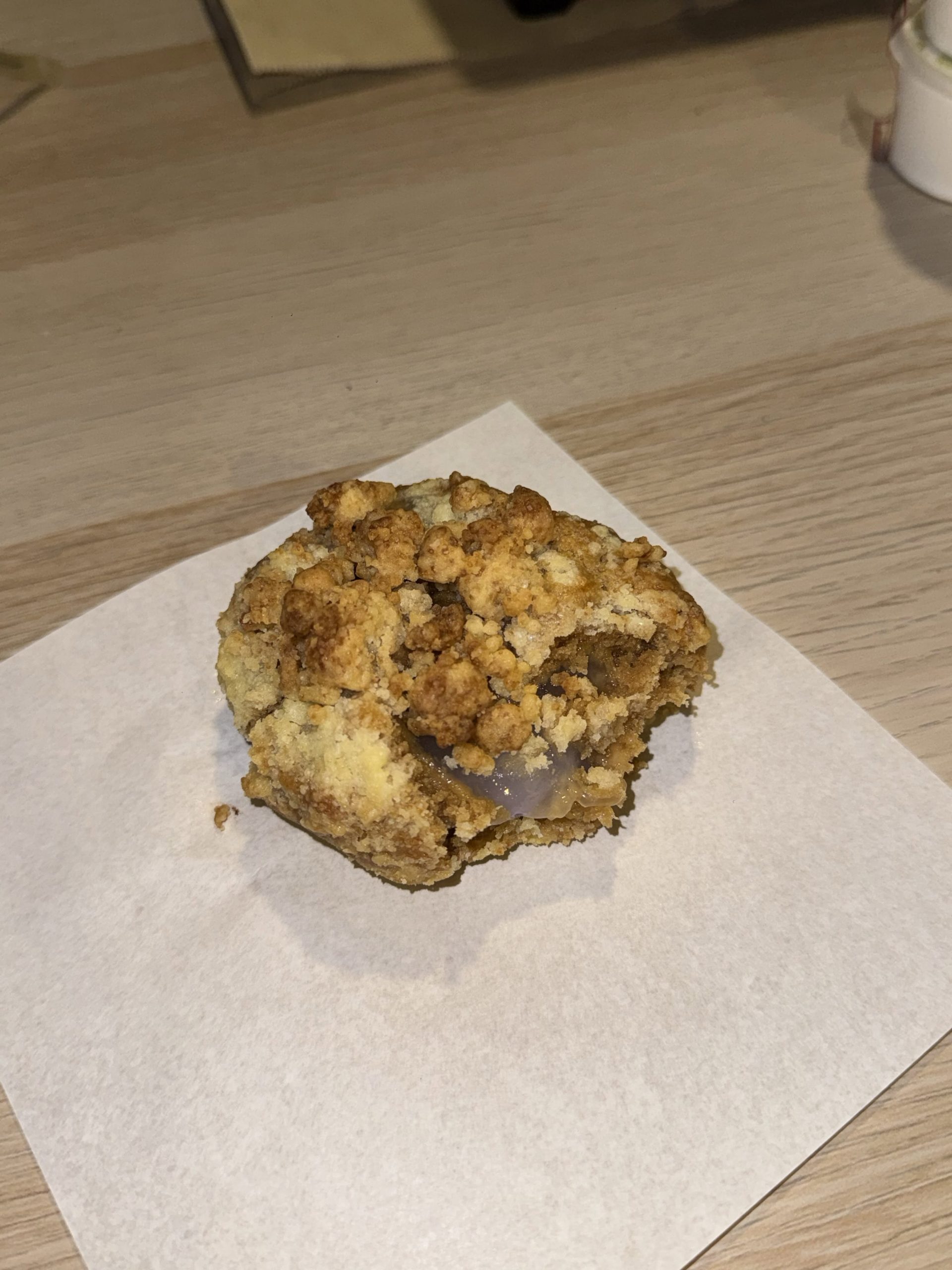
Taro and Ube Crumble Cookies are a delicious bakery-style treat combining soft, buttery cookie dough, a creamy sweet root-vegetable filling, and a golden, crunchy streusel topping.
These stuffed cookies offer a wonderful contrast of textures, with slightly crisp edges, tender centers, and a rich filling made from sweet taro or purple ube paste.
The buttery crumble topping adds an extra layer of sweetness and crunch, creating a dessert that feels like a combination of a traditional cookie, a filled pastry, and a crumb-topped cake.
Taro and ube are popular ingredients in many Asian desserts, particularly in Filipino, Taiwanese, and other Southeast and East Asian-inspired sweets.
Although they are sometimes confused because of their similar uses, taro and ube are different ingredients.
Taro has a mild, earthy, slightly nutty flavor and is typically white or pale with purple speckles.
Ube, also known as purple yam, has a naturally purple color and a sweeter, more pronounced flavor.
Both work beautifully in this cookie recipe, especially when prepared as smooth, sweetened pastes.
The filling is chilled briefly before assembly, making it easier to wrap inside the cookie dough.
The cookie dough itself is prepared with softened butter, brown sugar, granulated sugar, egg, vanilla, flour, and baking powder.
The topping is a simple streusel made with flour, brown sugar, and cold butter.
During baking, the cookie dough spreads slightly around the filling while the crumble develops a golden, crisp texture.
These cookies are perfect for afternoon tea, dessert tables, homemade bakery boxes, holiday gatherings, and thoughtful edible gifts.
With their soft centers, sweet filling, and buttery topping, Taro and Ube Crumble Cookies are a memorable alternative to ordinary cookies.
2. Origin and Cultural Significance
Taro and ube have long histories in Asian and Pacific food traditions.
Taro is a starchy root crop cultivated in many tropical and subtropical regions.
It is used in both savory and sweet preparations, including soups, steamed dishes, cakes, puddings, and sweet pastes.
In Taiwanese desserts, taro is especially popular in sweet soups, taro balls, and creamy fillings.
Ube, or purple yam, is particularly associated with Filipino cuisine.
One of the most recognizable Filipino ube desserts is ube halaya, a sweet purple yam jam commonly prepared with sugar and milk.
Ube halaya is used as a dessert on its own and as a filling or flavoring for cakes, pastries, breads, and other sweets.
The distinctive purple color of ube has also contributed to its popularity in modern bakeries and dessert cafés.
Crumble cookies, meanwhile, draw inspiration from Western baking traditions.
Streusel toppings are commonly associated with European-style cakes, muffins, pies, and pastries.
They are usually prepared by combining flour, sugar, and butter until a crumbly mixture forms.
When baked, the topping becomes golden and slightly crisp.
Taro and Ube Crumble Cookies bring these different culinary influences together.
The sweet taro or ube filling reflects Asian dessert traditions, while the buttery cookie dough and streusel topping reflect familiar Western baking techniques.
The result is a contemporary fusion dessert rather than a single traditional regional recipe.
Its appeal comes from the combination of comforting cookie flavors with the distinctive taste and texture of taro or ube.
3. Ingredients
A. For the Taro or Ube Filling
| Ingredient | Amount |
|---|---|
| Sweet taro paste or ube paste | 150 g |
Use a smooth, sweetened paste that is thick enough to shape into small balls.
Store-bought paste works well.
Alternatively, prepare a homemade version by steaming taro or ube until tender and mashing it with sugar and condensed milk until smooth and thick.
The original recipe does not specify exact quantities for homemade paste ingredients, so adjust them carefully to achieve a thick, moldable consistency.
B. For the Cookie Dough
| Ingredient | Amount |
|---|---|
| Unsalted butter, softened | ½ cup (approximately 113 g) |
| Brown sugar | ⅓ cup |
| White granulated sugar | ¼ cup |
| Large egg | 1 |
| Vanilla extract | 1 teaspoon |
| All-purpose flour | 1½ cups |
| Baking powder | ½ teaspoon |
| Salt | 1 pinch |
C. For the Crumble Topping
| Ingredient | Amount |
|---|---|
| All-purpose flour | ¼ cup |
| Brown sugar | 3 tablespoons |
| Cold unsalted butter, cubed | 2 tablespoons |
Equipment
- Large mixing bowl
- Small mixing bowl
- Electric mixer or wooden spoon
- Measuring cups and spoons
- Kitchen scale
- Baking sheet
- Parchment paper
- Spatula
- Cooling rack
Estimated yield: 10–12 medium stuffed cookies, depending on portion size.
4. Optional Additions
The basic recipe is flavorful on its own, but several optional additions can create delicious variations.
White Chocolate Chips: Add a small handful to the cookie dough for additional sweetness.
Ube Extract: Add a few drops to enhance the aroma and purple color of an ube version.
Coconut Flakes: Mix a small amount of shredded coconut into the crumble topping for a tropical flavor.
Vanilla Bean Paste: Replace vanilla extract with vanilla bean paste for a more pronounced vanilla aroma.
Brown Butter: Use cooled, softened browned butter for a deeper nutty flavor, noting that this changes the dough’s moisture balance.
Cream Cheese Filling: Add a small amount of sweetened cream cheese alongside the taro paste for a cheesecake-inspired variation.
Black Sesame Seeds: Sprinkle a few seeds over the topping for a subtle nutty contrast.
Toasted Coconut: Add toasted coconut as a garnish after baking.
Purple Sweet Potato Paste: Use thick sweetened purple sweet potato paste as an alternative filling.
Cinnamon: Add a small pinch to the crumble for gentle warmth.
These additions are optional and may change the dough’s texture, spread, or baking behavior.
For the original recipe, use only the specified taro or ube paste, cookie dough, and buttery crumble topping.
5. Tips for Success
The key to successful stuffed crumble cookies is using a thick filling that can hold its shape during assembly.
If the taro or ube paste is too soft, it may leak through the dough during baking.
Chilling the filling for 15–20 minutes makes it easier to handle.
Divide the paste into evenly sized portions so each cookie contains a similar amount of filling.
Use softened butter for the cookie dough, but avoid melting it.
Softened butter should be pliable enough to cream with sugar while still holding its shape.
Cream the butter and sugars until the mixture becomes lighter and fluffy.
After adding the flour, mix only until the dough comes together.
Overmixing can develop excess gluten and produce tougher cookies.
For the crumble topping, use cold butter.
Rub the butter into the flour and brown sugar until coarse crumbs form.
Avoid blending the topping into a smooth paste.
Keep the crumble chilled until ready to use.
When assembling the cookies, flatten the dough enough to wrap it completely around the filling.
Seal all openings carefully.
Press the crumble onto the tops rather than coating the entire cookie.
Leave enough space between cookies on the baking sheet because they may spread.
Bake until the edges are lightly golden and the topping is set.
Allow the cookies to cool on the baking sheet briefly before transferring them to a rack.
The filling will be very hot immediately after baking.
6. Step-by-Step Instructions
Part A: Preparing the Taro or Ube Filling
Step 1: Measure the Filling
Measure 150 g sweet taro paste or ube paste.
Place it in a small bowl.
Step 2: Check the Texture
The paste should be smooth, thick, and easy to shape.
Step 3: Divide the Paste
Divide the paste into approximately 10–12 equal portions.
Step 4: Shape the Filling
Roll each portion into a small ball.
Step 5: Prepare a Tray
Line a small tray or plate with parchment paper.
Step 6: Arrange the Filling Balls
Place the shaped taro or ube balls on the tray.
Leave a little space between them.
Step 7: Freeze Briefly
Transfer the tray to the freezer.
Step 8: Chill Until Firm
Freeze for approximately 15–20 minutes.
The filling should become firmer but does not need to freeze solid.
Part B: Preparing the Crumble Topping
Step 9: Measure the Flour
Place ¼ cup all-purpose flour in a small mixing bowl.
Step 10: Add the Brown Sugar
Add 3 tablespoons brown sugar.
Step 11: Combine the Dry Ingredients
Stir the flour and brown sugar together.
Step 12: Prepare the Butter
Cut 2 tablespoons cold unsalted butter into small cubes.
Step 13: Add the Butter
Place the cold butter cubes into the flour mixture.
Step 14: Rub the Butter into the Flour
Use your fingertips to gently rub the butter into the dry ingredients.
Step 15: Create Coarse Crumbs
Continue mixing until the mixture resembles coarse breadcrumbs.
Step 16: Check the Crumble Texture
The topping should contain small, irregular buttery crumbs.
Step 17: Refrigerate the Crumble
Place the bowl in the refrigerator.
Keep chilled until assembly.
Part C: Preparing the Cookie Dough
Step 18: Prepare the Butter
Measure ½ cup softened unsalted butter.
Place it in a large mixing bowl.
Step 19: Add the Brown Sugar
Add ⅓ cup brown sugar.
Step 20: Add the Granulated Sugar
Add ¼ cup white granulated sugar.
Step 21: Cream the Butter and Sugars
Beat the ingredients together using an electric mixer or wooden spoon.
Step 22: Continue Mixing
Mix until the butter and sugar mixture becomes lighter and fluffy.
Step 23: Prepare the Egg
Crack 1 large egg into a small bowl.
Step 24: Add the Egg
Pour the egg into the creamed butter mixture.
Step 25: Add the Vanilla
Add 1 teaspoon vanilla extract.
Step 26: Mix the Wet Ingredients
Beat until the egg and vanilla are fully incorporated.
Step 27: Measure the Flour
Measure 1½ cups all-purpose flour.
Step 28: Add the Baking Powder
Add ½ teaspoon baking powder to the flour.
Step 29: Add the Salt
Add a small pinch of salt.
Step 30: Combine the Dry Ingredients
Stir the flour, baking powder, and salt together.
Step 31: Add the Flour Mixture
Gradually add the dry ingredients to the butter mixture.
Step 32: Mix Gently
Stir until the ingredients begin forming a soft dough.
Step 33: Finish the Dough
Continue mixing just until no dry flour remains.
Step 34: Check the Consistency
The dough should be soft but firm enough to handle.
If it feels overly sticky, refrigerate it briefly before shaping.
Part D: Assembling the Stuffed Cookies
Step 35: Preheat the Oven
Preheat your oven to 350°F (175°C).
Step 36: Prepare the Baking Sheet
Line a baking sheet with parchment paper.
Step 37: Remove the Filling
Take the chilled taro or ube filling balls out of the freezer.
Step 38: Divide the Cookie Dough
Divide the dough into the same number of portions as the filling balls.
Step 39: Take One Dough Portion
Place one portion of cookie dough in your palm.
Step 40: Flatten the Dough
Gently press it into a thick, round disc.
Step 41: Add the Filling
Place one chilled taro or ube paste ball in the center.
Step 42: Wrap the Filling
Carefully bring the edges of the cookie dough around the filling.
Step 43: Seal the Dough
Pinch the dough together until the filling is completely enclosed.
Step 44: Shape the Cookie
Roll gently between your palms to create a rounded stuffed cookie.
Step 45: Repeat the Process
Continue shaping the remaining dough and filling portions.
Step 46: Prepare the Crumble
Remove the chilled crumble topping from the refrigerator.
Step 47: Add the Topping
Press the top of each stuffed cookie into the crumble mixture.
Step 48: Secure the Crumbs
Gently press the topping so it adheres to the cookie dough.
Step 49: Arrange on the Baking Sheet
Place the cookies on the prepared baking sheet.
Step 50: Leave Space Between Cookies
Arrange them approximately 2 inches apart.
Part E: Baking and Cooling
Step 51: Place the Cookies in the Oven
Transfer the baking sheet to the center rack of the preheated oven.
Step 52: Begin Baking
Bake at 350°F (175°C).
Step 53: Monitor the Cookies
Check the cookies after approximately 12 minutes.
Step 54: Continue Baking if Needed
Bake for approximately 12–15 minutes total, depending on cookie size and oven performance.
Step 55: Check the Edges
The cookie edges should be lightly golden.
Step 56: Check the Crumble
The streusel topping should appear set and lightly browned.
Step 57: Remove from the Oven
Carefully remove the baking sheet.
Step 58: Cool on the Baking Sheet
Allow the cookies to rest for approximately 5 minutes.
Step 59: Transfer to a Cooling Rack
Use a spatula to move the cookies to a wire rack.
Step 60: Allow the Filling to Cool
Let the cookies cool until the filling is no longer dangerously hot.
Step 61: Serve
Enjoy the cookies slightly warm or at room temperature.
Step 62: Reveal the Filling
For an attractive presentation, cut one cookie in half to show the creamy taro or ube center.
7. Description
Taro and Ube Crumble Cookies are soft, buttery stuffed cookies with a sweet, creamy filling and a crisp streusel topping.
The cookie exterior has lightly golden edges and a tender center.
Brown sugar adds a gentle caramel-like sweetness, while vanilla contributes a familiar bakery aroma.
The filling provides the distinctive flavor of taro or ube.
Taro paste offers a mild, earthy, subtly nutty taste.
Ube paste contributes a sweeter, more aromatic flavor and a naturally purple appearance.
The crumble topping adds a contrasting crunchy texture.
Its combination of flour, brown sugar, and butter creates small golden crumbs that complement the soft cookie dough.
When sliced, the cookies reveal a thick center of sweet paste surrounded by tender dough.
The finished dessert combines creamy, soft, and crisp textures in every bite.
These cookies are especially appealing when served slightly warm with tea, coffee, or milk.
8. Nutritional Information
Approximate values per cookie, assuming the recipe makes 12 cookies:
| Nutrient | Estimated Amount |
|---|---|
| Calories | 230–280 kcal |
| Protein | 3–4 g |
| Carbohydrates | 30–38 g |
| Total Fat | 11–14 g |
| Saturated Fat | 7–9 g |
| Fiber | 1–2 g |
| Sugar | 15–21 g |
| Sodium | 40–90 mg |
These values are estimates. Actual nutrition depends on the sweetness and ingredients of the taro or ube paste, the amount of butter, flour measurement, and cookie size.
9. Recipe Details
| Category | Details |
|---|---|
| Recipe Name | Taro and Ube Crumble Cookies |
| Cuisine | Asian-Inspired Fusion Baking |
| Preparation Time | 20–25 Minutes |
| Filling Freezing Time | 15–20 Minutes |
| Baking Time | 12–15 Minutes |
| Cooling Time | Approximately 10–15 Minutes |
| Total Time | Approximately 50–75 Minutes |
| Yield | 10–12 Cookies |
| Difficulty | Easy to Intermediate |
| Main Ingredients | Taro or Ube Paste, Butter, Flour, Brown Sugar |
| Cooking Method | Oven Baking |
| Course | Dessert / Sweet Snack |
| Texture | Soft, Creamy, Buttery, Crispy |
| Flavor Profile | Sweet, Nutty, Vanilla, Caramel-Like |
| Best For | Afternoon Tea, Dessert Tables, Homemade Gifts |
10. Conclusion
Taro and Ube Crumble Cookies are a delightful bakery-style dessert that combines a soft cookie exterior, a creamy sweet filling, and a crunchy streusel topping.
The recipe brings together the distinctive flavors of taro or ube with familiar ingredients such as butter, brown sugar, vanilla, and flour.
Chilling the filling makes assembly easier, while the buttery crumble adds texture and visual appeal.
The cookies bake in approximately 12–15 minutes, making them relatively quick to prepare once the dough and filling are ready.
Whether made with pale taro paste or vibrant purple ube paste, these stuffed cookies offer a beautiful and flavorful alternative to traditional cookies.
They are especially suitable for sharing, gifting, and serving alongside warm drinks.
11. Serving and Storage Recommendations
Serving Suggestions: Serve slightly warm or at room temperature with coffee, tea, or milk.
Presentation: Arrange the cookies on a serving plate and cut one in half to reveal the filling.
Room Temperature Storage: If made with a shelf-stable commercial filling and no perishable ingredients requiring refrigeration, store in an airtight container in a cool location for up to 1–2 days.
Refrigeration: For cookies made with homemade taro or ube paste containing condensed milk, refrigerate promptly and consume within approximately 3–4 days.
Freezing: Freeze fully baked and cooled cookies in an airtight freezer-safe container for up to 2 months for best quality.
Reheating: Warm refrigerated cookies briefly in a low oven until the center is pleasantly warm.
Make-Ahead: Shape the filling balls and prepare the crumble topping in advance. Keep refrigerated or frozen as appropriate until ready to assemble.
Unbaked Cookies: Stuffed cookie dough balls can be frozen on a tray, then transferred to a freezer-safe container. Bake from frozen with additional time as needed.
Food Safety: Do not leave homemade dairy-containing fillings at room temperature for extended periods. Refrigerate within 2 hours, or within 1 hour when temperatures exceed 90°F (32°C).
12. Embracing Healthful Indulgence
Taro and Ube Crumble Cookies combine familiar baking ingredients with root vegetables commonly used in Asian desserts.
Taro contains carbohydrates, dietary fiber, and minerals such as potassium.
Ube also provides carbohydrates and naturally occurring plant pigments responsible for its purple color.
However, when prepared as sweetened pastes, both ingredients can contribute substantial added sugar.
The cookie dough and crumble topping contain butter and sugar, making these cookies a rich dessert rather than an everyday nutritional staple.
For a more moderate serving, enjoy one cookie alongside fresh fruit or an unsweetened beverage.
Using a less-sweet homemade taro or ube paste can help reduce the overall sweetness, although changing the filling may affect its texture.
The cookies can also be made slightly smaller for portion-controlled treats.
Their appeal lies in the balance of flavors and textures rather than any particular health claim.
With their soft buttery dough, creamy taro or ube filling, and golden streusel topping, these crumble cookies offer a delicious way to enjoy Asian-inspired flavors in a comforting homemade dessert.