
1. Introduction
Traditional Golden-Baked Semolina Cake is a delicious homemade dessert characterized by its beautiful golden-brown surface, soft interior, and rich, comforting flavor.
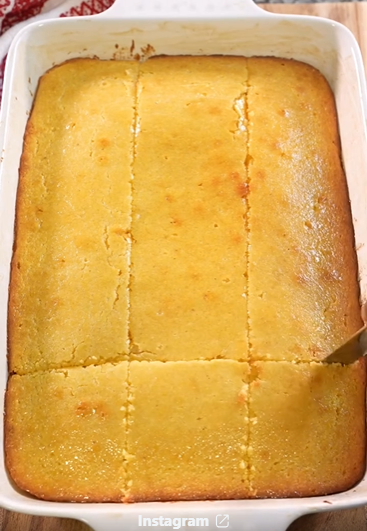
As shown in the photograph, the cake is baked in a rectangular ceramic dish and divided into generous square portions. Its smooth golden crust and slightly glossy surface give it an appealing homemade appearance.
This cake resembles a traditional semolina-based dessert, similar to basbousa, although its exact ingredients cannot be confirmed from the photograph alone.
Prepared using simple baking ingredients such as semolina, flour, eggs, milk, sugar, and butter, this dessert is suitable for breakfast, afternoon tea, family gatherings, and special occasions.
2. Origin
Semolina-based cakes have a long history in Mediterranean, Middle Eastern, and North African culinary traditions.
One particularly popular example is Basbousa, a traditional sweet cake made primarily with semolina, sugar, yogurt, and butter or ghee.
Basbousa is widely enjoyed in Egypt, the Levant, and other parts of the Middle East and North Africa. Different regions prepare their own variations, sometimes adding coconut, almonds, orange blossom water, or sugar syrup.
In Morocco, similar semolina-based sweets are appreciated alongside traditional tea and coffee.
The rectangular baked version shown in the photograph reflects the convenient preparation of homemade cakes in ovenproof baking dishes.
3. Cultural Significance
Golden-baked cakes hold an important place in family food traditions across Mediterranean and North African communities.
Their cultural significance includes:
- Family gatherings: Homemade cakes are frequently prepared for family visits and celebrations.
- Hospitality: Sweet baked goods are commonly offered to guests alongside tea or coffee.
- Traditional baking: Semolina-based desserts preserve recipes and techniques passed between generations.
- Regional identity: Different countries incorporate local ingredients and flavorings into their traditional cakes.
- Celebrations: Sweet semolina cakes are popular during religious holidays, weddings, and festive occasions.
In Moroccan food culture, homemade sweets are particularly associated with hospitality and the tradition of sharing food with family and guests.
4. Ingredients and Quantity
Estimated quantities for one rectangular baking dish, approximately 8–10 servings.
Basbousa (Semolina Syrup Cake) with Orange Blossom — Zaffaron
| Ingredient | Quantity |
|---|---|
| Fine semolina | 250 g |
| All-purpose flour | 100 g |
| Granulated sugar | 150 g |
| Plain yogurt | 200 g |
| Milk | 100 ml |
| Eggs | 2 large |
| Unsalted melted butter | 100 g |
| Vegetable oil | 50 ml |
| Baking powder | 2 teaspoons |
| Vanilla extract | 1 teaspoon |
| Salt | A small pinch |
| Lemon zest | 1 teaspoon |
Optional ingredients for the syrup
| Ingredient | Quantity |
|---|---|
| Sugar | 100 g |
| Water | 120 ml |
| Lemon juice | 1 teaspoon |
| Orange blossom water | ½ teaspoon |
These measurements are a suggested semolina-cake recipe inspired by the photograph, not a verified ingredient list.
5. Optional Additions
You can customize this cake with different ingredients to enhance its flavor, aroma, and texture.
- Desiccated coconut: Adds a pleasant tropical flavor and additional texture.
- Ground almonds: Provide richness and a delicate nutty taste.
- Chopped pistachios: Add color and a distinctive flavor.
- Orange zest: Introduces a refreshing citrus aroma.
- Orange blossom water: Provides a traditional North African and Middle Eastern fragrance.
- Rose water: Creates a delicate floral flavor.
- Honey: Adds natural sweetness and a distinctive aroma.
- Cinnamon: Introduces warmth and depth.
- Raisins: Add small pockets of natural sweetness.
- Sesame seeds: Provide a lightly toasted nutty flavor.
For a more traditional basbousa-inspired variation, decorate the surface with whole almonds before baking.
6. Tips for Success
- Choose the correct semolina: Fine or medium semolina produces a more consistent cake texture.
- Measure ingredients accurately: Maintaining the correct ratio of wet and dry ingredients helps prevent a dry cake.
- Avoid overmixing: Mix until the ingredients are just combined.
- Allow the batter to rest: A short resting period allows the semolina to absorb moisture.
- Prepare the baking dish: Grease the dish with butter or oil to prevent sticking.
- Spread evenly: Level the batter to ensure uniform baking.
- Monitor the oven temperature: Bake at a moderate temperature to avoid excessive browning.
- Check the center: Insert a toothpick into the middle; it should come out without wet batter.
- Allow sufficient cooling: Resting helps the cake firm up before cutting.
- Use syrup carefully: If preparing a syrup-soaked variation, add it gradually to avoid making the cake excessively wet.
7. Instructions
Ravani or Revani Recipe | Greek Semolina Cake With Syrup | Mamazilla
Semolina Cake – Basbousa – ByLena.com
9
Step 1: Prepare the dry ingredients
In a large mixing bowl, combine semolina, flour, sugar, baking powder, and a small pinch of salt.
Mix thoroughly to distribute the ingredients evenly.
Step 2: Prepare the wet ingredients
In another bowl, whisk the eggs, yogurt, milk, melted butter, vegetable oil, and vanilla extract until smooth.
Step 3: Combine the mixtures
Gradually pour the wet ingredients into the dry ingredients.
Stir gently until a smooth, thick batter forms.
Step 4: Allow the batter to rest
Leave the batter for approximately 10–15 minutes to allow the semolina to absorb some of the moisture.
Step 5: Prepare the baking dish
Lightly grease a rectangular ovenproof dish with butter or vegetable oil.
Pour the prepared batter into the dish and spread it evenly using a spatula.
Step 6: Preheat the oven
Preheat the oven to 180°C (350°F).
Step 7: Bake the cake
Place the baking dish in the center of the oven.
Bake for approximately 30–40 minutes, or until the surface develops a beautiful golden-brown color and the center is fully cooked.
Step 8: Prepare the optional syrup
While the cake is baking, combine sugar and water in a small saucepan.
Bring to a gentle boil and simmer for approximately 5–7 minutes.
Add lemon juice and orange blossom water, then allow the syrup to cool slightly.
Step 9: Finish the cake
If making a syrup-soaked version, pour the syrup gradually over the warm cake.
For the drier, cake-like appearance shown in the photograph, omit the syrup or use only a small amount.
Step 10: Cut and serve
Allow the cake to cool before cutting it into evenly sized rectangular or square portions.
Serve directly from the baking dish or arrange the pieces on a decorative serving plate.
8. Description
The cake displayed in the photograph has an attractive golden-yellow to golden-brown surface with a smooth, slightly glossy finish.
It is baked in a rectangular ceramic dish and divided into large square portions using straight cuts.
The edges appear slightly darker than the center, suggesting an evenly baked exterior with gentle caramelization.
Its appearance is characteristic of a simple homemade semolina-style cake, although the precise texture and composition of the interior cannot be established from the photograph.
Texture and flavor profile:
- Exterior: Golden brown, lightly firm, and slightly caramelized.
- Interior: Expected to be soft, tender, and moist.
- Flavor: Mildly sweet with a buttery, cereal-like taste.
- Aroma: Warm baked semolina, vanilla, and butter.
- Appearance: Rectangular, evenly baked, and cut into generous portions.
The cake’s simple presentation makes it suitable for everyday enjoyment as well as special occasions.
9. Nutritional Information
Estimated nutrition
The following nutritional values are approximate, based on the suggested recipe without optional syrup and divided into 10 servings.
| Nutritional component | Per serving |
|---|---|
| Calories | 300–350 kcal |
| Protein | 5–7 g |
| Carbohydrates | 38–45 g |
| Total fat | 13–17 g |
| Saturated fat | 6–9 g |
| Dietary fiber | 1–2 g |
| Sugar | 16–21 g |
| Sodium | 150–220 mg |
Nutritional considerations:
- Semolina provides carbohydrates and some protein.
- Eggs contribute protein and essential nutrients.
- Yogurt supplies calcium and additional protein.
- Butter contributes fat and richness.
- Sugar provides sweetness and increases the dessert’s energy content.
- Almonds and coconut can contribute additional fiber and nutrients when included.
For a lighter version, reduce the sugar, use less butter, and replace some of the refined flour with whole-wheat flour.
10. Conclusion
Traditional Golden-Baked Semolina Cake is a simple yet delicious homemade dessert that combines accessible baking ingredients with a beautiful golden appearance.
Its soft texture, mildly sweet flavor, and attractive rectangular presentation make it suitable for family meals, afternoon refreshments, and festive occasions.
The recipe is versatile and can be adapted with coconut, almonds, citrus zest, or traditional aromatic ingredients.
Whether served plain or lightly sweetened with syrup, this cake offers a comforting homemade dessert inspired by Mediterranean and North African baking traditions.
11. Recommendation
I recommend serving the cake at room temperature or slightly warm to appreciate its soft texture and buttery flavor.
It pairs particularly well with:
- Moroccan mint tea.
- Black coffee.
- Freshly brewed green tea.
- Plain yogurt.
- Fresh orange slices.
- Strawberries or other seasonal fruits.
- A light drizzle of honey.
For a more elegant presentation, cut the cake into uniform squares and garnish each piece with chopped almonds or a little powdered sugar.
If you prefer traditional Moroccan and Middle Eastern flavors, add orange blossom water and a light sugar syrup.
For the cake-like appearance shown in the photograph, however, I recommend keeping the syrup minimal.
12. Embracing Healthful Indulgence
Homemade semolina cake can be enjoyed as part of a balanced eating pattern when portion sizes and ingredients are considered.
Although it contains semolina, eggs, and yogurt, it remains a sweet dessert because of its added sugar and butter.
To create a more nutritious variation:
- Reduce the added sugar.
- Use plain yogurt instead of additional cream.
- Moderate the quantity of butter.
- Add ground almonds for additional nutrients.
- Incorporate orange zest for natural fragrance.
- Serve smaller portions alongside fresh fruit.
- Avoid excessive sugar syrup.
The objective is to preserve the traditional taste and enjoyable texture while making thoughtful ingredient choices.
Final Recommendation: This golden-baked semolina cake is an excellent choice for homemade dessert lovers. Its simple preparation, attractive golden crust, and versatile flavor make it ideal for serving with Moroccan mint tea or coffee. For a balanced approach, enjoy a moderate portion with fresh fruit and adjust the sugar and butter according to your preferences.