
Prep Time: 30 minutes Bake Time: 28–35 minutes Cooling and Decorating Time: 1–2 hours Total Time: Approximately 2½–3 hours Servings: 10–12 slices Difficulty: Easy to Intermediate Category: Dessert, Layer Cake, Summer Baking
1. Introduction
The Ultimate Lemon Blueberry Chamomile Cake is a refreshing and elegant dessert that celebrates the delicate flavors of citrus, fresh berries, and floral-inspired decoration. Featuring a soft, lemon-infused sponge generously studded with juicy blueberries, this beautiful cake offers a delightful balance of sweetness and tanginess.
Each layer is exceptionally moist, thanks to the addition of Greek yogurt and vegetable oil, while fresh lemon zest and juice create a bright, refreshing flavor. The blueberries introduce natural sweetness and bursts of fruity goodness throughout the tender crumb.
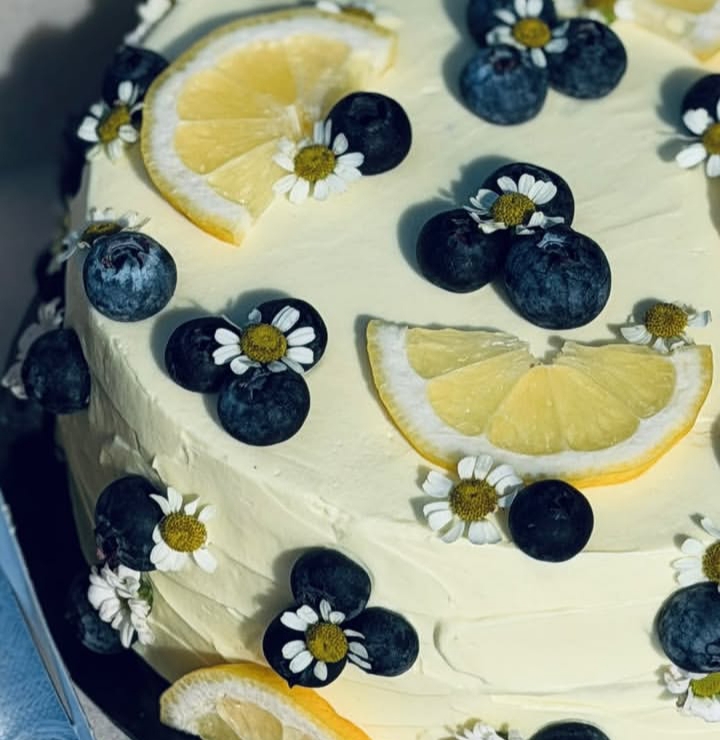
A smooth vanilla buttercream frosting provides a creamy contrast to the tangy sponge, while fresh blueberries, thin lemon slices, and delicate chamomile flowers create a charming, garden-inspired presentation.
Perfect for spring celebrations, summer gatherings, birthdays, afternoon tea, or special occasions, this cake brings together simple ingredients and beautiful natural decorations to create a memorable homemade dessert.
2. Origin and Cultural Significance
Lemon and blueberry cakes are inspired by longstanding European and North American baking traditions, where seasonal fruits and citrus ingredients have been incorporated into cakes, pastries, and sweet breads for generations.
Lemons have been valued in baking for their fragrant zest and distinctive acidity, which helps balance sweetness and adds freshness to rich desserts.
Blueberries are particularly associated with North American cuisine, where they have traditionally been used in muffins, pies, pancakes, cobblers, and cakes.
The combination of lemon and blueberry became especially popular in modern home baking because the tartness of lemon complements the natural sweetness of ripe blueberries.
Chamomile adds another layer of cultural significance. Historically appreciated in many European herbal traditions, chamomile is commonly associated with herbal teas, gentle floral aromas, and botanical preparations.
In contemporary baking, edible flowers are also used to create natural, visually appealing decorations inspired by cottage gardens and seasonal landscapes.
Although the Lemon Blueberry Chamomile Cake does not have one specific documented origin, it represents a modern fusion of classic fruit-based baking and botanical cake decoration.
Its refreshing flavor and delicate appearance make it particularly suitable for garden parties, bridal showers, spring celebrations, and elegant afternoon gatherings.
3. Ingredients and Quantities
A. For the Lemon Blueberry Sponge
- 2 cups + 1 tablespoon all-purpose flour, divided
- 1½ teaspoons baking powder
- ½ teaspoon baking soda
- ½ teaspoon salt
- 1¼ cups granulated sugar
- Zest of 2 large lemons
- ¼ cup (60 ml) fresh lemon juice
- 1 cup (240 g) plain Greek yogurt or sour cream
- 1 cup (240 ml) neutral vegetable or canola oil
- 3 large eggs, at room temperature
- 1 teaspoon pure vanilla extract
- 1 cup fresh blueberries
Why Use Greek Yogurt?
Greek yogurt adds moisture and a slight tanginess to the sponge. Its acidity also reacts with baking soda, helping create a tender cake texture.
Why Use Fresh Lemon Zest?
Lemon zest contains aromatic oils that provide a vibrant citrus fragrance. Combined with fresh lemon juice, it creates a more pronounced and natural lemon flavor.
Why Toss Blueberries in Flour?
Coating blueberries with a small quantity of flour can help distribute them through the batter, although it does not completely prevent sinking.
B. For the Smooth Vanilla Frosting
- ½ cup (113 g) unsalted butter, softened
- 2 cups (approximately 240 g) powdered sugar, sifted
- 1 teaspoon pure vanilla extract
- 1–2 teaspoons milk, as needed
Alternative: Replace the vanilla buttercream with lemon cream cheese frosting for a tangier, slightly less sweet flavor.
This frosting quantity is best for a relatively thin coating. For a generously frosted double-layer cake with completely covered sides, prepare approximately 1½–2 times the frosting recipe.
C. For the Artistic Toppings
- ½ cup fresh blueberries
- 1 fresh lemon, sliced into thin half-moons
- Fresh culinary-grade chamomile flowers, carefully cleaned and dried
Use only chamomile flowers specifically sold as edible and suitable for culinary use. Avoid florist flowers or plants treated with pesticides.
4. Optional Additions
The Lemon Blueberry Chamomile Cake can be customized with additional ingredients to enhance its flavor, aroma, and presentation.
Lemon Curd Filling: Spread a thin layer of lemon curd between the sponge layers for a more intense citrus flavor.
Cream Cheese Frosting: Replace vanilla buttercream with cream cheese frosting to introduce a pleasant tanginess.
Chamomile-Infused Frosting: Steep food-grade chamomile in a small quantity of warm milk, strain thoroughly, cool completely, and use a little of the infusion in the frosting for a subtle floral flavor.
White Chocolate: Add finely chopped white chocolate to the batter or use white chocolate curls for decoration.
Fresh Raspberries: Combine blueberries with raspberries for an additional fruity contrast.
Honey: Add a small drizzle of honey between the layers for a delicate floral sweetness.
Almond Extract: Add ¼ teaspoon of almond extract to complement the lemon and blueberry flavors.
Lemon Glaze: Drizzle a light glaze made from powdered sugar and fresh lemon juice over the cake for extra citrus brightness.
5. Tips for Success
Use fresh lemons: Freshly squeezed lemon juice and finely grated zest provide a cleaner, brighter flavor than many bottled alternatives.
Bring ingredients to room temperature: Eggs and Greek yogurt at room temperature combine more easily with the other ingredients.
Rub lemon zest into sugar: Massaging the zest into granulated sugar releases fragrant citrus oils and intensifies the lemon aroma.
Measure flour accurately: Too much flour can make the cake dense or dry. Use a kitchen scale when possible.
Do not overmix the batter: Mix gently once the flour is added. Excessive mixing can produce a tougher sponge.
Dry the blueberries: Wash and thoroughly dry fresh blueberries before coating them in flour and incorporating them into the batter.
Fold blueberries gently: Use a silicone spatula to prevent crushing the berries and discoloring the batter.
Avoid overbaking: Check the cakes near the end of the baking time. A toothpick inserted into the sponge should come out clean or with a few moist crumbs.
Cool completely before frosting: Warm cake layers can melt buttercream and make decorating difficult.
Decorate close to serving: Fresh lemon slices can release moisture, so adding them shortly before serving helps maintain the frosting’s appearance.
6. Step-by-Step Instructions
Step 1: Prepare the Oven and Cake Pans
Preheat the oven to 350°F (175°C).
Grease two 8-inch (20 cm) round cake pans with butter or nonstick baking spray.
Line the bottoms of both pans with parchment paper to ensure easy removal.
Lightly dust the sides with flour if desired.
Set the prepared cake pans aside.
Step 2: Prepare the Lemon Sugar
Place the granulated sugar into a large mixing bowl.
Finely grate the zest of two large lemons directly over the sugar, avoiding the bitter white pith.
Using clean fingertips, gently rub the lemon zest into the sugar for approximately 1–2 minutes.
Continue until the sugar becomes fragrant and slightly moist.
This process releases the aromatic oils from the lemon zest and distributes them evenly throughout the sugar.
Step 3: Combine the Dry Ingredients
In a separate bowl, whisk together the 2 cups of all-purpose flour, baking powder, baking soda, and salt.
Reserve the additional tablespoon of flour for coating the blueberries.
Mix the dry ingredients thoroughly to ensure the leavening agents are evenly distributed.
Set aside.
Step 4: Mix the Wet Ingredients
Add the eggs to the bowl containing the fragrant lemon sugar.
Whisk until the mixture becomes smooth and slightly lighter in color.
Add the Greek yogurt, vegetable oil, freshly squeezed lemon juice, and vanilla extract.
Whisk until everything is thoroughly combined.
The mixture should appear smooth, creamy, and lightly fragrant with lemon.
Step 5: Combine the Wet and Dry Mixtures
Gradually add the dry ingredients to the wet mixture.
Using a silicone spatula or electric mixer on low speed, gently mix until the flour is incorporated.
Scrape the sides and bottom of the bowl to ensure an even consistency.
Avoid overmixing, as this can produce a dense or tough cake.
The finished batter should be smooth and moderately thick.
Step 6: Prepare and Add the Blueberries
Wash the fresh blueberries and pat them completely dry with paper towels.
Place the blueberries in a small bowl.
Sprinkle them with the reserved tablespoon of all-purpose flour and toss gently until lightly coated.
Add the blueberries to the prepared cake batter.
Using a silicone spatula, fold them in gently, taking care not to crush the berries.
Distribute the blueberries as evenly as possible throughout the mixture.
Step 7: Bake the Cake Layers
Divide the batter evenly between the two prepared cake pans.
Smooth the tops using an offset spatula or the back of a spoon.
Place the pans on the center rack of the preheated oven.
Bake for approximately 28–35 minutes, or until the tops are lightly golden and the centers are fully set.
Insert a toothpick into the center of each cake, avoiding any visible blueberry.
The cakes are ready when the toothpick comes out clean or with a few moist crumbs attached.
Remove from the oven and let the cakes cool inside their pans for approximately 10–15 minutes.
Carefully transfer them to a wire rack and allow them to cool completely.
Step 8: Prepare the Vanilla Buttercream Frosting
Place the softened unsalted butter into a large mixing bowl.
Using an electric hand mixer or stand mixer, beat the butter on medium speed for approximately 2–3 minutes until smooth and creamy.
Gradually add the sifted powdered sugar in small portions.
Mix on low speed initially to prevent the sugar from scattering.
Once incorporated, add the vanilla extract.
Continue beating until the frosting becomes light and fluffy.
Add milk, one teaspoon at a time, until the desired consistency is achieved.
The finished frosting should be smooth, creamy, and firm enough to hold its shape when spread over the cake.
Step 9: Level the Cake Layers
Once the sponge layers have cooled completely, place them on a flat working surface.
If the cakes have developed domed tops, carefully trim them using a serrated knife or cake leveler.
Create flat, even surfaces so the layers stack securely.
For easier handling, refrigerate the cooled cakes for approximately 20–30 minutes before assembling.
Step 10: Assemble the Lemon Blueberry Cake
Place the first cake layer onto a serving plate or cake board.
Spread an even layer of vanilla buttercream over the top using an offset spatula.
Smooth the frosting toward the edges.
Carefully position the second cake layer on top, ensuring that it is centered.
Press down very gently to secure the layers without squeezing out the filling.
Check that the cake is level before continuing.
Step 11: Apply the Crumb Coat
Spread a thin layer of frosting over the entire cake, including the top and sides.
Use an offset spatula to fill any gaps between the layers.
This first coating helps trap loose cake crumbs and creates a smooth base for the final frosting.
Place the cake in the refrigerator for approximately 20–30 minutes, allowing the crumb coat to firm up.
Step 12: Create the Smooth Frosting Finish
Remove the chilled cake from the refrigerator.
Spread the remaining frosting evenly over the top and sides.
Using an offset spatula or cake scraper, gently smooth the frosting while rotating the cake on a turntable.
For a clean finish, hold the scraper vertically against the sides and rotate the turntable slowly.
Repeat until the frosting becomes smooth and even.
Use a clean offset spatula to refine the top surface and gently pull excess frosting inward to create neat upper edges.
Refrigerate briefly if the frosting becomes too soft.
Step 13: Prepare the Decorative Toppings
Wash the fresh blueberries and pat them completely dry.
Cut the fresh lemon into thin, attractive half-moon slices.
Carefully inspect the chamomile flowers, ensuring they are culinary-grade, clean, and free from insects or damaged petals.
Gently dry the flowers so they do not introduce excess moisture onto the frosting.
Arrange the decorative ingredients on a clean plate before placing them on the cake.
Step 14: Decorate the Cake
Begin by arranging the thin lemon slices decoratively over one section of the cake’s surface.
Place fresh blueberries around the lemon slices, allowing some to form small clusters.
Add the edible chamomile flowers between the fruit elements to create a delicate, garden-inspired arrangement.
Keep some areas of the frosting visible to preserve the cake’s clean and elegant appearance.
For a more artistic presentation, concentrate the decorations along one side or in a gentle crescent shape.
Avoid overcrowding the top with excessive fruit or flowers.
Step 15: Chill and Serve
Refrigerate the decorated cake for approximately 20–30 minutes to help stabilize the frosting.
Before serving, allow the cake to stand at room temperature for approximately 15–20 minutes, depending on the surrounding temperature.
Slice using a sharp knife, wiping the blade clean between cuts.
Serve on individual dessert plates, optionally accompanied by fresh berries, herbal tea, or a light beverage.
7. Description
The Ultimate Lemon Blueberry Chamomile Cake is a beautifully balanced dessert featuring soft, moist lemon sponge layers filled with juicy, naturally sweet blueberries.
The sponge has a tender crumb and a refreshing citrus fragrance, enhanced by fresh lemon zest and juice.
Greek yogurt contributes moisture and a delicate tang, while vegetable oil helps maintain the cake’s soft texture.
A smooth vanilla buttercream frosting surrounds the layers, providing a sweet, creamy contrast to the bright lemon and fruity blueberries.
The exterior is elegantly decorated with fresh lemon slices, plump blueberries, and delicate edible chamomile flowers.
These natural decorations give the cake a fresh, botanical appearance reminiscent of a summer garden.
The combination of pale frosting, vibrant yellow lemon slices, deep blue berries, and soft floral details creates a visually striking centerpiece.
Each slice offers a harmonious blend of citrus freshness, delicate sweetness, fruity flavor, and creamy frosting.
8. Nutritional Information
Estimated Nutritional Values per Serving (Based on 12 Slices):
| Nutrient | Approximate Amount |
|---|---|
| Calories | 500–580 kcal |
| Protein | 5–8 g |
| Carbohydrates | 55–68 g |
| Total Fat | 29–34 g |
| Saturated Fat | 6–9 g |
| Sugar | 37–46 g |
| Fiber | 1–3 g |
| Sodium | 220–350 mg |
Note: These nutritional values are estimates. Actual values depend on ingredient brands, yogurt fat content, frosting quantity, and portion sizes.
Healthier Preparation Alternatives
Reduce the Frosting: Apply a thinner layer of buttercream to decrease the sugar and fat content.
Use Reduced-Fat Greek Yogurt: Plain reduced-fat Greek yogurt can help lower the fat content while preserving a moist cake texture.
Adjust the Sugar: A modest reduction in the granulated sugar may be possible, although larger changes can affect moisture, browning, and structure.
Include More Fresh Fruit: Serve smaller cake slices alongside extra blueberries or other fresh berries.
Moderate Portions: Because the cake contains a substantial amount of oil and sugar, smaller portions can provide a satisfying dessert while reducing total calorie intake.
9. Conclusion
The Ultimate Lemon Blueberry Chamomile Cake is a delightful combination of refreshing citrus flavors, juicy berries, soft sponge layers, and creamy vanilla frosting.
Its elegant floral decoration makes it especially appealing for celebrations and seasonal gatherings.
The recipe relies on familiar baking ingredients, but attention to preparation techniques helps produce a cake with a moist crumb, balanced flavor, and beautiful presentation.
Fresh lemon zest enhances the citrus fragrance, while blueberries add color, sweetness, and naturally occurring fruit juices.
The vanilla frosting completes the dessert with a smooth and creamy finish, and the edible chamomile flowers introduce a charming botanical detail.
Whether prepared for a birthday, an afternoon tea gathering, a garden party, or a summer family celebration, this cake offers a refreshing alternative to heavier chocolate-based desserts.
10. Recommendation
For the best flavor, use fresh lemons, ripe blueberries, and good-quality vanilla extract.
Greek yogurt is particularly recommended because it contributes moisture and a pleasant tanginess that complements the citrus flavor.
Use neutral vegetable oil to maintain a tender sponge without introducing competing flavors.
When incorporating the blueberries, toss them lightly in flour and fold them into the batter gently to minimize crushing.
For the smoothest frosting, ensure the butter is properly softened and the powdered sugar is sifted before mixing.
If you prefer a tangier flavor profile, lemon cream cheese frosting is an excellent alternative to vanilla buttercream.
For a visually elegant finish, decorate the cake with fresh lemon slices, blueberry clusters, and small culinary-grade chamomile flowers arranged naturally rather than symmetrically.
Storage Recommendation: Store the cake in an airtight container in the refrigerator for approximately 3–4 days. For the freshest appearance, add lemon slices and edible flowers shortly before serving.
Flower Safety: Chamomile may cause allergic reactions in individuals sensitive to plants in the Asteraceae family, including ragweed and daisies. Use only verified edible flowers, and omit them when serving anyone with a relevant allergy.
11. Embracing Healthful Indulgence
The Ultimate Lemon Blueberry Chamomile Cake demonstrates how a homemade dessert can combine indulgent flavors with naturally vibrant ingredients.
Blueberries contribute dietary fiber, vitamin K, and naturally occurring plant compounds, including anthocyanins, which are responsible for their characteristic blue-purple color.
Lemons provide vitamin C and aromatic citrus compounds, although the amount of vitamin C retained in the baked cake depends on preparation and baking conditions.
Greek yogurt contributes protein and calcium while helping create a moist and tender crumb.
However, the cake also contains significant quantities of added sugar and fat, primarily from the granulated sugar, vegetable oil, butter, and frosting.
A balanced approach to enjoying this dessert involves mindful portion sizes, variety in the overall diet, and appreciation of homemade food.
Reducing the amount of frosting, using smaller slices, and pairing the dessert with additional fresh fruit can make it easier to incorporate into a balanced eating pattern.
The cake’s fresh lemon aroma and juicy blueberries provide substantial flavor, allowing even moderate portions to feel satisfying.
Preparing desserts at home also offers greater control over ingredient quality, sweetness, and decoration.
The use of fresh fruit and carefully selected edible flowers encourages creativity while celebrating seasonal ingredients.
Ultimately, healthful indulgence is not about eliminating enjoyable desserts, but about appreciating them in moderation as part of a varied and nutritious lifestyle.
Final Thought: 🍋🫐🌼 With its soft lemon-infused sponge, juicy blueberries, silky vanilla frosting, and delicate chamomile decorations, the Ultimate Lemon Blueberry Chamomile Cake is a refreshing and elegant celebration of seasonal flavors. Beautifully presented and wonderfully aromatic, it is a memorable dessert for sharing with family and friends.