
Prep Time: 5 minutes Cook Time: 10 minutes Total Time: 15 minutes Servings: 2 Difficulty: Easy Category: Soup, Comfort Food, Asian-Inspired Cuisine
1. Introduction
Egg Drop Noodle Soup is a comforting, flavorful dish that combines tender noodles, delicate ribbons of beaten egg, and a warm, savory broth. Simple yet satisfying, this homemade soup is perfect for chilly evenings, quick lunches, light dinners, or whenever you crave something soothing and delicious.
The beauty of this recipe lies in its simplicity. A fragrant broth seasoned with soy sauce, sesame oil, ginger, and garlic forms the foundation of the dish, while soft noodles provide a hearty and satisfying texture.
The signature feature is the silky egg ribbons, created by slowly pouring beaten eggs into gently simmering broth. This technique produces delicate strands of egg that float beautifully throughout the soup.
Finished with freshly sliced green onions, this nourishing bowl offers a delightful balance of savory flavors, comforting warmth, and satisfying textures.
Ready in just 15 minutes, Egg Drop Noodle Soup is an excellent choice for busy days when you want a delicious homemade meal without spending hours in the kitchen.
2. Origin and Cultural Significance
Egg drop soup has its roots in Chinese cuisine, where it is commonly known as dan hua tang, meaning “egg flower soup.”
The name refers to the delicate, flower-like patterns created when beaten eggs are poured into hot broth.
Traditional Chinese egg drop soup generally consists of a light broth, beaten eggs, and simple seasonings. Variations may include vegetables, tofu, mushrooms, or other ingredients.
The addition of noodles transforms this classic soup into a more substantial meal, combining the traditional egg-drop technique with the broader Asian culinary tradition of noodle soups.
Noodles have played an important role in Chinese food culture for centuries and are often associated with nourishment, hospitality, and longevity, particularly when served as long noodles during celebrations.
Although Egg Drop Noodle Soup does not have one universally recognized historical origin as a specific dish, it represents a modern adaptation of these established culinary traditions.
Today, it is appreciated for its affordability, simplicity, versatility, and comforting qualities.
3. Ingredients and Quantities
A. For the Savory Broth
- 4 cups (960 ml) low-sodium chicken broth or vegetable broth
- 1 tablespoon (15 ml) soy sauce
- 1 teaspoon (5 ml) sesame oil
- ½ teaspoon ground ginger, or 1 teaspoon freshly minced ginger
- ¼ teaspoon garlic powder
- Salt, to taste
- White pepper, to taste
Why Use Low-Sodium Broth?
Low-sodium broth allows better control over the soup’s saltiness, particularly because soy sauce also contributes sodium and savory flavor.
Why Add Sesame Oil?
Sesame oil introduces a distinctive nutty aroma that complements the ginger, garlic, and soy sauce.
B. For the Noodles and Egg Ribbons
- 2 bundles ramen noodles, thin egg noodles, or instant noodles (approximately 120–170 g total, depending on the type)
- 3 large eggs, thoroughly whisked
- 1½ tablespoons cornstarch
- 2 tablespoons (30 ml) cold water
Why Use Cornstarch?
Cornstarch gently thickens the broth, helping give the soup a smooth texture and allowing the delicate egg ribbons to remain suspended rather than sinking immediately.
Why Whisk the Eggs Thoroughly?
Well-beaten eggs create more uniform, delicate ribbons when introduced into hot broth.
C. For the Garnish
- 2 stalks green onions (scallions), thinly sliced
- Additional white pepper, if desired
- A few drops of sesame oil, optional
4. Optional Additions
Egg Drop Noodle Soup is highly customizable and can be adapted with different proteins, vegetables, and seasonings.
Shredded Chicken: Add ½ cup of cooked shredded chicken for additional protein and a heartier meal.
Fresh Mushrooms: Include thinly sliced shiitake, button, or oyster mushrooms to introduce an earthy flavor.
Baby Spinach: Stir in a handful of fresh spinach during the final minute of cooking for additional color and nutrients.
Sweet Corn: Add ¼ cup of sweet corn kernels for natural sweetness and texture.
Soft Tofu: Include small cubes of soft tofu for a delicate texture and extra plant-based protein.
Chili Oil: Drizzle a small amount over the finished soup for a spicy, aromatic variation.
Fresh Garlic: Replace garlic powder with finely minced fresh garlic for a stronger aromatic flavor.
Bok Choy: Add chopped baby bok choy to introduce a mild, slightly sweet vegetable element.
Sesame Seeds: Sprinkle toasted sesame seeds over the soup for additional nuttiness.
5. Tips for Success
Use a flavorful broth: Since broth is the foundation of the soup, choose a good-quality chicken or vegetable broth.
Keep the broth at a gentle simmer: Excessively vigorous boiling can break the egg into small pieces instead of producing long, delicate ribbons.
Whisk the eggs completely: Thoroughly beaten eggs create a smoother, more consistent texture.
Add the eggs slowly: Pour the beaten eggs in a thin, steady stream to achieve the signature egg ribbons.
Control the stirring: Stirring the broth gently before adding the eggs helps create graceful strands. Stirring too aggressively breaks them into tiny fragments.
Mix cornstarch with cold water: Adding cornstarch directly to hot soup can create lumps. Always prepare a smooth slurry first.
Do not overcook the noodles: Noodles continue absorbing broth after cooking, so avoid leaving them simmering longer than necessary.
Adjust seasoning carefully: Taste the broth before adding extra salt, as soy sauce already provides saltiness.
Serve immediately: The soup tastes best while the noodles are tender and the egg ribbons remain soft.
6. Step-by-Step Instructions
Step 1: Prepare the Ingredients
Begin by measuring all the ingredients.
Thinly slice the green onions, separating the white and green portions if desired.
Crack the three eggs into a small mixing bowl.
Whisk thoroughly with a fork or small whisk until the yolks and whites are completely combined.
In another small bowl, mix the cornstarch with 2 tablespoons of cold water until completely smooth.
Set the eggs, cornstarch slurry, and garnishes aside.
Step 2: Prepare the Savory Broth
Pour the chicken broth or vegetable broth into a medium saucepan.
Place the saucepan over medium-high heat.
Add the soy sauce, sesame oil, ground ginger or freshly minced ginger, and garlic powder.
Stir gently to combine.
Bring the mixture to a gentle boil, allowing the seasonings to infuse the broth.
Taste and add a small amount of white pepper.
Wait until the end of cooking before adding additional salt, if necessary.
Step 3: Cook the Noodles
Add the ramen noodles or thin egg noodles directly to the simmering broth.
Gently separate the noodles using chopsticks or a fork.
Cook according to the package instructions, usually about 2–4 minutes for instant ramen or thin noodles.
For this recipe, stop cooking when the noodles are just tender or slightly firm, because they will continue cooking while the soup is finished.
If using instant noodles, discard the seasoning packets to avoid excessive saltiness and maintain control over the flavor.
Step 4: Thicken the Broth
Give the cornstarch slurry another quick stir because the starch may settle at the bottom.
Reduce the heat to medium-low.
Slowly pour the slurry into the simmering soup while stirring gently.
Continue cooking for approximately 30–60 seconds until the broth becomes slightly thicker and develops a smooth consistency.
The soup should remain light and pourable rather than becoming excessively thick.
If the broth becomes too thick, add a small amount of warm water or additional broth.
Step 5: Create the Silky Egg Ribbons
Reduce the heat until the soup is gently simmering.
Using a spoon or chopsticks, stir the broth slowly in a circular motion to create a gentle movement.
Hold the bowl of beaten eggs a few inches above the saucepan.
Slowly pour the eggs into the hot broth in a thin, steady stream.
Allow the eggs to set for approximately 10–15 seconds before stirring again.
The eggs will form delicate, silky ribbons throughout the broth.
Gently stir once or twice to distribute the egg strands without breaking them apart.
Continue cooking until the eggs are fully set, approximately 30–60 seconds.
Step 6: Adjust the Seasoning
Taste the finished soup.
Add additional white pepper or a small splash of soy sauce if desired.
For a stronger sesame aroma, stir in a few extra drops of sesame oil.
If the soup tastes too concentrated, add a small amount of warm water or broth.
Avoid vigorous boiling at this stage, as it can overcook the noodles and break apart the delicate egg ribbons.
Step 7: Garnish the Soup
Remove the saucepan from the heat.
Divide the noodles evenly between two serving bowls.
Ladle the warm broth and silky egg ribbons over the noodles.
Sprinkle generously with freshly sliced green onions.
For additional flavor, finish with a pinch of white pepper or a light drizzle of sesame oil.
Step 8: Serve and Enjoy
Serve the Egg Drop Noodle Soup immediately while hot.
Enjoy the delicate combination of soft noodles, fragrant broth, and silky egg ribbons.
For a heartier meal, serve alongside steamed vegetables, dumplings, or a light Asian-inspired salad.
7. Description
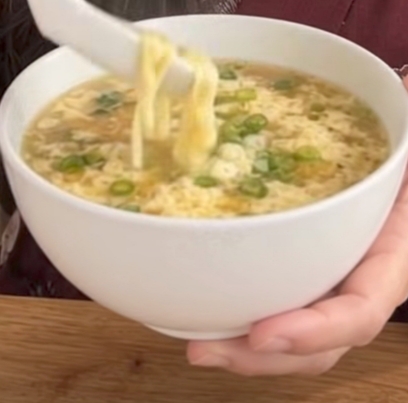
Egg Drop Noodle Soup is a warm and satisfying dish featuring tender noodles immersed in a savory, lightly thickened broth.
The broth is delicately seasoned with soy sauce, ginger, garlic, and sesame oil, creating a balanced combination of salty, aromatic, and umami-rich flavors.
The soup’s defining feature is its silky ribbons of beaten egg, which form beautiful golden strands as they cook gently in the hot liquid.
The noodles contribute a soft, satisfying texture, transforming the traditional egg drop soup into a complete and comforting meal.
Fresh green onions add a mild onion flavor, gentle crunch, and attractive green color.
With its golden broth, delicate egg ribbons, and fragrant seasonings, the soup is as visually appealing as it is delicious.
Its simple ingredients and quick preparation make it an excellent choice for everyday cooking.
8. Nutritional Information
Estimated Nutritional Values per Serving (Based on 2 Servings):
| Nutrient | Approximate Amount |
|---|---|
| Calories | 350–550 kcal |
| Protein | 18–25 g |
| Carbohydrates | 45–65 g |
| Total Fat | 10–22 g |
| Saturated Fat | 3–8 g |
| Fiber | 2–4 g |
| Sodium | 600–1,500 mg |
Note: These are approximate nutritional estimates. Values vary significantly depending on noodle type, bundle size, broth brand, and sodium content. Oil-fried instant ramen generally contains more fat than non-fried noodles.
Healthier Preparation Alternatives
Choose Whole-Grain Noodles: Whole-grain noodles can provide additional fiber and contribute to a more satisfying meal.
Use Low-Sodium Broth: Choosing reduced-sodium chicken or vegetable broth helps manage the overall salt content.
Add More Vegetables: Spinach, mushrooms, bok choy, and carrots provide additional vitamins, minerals, and dietary fiber.
Increase Lean Protein: Cooked chicken breast, tofu, or additional egg whites can increase protein content.
Use Non-Fried Noodles: Select non-fried ramen or thin wheat noodles to reduce the amount of fat compared with traditional oil-fried instant ramen.
Adjust Noodle Portions: Use slightly fewer noodles and add vegetables to create a lighter, vegetable-rich soup.
9. Conclusion
Egg Drop Noodle Soup is a simple yet deeply satisfying recipe that combines the comforting qualities of warm broth with tender noodles and delicate egg ribbons.
Its flavorful base, quick preparation, and flexible ingredient options make it an ideal choice for busy weekdays, light dinners, or relaxing evenings at home.
The secret to achieving the perfect bowl lies in maintaining a gentle simmer, incorporating the cornstarch slurry correctly, and pouring the beaten eggs slowly to create silky strands.
With just a few accessible ingredients and approximately 15 minutes of preparation and cooking, this soup delivers a delicious homemade meal.
Whether enjoyed in its classic form or customized with vegetables, chicken, tofu, or additional seasonings, Egg Drop Noodle Soup is a versatile comfort-food favorite.
10. Recommendation
For the best flavor, begin with a high-quality, low-sodium chicken broth and season it gradually with soy sauce, ginger, garlic, and sesame oil.
Thin egg noodles are particularly recommended for their tender texture, although ramen noodles also provide excellent results.
To achieve beautiful egg ribbons, ensure the broth is gently simmering rather than boiling vigorously.
Pour the beaten eggs slowly and avoid excessive stirring until the strands have formed.
For a richer variation, add a small quantity of cooked shredded chicken or sliced mushrooms.
For a lighter and more balanced meal, incorporate baby spinach, bok choy, or other fresh vegetables.
Finish the soup with generous amounts of sliced green onions and a few drops of sesame oil for additional freshness and aroma.
Storage Recommendation: Egg Drop Noodle Soup is best enjoyed immediately. If storing leftovers, cool promptly and refrigerate in an airtight container for up to 3–4 days. The noodles may soften as they absorb liquid. Reheat thoroughly until steaming hot, and avoid repeated reheating.
For meal preparation, store the cooked noodles separately from the broth whenever possible to preserve their texture.
11. Embracing Healthful Indulgence
Egg Drop Noodle Soup demonstrates that comforting homemade meals do not necessarily require complicated techniques or lengthy preparation.
The eggs provide high-quality protein and contribute nutrients such as choline, vitamin B12, and selenium.
The broth supplies warmth, fluid, and savory flavor, while the noodles provide carbohydrates that serve as an important source of energy.
The addition of ginger, garlic, and green onions introduces aromatic ingredients that enhance flavor without requiring large quantities of added fat.
However, the sodium content can become relatively high depending on the broth, soy sauce, and noodles selected.
Choosing low-sodium ingredients, adjusting seasoning carefully, and including additional vegetables are practical ways to improve the nutritional balance.
Adding fresh spinach, mushrooms, carrots, or bok choy can increase the soup’s fiber and micronutrient content while creating a more colorful and satisfying meal.
Egg Drop Noodle Soup can also be adapted to different dietary preferences by using vegetable broth, non-fried noodles, or additional plant-based ingredients.
Preparing the soup at home allows greater control over the quality of ingredients, serving sizes, and seasoning levels.
Ultimately, healthful indulgence means enjoying delicious and comforting meals while incorporating variety, balance, and thoughtful ingredient choices into everyday eating.
Final Thought: 🍜🥚 With its fragrant savory broth, tender noodles, delicate golden egg ribbons, and fresh green onions, the Ultimate Egg Drop Noodle Soup offers a perfect combination of comfort, simplicity, and flavor. Quick to prepare, easy to customize, and wonderfully satisfying, it is a timeless homemade dish worth enjoying throughout the year.