
Introduction
Coffee and Walnut Layer Cake is a classic British bake that combines a soft, buttery walnut sponge with rich coffee buttercream and a crunchy walnut coating. Each layer delivers a delicate coffee aroma, a nutty flavor, and a smooth, creamy finish that makes this cake especially appealing to coffee lovers.
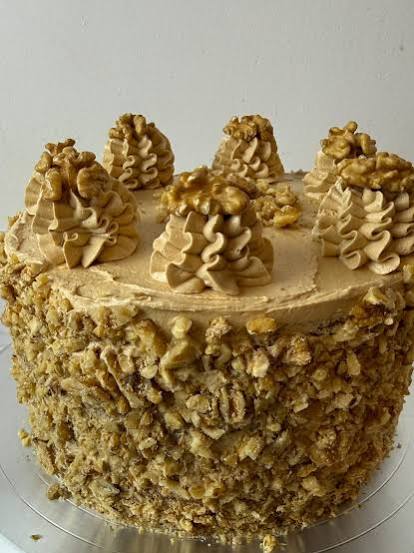
Inspired by the popular version associated with Nigella Lawson and The Great British Bake Off, this showstopping dessert features three layers of sponge, generous coffee frosting, and eight decorative buttercream rosettes topped with whole walnut halves.
Whether you’re preparing it for a birthday, afternoon tea, a holiday gathering, or a special weekend treat, this elegant cake brings traditional British baking to your table.
Origin and Cultural Significance
Coffee and walnut cake is a well-established favorite in British home baking. The combination of coffee-flavored sponge, walnuts, and buttercream has long been popular in cafés, tea rooms, and homemade celebration cakes.
Its appeal comes from the balance between the slightly bitter aroma of coffee, the rich sweetness of buttercream, and the earthy crunch of walnuts. The cake is also associated with afternoon tea, when slices of cake are traditionally served alongside a cup of tea or coffee.
Coffee and walnut cake has appeared in several baking competitions and television recipes, including The Great British Bake Off. Its familiar ingredients and decorative finish make it a rewarding choice for both experienced bakers and home cooks looking to create an impressive layered dessert.
Ingredients
For the Walnut and Coffee Sponges
- 225 g walnuts, finely ground, reserving 8 walnut halves for decoration
- 225 g caster sugar
- 225 g unsalted butter, softened
- 200 g self-raising flour
- 1½ teaspoons baking powder
- 4 large eggs, at room temperature
- 2 tablespoons instant espresso powder
- 1 tablespoon boiling water
For the Coffee Buttercream
- 250 g unsalted butter, softened
- 500 g icing sugar, sifted
- 3 tablespoons instant espresso powder
- 1½ tablespoons boiling water
For Decoration
- 8 reserved walnut halves
- Finely chopped walnuts from the remaining quantity
- Reserved coffee buttercream for piping
Optional Additions
- Vanilla extract: Add 1 teaspoon to the sponge or buttercream for extra aroma.
- A pinch of salt: Enhance the flavor of the buttercream by balancing its sweetness.
- Dark chocolate shavings: Sprinkle a small amount over the top for a coffee-and-chocolate variation.
- A little milk: Add 1 teaspoon at a time to the buttercream if it becomes too thick to spread or pipe.
- Extra espresso: For a stronger coffee flavor, increase the espresso slightly, but avoid adding too much liquid to the sponge or frosting.
Tips for Success
- Use room-temperature ingredients: Softened butter and room-temperature eggs combine more evenly, helping create a smoother cake batter.
- Grind the walnuts carefully: Pulse them in a food processor until finely ground. Stop before they release their oils and turn into a paste.
- Dissolve the espresso completely: Mix the espresso powder with boiling water and allow it to cool before adding it to the batter or buttercream.
- Avoid overmixing: Fold in the flour and walnuts gently to maintain a light sponge texture.
- Divide the batter evenly: Weigh the batter if possible so all three cake layers bake to a similar thickness.
- Check the cakes early: Oven temperatures vary, so begin checking for doneness at around 20 minutes.
- Cool the sponges completely: Warm cake can melt the buttercream and make the layers slide.
- Beat the buttercream thoroughly: Whipping the butter before adding the sugar helps create a lighter, smoother frosting.
- Chill before decorating if necessary: If the cake layers are delicate or the buttercream is soft, a short chill can make assembly easier.
- Use a piping bag with a star nozzle: This creates well-defined rosettes for the classic finished appearance.
Instructions
Step 1: Prepare the Oven and Cake Tins
Preheat the oven to 350°F (180°C conventional or 160°C fan). Grease and line three 8-inch (20 cm) round cake tins with baking parchment.
Dissolve the 2 tablespoons of espresso powder in 1 tablespoon of boiling water. Stir until smooth and set aside to cool.
Step 2: Grind the Walnuts
Place the walnuts in a food processor and pulse until finely ground. Reserve eight attractive walnut halves for the final decoration.
Be careful not to process the walnuts for too long, as they can release oil and become a paste. Set the ground walnuts aside.
Step 3: Cream the Butter and Sugar
Place the softened butter and caster sugar in a large mixing bowl. Beat with an electric mixer for approximately 3–5 minutes, or until the mixture becomes pale, light, and fluffy.
Scrape down the sides of the bowl as needed to ensure everything is evenly mixed.
Step 4: Add the Eggs and Coffee
Add the eggs one at a time, beating well after each addition. If the mixture begins to look slightly curdled, add a spoonful of the measured flour and continue mixing gently.
Pour in the cooled espresso mixture and beat briefly until incorporated.
Step 5: Fold in the Dry Ingredients and Walnuts
Sift the self-raising flour and baking powder into the bowl. Add the ground walnuts and fold everything together gently with a spatula until no dry streaks remain.
Avoid excessive mixing, as this can make the sponge denser.
Step 6: Bake the Sponge Layers
Divide the batter evenly among the three prepared tins and smooth the tops.
Bake for approximately 20–25 minutes, or until the cakes are golden, spring back lightly when touched, and a skewer inserted into the center comes out clean.
Leave the cakes in their tins for about 5–10 minutes, then carefully turn them out onto wire racks. Remove the parchment and allow the sponges to cool completely.
Step 7: Prepare the Coffee Buttercream
Dissolve the 3 tablespoons of espresso powder in 1½ tablespoons of boiling water. Allow the mixture to cool completely.
Beat the softened butter with an electric mixer for 3–5 minutes until pale and creamy.
Gradually add the sifted icing sugar in several batches, beating well after each addition. Scrape down the bowl occasionally to keep the mixture smooth.
Add the cooled espresso mixture and beat until the buttercream is fluffy, evenly colored, and strongly scented with coffee.
If the frosting is too thick, add a tiny amount of milk. If it becomes too soft, refrigerate it briefly before assembling the cake.
Reserve approximately one cup of buttercream in a piping bag fitted with a star nozzle for the rosettes.
Step 8: Assemble the Cake Layers
Place the first sponge on a cake stand or serving plate.
Spread an even layer of coffee buttercream over the top, reaching close to the edges. Place the second sponge on top and spread another layer of frosting.
Add the third sponge, positioning it carefully so the cake remains level.
Step 9: Frost the Outside
Use the remaining buttercream, excluding the reserved piping portion, to cover the top and sides of the cake.
Smooth the frosting with an offset spatula or cake scraper. The finish does not need to be perfectly smooth because the chopped walnuts will cover the sides.
Step 10: Add the Chopped Walnuts
Gently press the remaining finely chopped walnuts onto the sides of the cake. Work around the cake until the surface is covered with an even layer.
Place the cake in the refrigerator for a short time if the buttercream needs to firm up before piping.
Step 11: Pipe the Rosettes
Using the prepared piping bag, pipe eight evenly spaced buttercream rosettes around the top edge of the cake.
Place one reserved walnut half on each rosette, pressing gently so it stays in position.
Refrigerate the finished cake briefly if needed, then let it stand at room temperature for about 20–30 minutes before serving for the best buttercream texture.
Description
This Coffee and Walnut Layer Cake features three tender walnut sponges infused with espresso and layered with generous coffee buttercream. The outside is coated in finely chopped walnuts, creating a crunchy contrast to the soft cake and smooth frosting.
Eight piped rosettes crowned with walnut halves give the cake a traditional, polished finish. Its flavor is rich but balanced, with aromatic coffee, buttery sweetness, and the distinctive nuttiness of walnuts in every slice.
Nutritional Information
Approximate values per serving, assuming 12 slices:
- Calories: 650–750
- Protein: 7–10 g
- Carbohydrates: 65–80 g
- Fat: 40–48 g
- Saturated fat: 18–23 g
- Fiber: 2–4 g
- Sugar: 45–60 g
- Sodium: 200–350 mg
These values are estimates and may vary depending on the exact ingredients, the amount of buttercream used, and the size of each slice.
Recipe Details
- Prep time: 35 minutes
- Bake time: 20–25 minutes
- Cooling and assembly time: Approximately 45–60 minutes
- Total time: Approximately 1 hour 40 minutes to 2 hours
- Servings: 12 slices
- Cuisine: British-inspired
- Course: Dessert
- Cooking method: Baking
- Difficulty: Moderate
Conclusion
Coffee and Walnut Layer Cake is a timeless dessert that combines familiar ingredients with an elegant presentation. The tender walnut sponge, rich espresso buttercream, crunchy nut coating, and decorative rosettes create a cake that looks impressive and tastes even better.
Serve it for afternoon tea, birthdays, family gatherings, or any occasion that calls for a homemade dessert with classic flavor. With careful mixing, fully cooled cake layers, and a little patience during assembly, you can recreate this traditional favorite in your own kitchen.
Recommendation
Serve the cake in moderate slices alongside freshly brewed coffee, espresso, or black tea. Its rich buttercream pairs particularly well with unsweetened drinks that balance the sweetness.
Store the cake in an airtight container in the refrigerator for up to 4–5 days. Before serving, allow each slice to stand at room temperature for approximately 20–30 minutes so the sponge softens and the buttercream becomes creamy again.
For advance preparation, bake the sponges a day ahead, cool them completely, and wrap them tightly before storing. Prepare the buttercream and assemble the cake closer to serving time for the freshest texture and best decorative finish.
Embracing Healthful Indulgence
This cake is a rich treat intended to be enjoyed in moderation. Walnuts provide unsaturated fats, some protein, fiber, and minerals, while coffee contributes the distinctive aroma that defines the dessert.
To adjust the recipe slightly, consider serving smaller slices or reducing the buttercream between the layers. You can also use the same walnut-and-coffee flavor combination in a smaller cake for fewer servings. These changes preserve the spirit of the dessert while making it easier to enjoy as part of a varied, balanced diet.