
Introduction
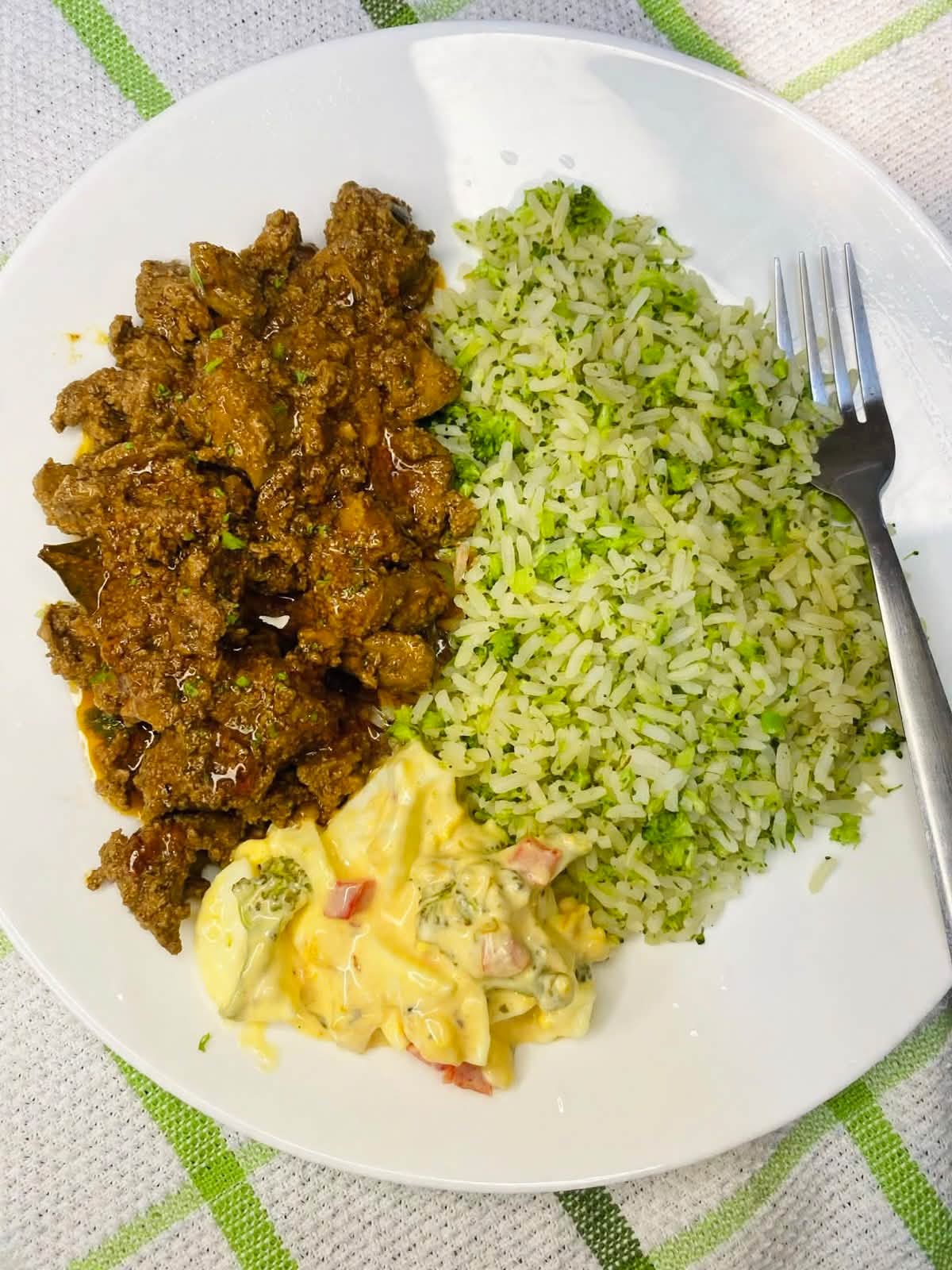
Bring the bold, comforting flavors of a homemade curry feast to your dinner table with this delicious Slow-Cooked Beef or Lamb Masala Curry served alongside fluffy broccoli rice and a refreshing creamy vegetable salad. This complete meal combines tender, richly seasoned meat, fragrant rice, colorful vegetables, and a smooth, tangy salad for a satisfying combination of flavors and textures.
The centerpiece of this dish is a slow-simmered masala curry featuring succulent chunks of beef or lamb coated in a thick, aromatic gravy. A carefully balanced mixture of ginger, garlic, onions, yogurt, and traditional spices creates layers of savory warmth, while gentle cooking allows the meat to become wonderfully tender.
Complementing the curry is a fluffy broccoli rice side dish that combines perfectly cooked white rice with finely chopped fresh broccoli, garlic, and butter. The broccoli adds a beautiful green color and a delicate vegetable flavor without overpowering the rice.
A creamy potato-and-vegetable salad completes the plate, bringing together tender potatoes, crisp red bell peppers, lightly blanched broccoli, and a smooth mayonnaise-based dressing. Its cool, refreshing flavor provides a pleasant contrast to the warm, spiced curry.
Although this meal includes three different components, each one can be prepared using straightforward cooking techniques. With a little planning, the curry can simmer gently while the rice and salad are prepared.
Perfect for family dinners, weekend meals, gatherings, or occasions when you want something hearty and memorable, this flavorful combination delivers a satisfying homemade dining experience.
Origin and Cultural Significance
This meal combines influences from South Asian curry traditions with familiar rice dishes and creamy vegetable salads.
Masala curries are widely associated with the cuisines of the Indian subcontinent, where aromatic spice blends, onions, ginger, garlic, and various cooking techniques are used to create richly flavored dishes. The word masala generally refers to a mixture of spices, which may be used whole, ground, or combined into a paste.
Beef and lamb curries appear in different regional cooking traditions, with variations in spice intensity, ingredients, and preparation methods. Slow cooking is particularly effective for tougher cuts of meat because it allows connective tissue to soften while the meat absorbs the flavors of the surrounding sauce.
Whole spices such as cardamom, cinnamon, cloves, and bay leaves contribute depth and fragrance, while ground turmeric, cumin, coriander, and chili powder create the distinctive warmth associated with many masala preparations.
Yogurt is also used in numerous South Asian meat dishes, where it adds richness and subtle acidity to marinades and sauces.
Rice has long served as an important accompaniment to spiced meat dishes throughout South Asia and many other culinary traditions. Its relatively mild flavor makes it an excellent complement to richly seasoned gravies.
The broccoli rice featured in this recipe is a contemporary variation that incorporates finely chopped vegetables into cooked rice, adding freshness, texture, and color.
The creamy vegetable salad introduces a different culinary influence. Potato salads dressed with mayonnaise or other creamy sauces are popular in many countries, with countless regional variations that include vegetables, herbs, eggs, and seasonings.
Together, these three components create a modern, fusion-inspired meal that celebrates traditional curry flavors while incorporating familiar vegetable sides.
Ingredients
For the Slow-Cooked Beef or Lamb Masala Curry
- 1½ lb (approximately 700 g) boneless beef chuck roast or lamb suitable for slow cooking, cut into 1½-inch cubes
- 1 large onion, thinly sliced
- 1 tablespoon fresh ginger paste
- 1 tablespoon fresh garlic paste
- 3 tablespoons cooking oil or ghee, divided
- ½ cup plain full-fat yogurt, whisked until smooth
- 1 cup water, plus more as needed
- ½–1 teaspoon fine salt, or to taste
- 2 tablespoons chopped fresh cilantro, optional, for garnishing
For the Whole Masala Spices
- 1 bay leaf
- 3 green cardamom pods, lightly crushed
- 3 whole cloves
- 1 small cinnamon stick, approximately 2 inches long
For the Ground Masala Seasoning
- 1 teaspoon ground turmeric
- 1 tablespoon mild Kashmiri chili powder or paprika, or ½–1 teaspoon hot chili powder for a spicier curry
- 1½ tablespoons ground coriander
- 1 teaspoon ground cumin
- 1 teaspoon garam masala
Note: Beef chuck and lamb shoulder are particularly suitable for long, gentle cooking. Lamb leg can also be used, but its tenderness and cooking time may differ. Adjust the chili powder according to its heat level, as some varieties are much stronger than others.
For the Quick and Fluffy Broccoli Rice
- 1 cup uncooked long-grain white rice or basmati rice
- 1½ cups water, or the amount recommended on the rice package
- 1½ cups finely chopped fresh broccoli florets, approximately rice-sized
- 1 tablespoon unsalted butter or olive oil
- 2 teaspoons minced fresh garlic
- ½ teaspoon salt, divided, or to taste
- ¼ teaspoon freshly ground black pepper, optional
For the Creamy Potato and Vegetable Salad
- 2 medium waxy potatoes, approximately 14 oz (400 g), peeled if desired and cut into small cubes
- ½ cup small fresh broccoli florets
- ⅓ cup finely diced red bell pepper
- 2 tablespoons finely diced red onion, optional
- ¼ cup mayonnaise
- 2 tablespoons plain yogurt or sour cream
- 1 teaspoon Dijon mustard, optional
- 1 teaspoon fresh lemon juice
- ¼ teaspoon salt, or to taste
- ⅛ teaspoon ground black pepper
- 1 tablespoon finely chopped fresh parsley, optional
Note: The salad is designed as a creamy potato-based vegetable side. For a pasta salad variation, replace the potatoes with approximately 1½ cups cooked and cooled short pasta.
Optional Additions
- Fresh green chilies: Add one finely chopped green chili to the curry for additional heat and a fresher pepper flavor.
- Tomato puree: Stir 2–3 tablespoons into the masala before adding the yogurt for a tangier, deeper-colored gravy.
- Extra garam masala: Add a small pinch just before serving for a stronger aromatic finish.
- Fresh cilantro: Sprinkle over the finished curry to introduce freshness and color.
- Lemon juice: Add a small squeeze to the curry before serving to brighten the rich sauce.
- Caramelized onions: Garnish the curry with a few extra browned onion slices for added sweetness and texture.
- Green peas: Fold ¼ cup cooked peas into the broccoli rice for extra color and vegetable variety.
- Fresh parsley: Add chopped parsley to the rice for a mild herbal note.
- Toasted cumin seeds: Sprinkle over the broccoli rice for a subtle earthy aroma.
- Hard-boiled eggs: Add chopped hard-boiled eggs to the vegetable salad for a richer, more substantial side.
- Sweetcorn: Stir a few tablespoons of cooked sweetcorn into the creamy salad for additional sweetness.
- Diced cucumber: Add small pieces of cucumber to the salad immediately before serving for extra crunch.
- Greek yogurt: Replace part of the mayonnaise with plain Greek yogurt for a tangier, lighter dressing.
- Fresh mint: Add a little chopped mint to the salad for a refreshing contrast to the spicy curry.
These optional additions make it easy to adjust the meal according to your preferred flavors, spice tolerance, and available ingredients.
Tips for Success
- Choose the right cut of meat: Beef chuck or lamb shoulder works particularly well for slow cooking because these cuts contain connective tissue that softens during prolonged gentle cooking.
- Cut the meat evenly: Similar-sized cubes cook at approximately the same rate and produce a more consistent texture.
- Brown the meat in batches: Avoid overcrowding the pot. Proper browning develops a richer flavor and contributes to the depth of the curry gravy.
- Cook the onions until golden: Allowing the onions to soften and develop a deep golden color creates a flavorful foundation for the masala.
- Bloom the whole spices: Briefly heating cardamom, cloves, cinnamon, and bay leaf in oil or ghee helps release their aromatic compounds.
- Avoid burning ground spices: Cook ground masalas over medium-low heat, adding a small splash of water if the mixture begins sticking to the pot.
- Use whisked full-fat yogurt: Smooth yogurt is easier to incorporate into the gravy and is less likely to separate when heated gently.
- Maintain a gentle simmer: Aggressive boiling can make the meat tighten and may cause yogurt-based sauces to separate.
- Check the meat for tenderness: Cooking times are estimates. The curry is ready when the meat can be pierced easily with a fork.
- Reduce the gravy gradually: If the sauce is too thin, uncover the pot near the end of cooking and allow some liquid to evaporate.
- Rinse the rice thoroughly: Washing away excess surface starch helps produce lighter, more separate rice grains.
- Do not overprocess the broccoli: Pulse just until the broccoli resembles small grains. Overprocessing may create a wet, paste-like texture.
- Cook the broccoli briefly: A short sauté preserves its vibrant green color and prevents it from becoming mushy.
- Use firm potatoes for the salad: Waxy potatoes hold their shape better than very starchy varieties when tossed with a creamy dressing.
- Cool the salad ingredients before dressing: Combining mayonnaise with very hot potatoes can make the dressing thin and negatively affect the salad’s texture.
- Keep the salad chilled: Refrigerate the creamy salad until serving to maintain freshness and ensure appropriate food storage.
- Coordinate your preparation: Begin the curry first, prepare the salad while it simmers, and cook the broccoli rice shortly before serving.
Instructions
Step 1: Prepare the Meat and Curry Ingredients
Begin by cutting the beef chuck or lamb into evenly sized, bite-sized cubes approximately 1½ inches thick.
Pat the meat dry with paper towels to remove excess surface moisture.
Slice the onion thinly, measure the ginger and garlic pastes, and arrange all the whole and ground spices in separate small bowls.
Whisk the plain yogurt until completely smooth and set it aside in the refrigerator until needed.
Having the ingredients prepared before cooking allows the curry to develop evenly without interruptions.
Step 2: Brown the Beef or Lamb
Heat approximately 2 tablespoons of the cooking oil or ghee in a large, heavy-bottomed pot or Dutch oven over medium-high heat.
Once the oil is hot, add the meat in a single layer, working in batches if necessary.
Allow the cubes to brown for approximately 5–8 minutes per batch, turning occasionally to develop color on several sides.
Avoid moving the meat continuously, as contact with the hot cooking surface helps create a flavorful browned exterior.
Transfer the browned pieces to a plate and set aside.
The browned bits remaining at the bottom of the pot will contribute additional savory flavor to the curry.
Step 3: Bloom the Whole Spices
Reduce the heat to medium and add the remaining tablespoon of oil or ghee to the same pot.
Add the bay leaf, lightly crushed cardamom pods, cloves, and cinnamon stick.
Allow the spices to sizzle gently for approximately 20–30 seconds, stirring carefully.
They should become fragrant without darkening excessively or burning.
This step infuses the cooking fat with the warm, distinctive aromas that form the foundation of the masala.
Step 4: Cook the Onions, Ginger, and Garlic
Add the thinly sliced onion to the pot containing the whole spices.
Cook over medium heat for approximately 10–15 minutes, stirring frequently, until the onion becomes soft and golden brown.
If the onion begins sticking, add a small splash of water and scrape the bottom of the pot gently.
Stir in the ginger paste and garlic paste.
Cook for another 1–2 minutes, stirring continuously, until the raw garlic aroma fades and the mixture becomes fragrant.
Avoid allowing the garlic to burn, as it can produce a bitter flavor.
Step 5: Add the Ground Masala Spices
Lower the heat slightly.
Add the turmeric, chili powder or paprika, ground coriander, and ground cumin to the onion mixture.
Stir continuously for approximately 1–2 minutes, allowing the spices to combine with the oil and aromatics.
If the mixture becomes too dry, add 1–2 tablespoons of water to prevent scorching.
The masala should become fragrant and develop a rich color.
Return the browned meat and any accumulated juices to the pot.
Stir thoroughly until the meat is evenly coated with the aromatic spice mixture.
Step 6: Incorporate the Yogurt and Cooking Liquid
Reduce the heat to low.
Take the whisked yogurt and gradually stir in a few spoonfuls of the warm masala mixture to bring its temperature closer to that of the pot.
Add the tempered yogurt slowly to the curry, stirring continuously until incorporated.
Allow the mixture to warm gently without boiling rapidly.
Pour in approximately 1 cup of water and stir to create a thick, flavorful gravy around the meat.
Add the salt and mix thoroughly.
The liquid should surround the meat without completely drowning it.
If necessary, add a little extra water to maintain enough moisture for slow cooking.
Step 7: Slowly Simmer the Masala Curry
Bring the curry to a very gentle simmer.
Cover the pot with a tight-fitting lid and reduce the heat to low.
Allow the meat to cook slowly for approximately 1½–2½ hours, checking periodically for tenderness. Some cuts may need longer.
Stir every 20–30 minutes to prevent sticking and ensure the meat cooks evenly.
If the gravy becomes too thick before the meat is tender, add a small amount of hot water.
The curry should remain at a gentle simmer rather than a vigorous boil.
As the meat cooks, the spice mixture, onions, and yogurt combine into a thick, aromatic sauce.
Continue cooking until the beef or lamb becomes fork-tender and the gravy coats each piece generously.
Step 8: Finish and Thicken the Curry
Once the meat is tender, remove the lid and examine the consistency of the gravy.
If the sauce appears too thin, simmer uncovered for approximately 10–15 minutes, stirring occasionally, until it reaches your preferred thickness.
The gravy should be rich and spoonable, coating the meat without becoming excessively dry.
Stir in the garam masala and cook gently for another 2–3 minutes.
Taste and adjust the salt or chili seasoning if necessary.
Remove the cinnamon stick, bay leaf, and any other large whole spices you can easily locate before serving.
Turn off the heat and allow the curry to rest briefly while you finish the accompanying dishes.
Step 9: Prepare the Broccoli for the Rice
Wash the broccoli thoroughly under cool running water.
Cut the florets away from the thick central stalk.
Reserve ½ cup of small florets for the creamy vegetable salad.
Measure approximately 1½ cups of broccoli florets for the rice.
Place the florets in a food processor and pulse several times until they resemble coarse grains of rice.
Do not process continuously, as this can make the broccoli too finely chopped and watery.
Alternatively, finely mince the florets using a sharp knife.
Set the prepared broccoli aside.
Step 10: Cook the White Rice
Place the uncooked white rice in a fine-mesh strainer.
Rinse thoroughly under cool running water until the water becomes mostly clear.
Transfer the rinsed rice to a medium saucepan.
Add approximately 1½ cups of water and ¼ teaspoon of salt, adjusting the water quantity if your rice package specifies a different amount.
Bring the mixture to a gentle boil over medium-high heat.
Reduce the heat to low, cover tightly, and cook for approximately 12–18 minutes, or according to the package instructions, until the rice is tender and the water has been absorbed.
Remove the saucepan from the heat and allow the rice to rest, covered, for 5 minutes.
Gently fluff with a fork to separate the grains.
Avoid stirring aggressively, which can break the rice and make it sticky.
Step 11: Sauté the Broccoli and Garlic
Heat a large skillet over medium heat.
Add the butter or olive oil and allow it to warm.
Stir in the minced garlic and cook for approximately 30 seconds, until fragrant.
Add the finely chopped broccoli and toss to coat it evenly with the garlic-flavored fat.
Sauté for approximately 2–4 minutes, stirring occasionally, until the broccoli becomes bright green and just tender.
Season with the remaining salt and a small pinch of black pepper if desired.
Avoid overcooking the broccoli, as it should remain fresh-looking and slightly textured.
Step 12: Combine the Broccoli with the Fluffy Rice
Reduce the skillet heat to low or turn it off completely.
Add the cooked white rice to the sautéed broccoli.
Using a fork or wide spatula, gently fold the ingredients together until the green broccoli is evenly distributed throughout the rice.
Avoid pressing or mashing the grains.
Taste and adjust the seasoning if needed.
Cover loosely and keep warm until serving.
The finished rice should be fluffy, lightly buttery, aromatic with garlic, and speckled with vibrant green broccoli.
Step 13: Cook the Potatoes for the Creamy Salad
Place the cubed potatoes in a medium saucepan and cover with cold water.
Add a small pinch of salt.
Bring the water to a gentle boil over medium-high heat.
Cook for approximately 10–15 minutes, depending on the size of the cubes, until the potatoes are tender when pierced with a fork but still hold their shape.
Avoid cooking them until they begin falling apart, as the salad should contain recognizable potato pieces.
Drain the potatoes thoroughly in a colander.
Spread them on a tray or transfer them to a shallow bowl and allow them to cool.
Step 14: Blanch the Broccoli for the Salad
Bring a small saucepan of water to a boil.
Add the reserved ½ cup of broccoli florets.
Cook for approximately 1–2 minutes, just until the florets become bright green and slightly tender.
Immediately transfer them to a bowl of ice water to stop the cooking process.
Drain thoroughly and pat dry with a clean kitchen towel or paper towels.
Cut any larger florets into smaller pieces so they mix evenly throughout the salad.
Set aside until completely cool.
Step 15: Prepare the Creamy Salad Dressing
In a medium mixing bowl, combine the mayonnaise, plain yogurt or sour cream, Dijon mustard, and fresh lemon juice.
Whisk until the mixture becomes smooth and creamy.
Add the salt and freshly ground black pepper.
Taste and adjust the seasoning as desired.
The dressing should have a rich, slightly tangy flavor that complements the potatoes and fresh vegetables.
For a thinner consistency, stir in a small amount of additional yogurt or lemon juice.
For a thicker dressing, add a little extra mayonnaise.
Step 16: Assemble the Creamy Vegetable Salad
Place the cooled potato cubes in a large mixing bowl.
Add the blanched broccoli, finely diced red bell pepper, and optional diced red onion.
Pour the creamy dressing over the ingredients.
Using a large spoon or spatula, gently fold everything together until the potatoes and vegetables are evenly coated.
Avoid stirring too vigorously, which may break the potatoes.
Sprinkle with chopped fresh parsley if desired.
Cover the salad and refrigerate for approximately 20–30 minutes, or until chilled, before serving.
The finished salad should be creamy but not watery, with tender potato cubes, colorful vegetables, and a pleasantly tangy dressing.
Step 17: Assemble the Complete Meal
Divide the prepared broccoli rice evenly among four serving plates.
Spoon a generous portion of slow-cooked beef or lamb masala curry alongside the rice, making sure each serving includes plenty of tender meat and rich gravy.
Add a small portion of the chilled creamy potato-and-vegetable salad to the side of each plate.
For an attractive presentation, keep the curry, rice, and salad in distinct sections.
Garnish the curry with freshly chopped cilantro if desired.
Serve immediately while the curry is hot, the rice is fluffy, and the creamy vegetable salad remains pleasantly cool.
Optional Method: Prepare the Curry in a Slow Cooker
For an alternative hands-off cooking method, brown the meat in a skillet and prepare the onion-spice mixture as directed.
Transfer the browned meat and cooked aromatics to a slow cooker.
Add the cooking liquid and stir gently.
Cover and cook on low for approximately 6–8 hours, or until the meat is fork-tender. Follow your appliance’s instructions, as slow-cooker performance varies.
During the final 20–30 minutes, gradually stir in the whisked yogurt and garam masala, allowing them to warm gently without prolonged vigorous boiling.
If necessary, thicken the gravy by transferring some of the liquid to a saucepan and simmering until reduced.
Serve with the freshly prepared broccoli rice and creamy vegetable salad.
Description
Slow-Cooked Beef or Lamb Masala Curry with Fluffy Broccoli Rice and Creamy Vegetable Salad is a hearty, aromatic meal that brings together contrasting flavors and textures in one satisfying plate.
The curry features tender chunks of meat surrounded by a thick, richly seasoned gravy. Slowly cooked onions contribute natural sweetness, while ginger and garlic provide savory depth.
A carefully balanced selection of spices, including turmeric, coriander, cumin, cardamom, cinnamon, cloves, and garam masala, creates a warm and fragrant sauce.
The yogurt introduces a subtle tanginess that balances the spices and contributes to the curry’s creamy consistency.
Alongside the curry, fluffy white rice is combined with finely chopped broccoli, garlic, and butter. The rice grains remain separate and tender, while the broccoli introduces a delicate vegetable flavor and an appealing green color.
The creamy vegetable salad provides a refreshing contrast. Tender potatoes, lightly cooked broccoli, and crisp red bell peppers are coated in a smooth mayonnaise-based dressing with a touch of lemon juice and mustard.
Each component contributes something different to the finished meal. The curry delivers warmth and richness, the broccoli rice offers a mild and comforting foundation, and the chilled salad provides freshness and creaminess.
Together, these dishes create a colorful, flavorful, and filling meal suitable for family dinners, casual gatherings, and special occasions.
Nutritional Information
Approximate values per serving, assuming the complete recipe serves 4 and includes one portion each of the masala curry, broccoli rice, and creamy potato salad:
- Calories: 800–1,100 kcal
- Protein: 38–52 g
- Carbohydrates: 65–85 g
- Fat: 35–60 g
- Saturated Fat: 10–22 g
- Fiber: 6–10 g
- Sugar: 6–12 g
- Sodium: 650–1,200 mg
These values are estimates and can vary considerably according to the meat selected, fat content, type and quantity of oil or ghee, yogurt, mayonnaise, and serving sizes.
Beef chuck and lamb can contain different amounts of fat depending on the specific cut and trimming.
Using olive oil instead of ghee and reducing the mayonnaise in the salad may lower the saturated fat content.
The rice and potatoes provide carbohydrates, while the meat contributes a substantial portion of the meal’s protein.
Broccoli, onions, and bell peppers contribute fiber and a variety of vitamins and minerals.
Recipe Details
- Prep Time: Approximately 30 minutes
- Cook Time: Approximately 1 hour 45 minutes to 2 hours 45 minutes, depending on the meat
- Total Time: Approximately 2 hours 15 minutes to 3 hours 15 minutes
- Servings: 4 generous servings
- Cuisine: South Asian-inspired curry with contemporary fusion-style sides
- Course: Main course
- Cooking Methods: Searing, slow simmering, boiling, sautéing, blanching, and mixing
- Difficulty: Moderate
Conclusion
Slow-Cooked Beef or Lamb Masala Curry with Fluffy Broccoli Rice and Creamy Vegetable Salad is a satisfying homemade meal that brings together rich curry flavors, fragrant rice, and refreshing vegetables.
The slow-cooked curry serves as the centerpiece, offering tender meat coated in a deeply aromatic gravy made with onions, ginger, garlic, yogurt, and traditional masala spices.
Fluffy broccoli rice provides a mild and comforting accompaniment, allowing the bold flavors of the curry to remain the focus while introducing the freshness of finely chopped vegetables.
The creamy potato-and-vegetable salad completes the combination with its smooth dressing, tender potatoes, and colorful pieces of broccoli and bell pepper.
Although this meal requires some cooking time, much of that time is spent gently simmering the meat. The rice and salad can be prepared while the curry cooks, making the process easier to manage.
The result is a colorful and flavorful plate that feels generous, comforting, and suitable for sharing with family or guests.
Whether you choose beef or lamb, this meal delivers a satisfying balance of savory richness, aromatic spices, fluffy grains, and creamy vegetables.
Recommendation
For the best flavor and texture, serve the masala curry hot alongside freshly prepared broccoli rice and a chilled portion of creamy vegetable salad.
Allow the curry to rest briefly after cooking so the sauce settles and the flavors come together.
Freshly chopped cilantro, a small squeeze of lemon juice, or a few thin slices of green chili can provide an attractive finishing touch.
If you prefer a thicker curry, simmer the gravy uncovered during the final cooking stage. For a lighter sauce, add a small amount of hot water and adjust the seasoning.
When preparing the meal ahead of time, the curry can be cooked in advance and refrigerated once cooled appropriately. The flavors often become more integrated after resting overnight.
Store leftover curry, rice, and vegetable salad in separate airtight containers in the refrigerator. Refrigerate within 2 hours of cooking or serving, or within 1 hour when temperatures exceed 90°F (32°C).
For best quality, use the refrigerated leftovers within 3–4 days.
Reheat the curry gently in a saucepan over medium-low heat, adding a little water if the gravy has thickened. Reheat cooked leftovers thoroughly to 165°F (74°C).
The broccoli rice can be reheated in a covered pan or microwave with a small splash of water until steaming hot.
Serve the creamy vegetable salad cold, and avoid repeatedly warming or leaving it at room temperature.
For meal preparation, refrigerate the cooked rice promptly in shallow containers so it cools quickly. Portion and refrigerate the curry and salad separately.
The curry can also be frozen in airtight containers for approximately 2–3 months for best quality. Thaw in the refrigerator before reheating.
For an attractive dinner presentation, arrange the broccoli rice in a neat mound, spoon the masala curry beside it, and add a smaller portion of creamy vegetable salad for contrast.
A few fresh herbs or lemon wedges can make the finished plate especially inviting.
Embracing Healthful Indulgence
This homemade masala curry meal demonstrates how protein-rich ingredients, satisfying grains, and colorful vegetables can be combined into a flavorful and varied dinner.
Beef and lamb provide high-quality protein, iron, zinc, and vitamin B12, nutrients involved in normal body functions, including muscle maintenance and red blood cell formation.
The broccoli rice contributes carbohydrates for energy while adding vegetables to a familiar side dish.
Broccoli provides vitamin C, vitamin K, fiber, and other nutrients, while garlic adds its distinctive flavor without requiring large quantities of additional seasoning.
The creamy potato salad offers another source of vegetables and carbohydrates, with potatoes contributing potassium and red bell peppers providing vitamin C.
For a lighter variation, choose leaner meat, trim visible fat, and use a moderate amount of cooking oil.
Replacing part of the mayonnaise with plain Greek yogurt can produce a tangy dressing with less total fat, depending on the products selected.
You can also increase the amount of broccoli in the rice or replace a portion of the white rice with additional vegetables.
For those seeking more dietary fiber, brown rice may be used instead of white rice, although the cooking time and water requirements will need to be adjusted.
The spice mixture provides bold flavor, making it possible to enjoy a richly seasoned meal without relying entirely on added fats or excessive salt.
When serving, adjust the portions of meat, rice, and salad according to individual needs and preferences.
The goal is to preserve the comforting richness of the curry while enjoying the freshness and variety contributed by the vegetable sides.
With thoughtful ingredient choices and balanced portions, this flavorful combination can be enjoyed as part of a varied and satisfying eating pattern.