
1. Introduction
If you love moist, warmly spiced cakes with rich, creamy frosting, this Caramel Carrot Cake is a dessert worth making. It combines tender layers of homemade carrot cake with smooth cream cheese frosting and a beautiful swirl of golden caramel.
The cake is flavored with cinnamon, ginger, brown sugar, and freshly grated carrots, creating a soft texture and a delicious balance of sweetness and spice.
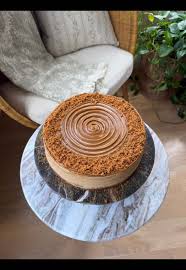
What makes this dessert especially eye-catching is its decoration. A glossy caramel center is surrounded by a crown of piped cream cheese frosting, delicate cookie crumbs, and fresh thyme sprigs.
Despite its elegant appearance, this two-layer cake is made with familiar baking ingredients and straightforward techniques.
2. Origin and Cultural Significance
Carrot cake has a long history, with earlier forms of carrot-based desserts appearing in European cooking. Carrots provided natural sweetness and moisture, making them useful in baked goods.
Over time, carrot cake developed into the soft, spiced dessert familiar today, particularly in American and British baking traditions.
Cream cheese frosting became a popular accompaniment because its mild tanginess balances the sweetness of the cake.
Modern variations often include nuts, fruit, caramel, or decorative toppings. This caramel carrot cake brings together those familiar elements in an elegant layered dessert.
The addition of salted caramel or dulce de leche creates an especially rich finish, while the piped frosting and delicate decorations give the cake a bakery-style presentation.
3. Ingredients
This recipe makes one two-layer, 8-inch round cake, serving approximately 12 people.
For the Moist Spiced Carrot Cake
- 2 cups (250g) all-purpose flour
- 2 teaspoons baking powder
- 1 teaspoon baking soda
- 1½ teaspoons ground cinnamon
- ½ teaspoon ground ginger
- ½ teaspoon salt
- 1¼ cups (250g) granulated sugar
- ½ cup (100g) packed light brown sugar
- 1 cup (240ml) neutral vegetable oil, such as canola or sunflower oil
- 4 large eggs, at room temperature
- 1 teaspoon vanilla extract
- 3 cups (approximately 300–330g) finely grated fresh carrots
- ½ cup chopped toasted pecans or walnuts, optional
For the Cream Cheese Frosting
- 16 oz (450g) full-fat brick cream cheese, softened slightly but still cool
- ½ cup (115g) unsalted butter, softened
- 3–4 cups (360–480g) powdered sugar, sifted
- 1 teaspoon vanilla extract
For the Caramel Topping and Decoration
- ½ cup thick salted caramel sauce or dulce de leche, cooled to room temperature
- ¼ cup crushed Biscoff cookies, graham crackers, or cake crumbs
- A few small fresh thyme sprigs, washed and thoroughly dried, for decoration
Important: Use thick caramel sauce rather than a thin ice cream syrup. The caramel should be spreadable but not runny so it stays neatly inside the frosting border.
4. Optional Additions
You can customize this caramel carrot cake with a few simple additions.
Chopped Walnuts or Pecans: Fold ½ cup of toasted nuts into the batter for a subtle crunch and nutty flavor.
Raisins: Add ⅓ cup raisins for additional sweetness and a slightly chewy texture.
Orange Zest: Mix 1 teaspoon finely grated orange zest into the cake batter for a fresh citrus note.
Extra Cinnamon: Increase the cinnamon slightly if you enjoy a stronger spice flavor.
Dulce de Leche: Substitute thick dulce de leche for the salted caramel sauce to create a smoother, milkier caramel flavor.
Crushed Biscoff Cookies: Use Biscoff crumbs around the frosting crown for a caramelized cookie flavor that pairs beautifully with the spices.
5. Tips for Success
Use freshly grated carrots. Freshly grated carrots retain moisture and blend into the batter more evenly than thick, pre-shredded packaged carrots.
Measure the flour correctly. For the most accurate result, weigh 250g of flour. Too much flour can make the cake dense or dry.
Do not overmix the batter. Once the flour is added, mix only until no dry streaks remain.
Use room-temperature eggs. They combine more easily with the oil and sugar, creating a smoother batter.
Cool the cake completely. Even slightly warm cake layers can cause the cream cheese frosting to soften and slide.
Keep the frosting cool. Cream cheese frosting can become loose if it is overbeaten or left in a warm kitchen. Mix until smooth, then refrigerate briefly if it becomes too soft to spread or pipe.
Choose thick caramel. Warm or runny caramel can spill over the edges of the cake. Make sure the topping is completely cooled before decorating.
Chill before decorating. Refrigerating the frosted cake for 20–30 minutes helps the surface firm up and makes the caramel swirl easier to control.
6. Instructions
Part 1: Prepare the Spiced Carrot Cake
Step 1: Preheat the Oven
Preheat your oven to 350°F (175°C).
Grease two 8-inch round cake pans, preferably with sides at least 2 inches high. Line the bottoms with parchment paper and lightly grease the parchment.
Set the prepared pans aside.
Step 2: Combine the Dry Ingredients
In a medium mixing bowl, whisk together:
- All-purpose flour
- Baking powder
- Baking soda
- Ground cinnamon
- Ground ginger
- Salt
Mix until the ingredients are evenly distributed.
Step 3: Mix the Wet Ingredients
In a separate large bowl, combine the granulated sugar, brown sugar, and vegetable oil.
Whisk until well blended.
Add the eggs one at a time, whisking after each addition.
Stir in the vanilla extract until the mixture is smooth.
Step 4: Combine Wet and Dry Ingredients
Gradually add the flour mixture to the wet ingredients.
Use a rubber spatula to fold everything together gently until just combined.
Avoid excessive stirring, which can develop gluten and make the cake tougher.
Step 5: Add the Carrots
Fold the freshly grated carrots into the batter.
If using chopped pecans or walnuts, add them now.
Stir just enough to distribute the carrots and nuts evenly.
Step 6: Divide the Batter
Divide the batter equally between the prepared cake pans.
Smooth the tops with a spatula so the layers bake evenly.
Step 7: Bake the Cake
Place the pans on the center oven rack.
Bake for approximately 30–40 minutes, checking around the 30-minute mark.
The cakes are ready when:
- The tops look set and lightly golden.
- The centers spring back gently when touched.
- A toothpick inserted into the middle comes out clean or with a few moist crumbs.
Avoid overbaking, as the cake should remain soft and moist.
Step 8: Cool Completely
Let the cakes cool in their pans for approximately 15 minutes.
Carefully remove them from the pans and transfer them to a wire rack.
Allow both layers to cool completely before frosting.
Part 2: Prepare the Cream Cheese Frosting
Step 9: Beat the Butter
Place the softened butter in a large mixing bowl.
Beat with an electric mixer for approximately 1–2 minutes, until smooth and creamy.
Step 10: Add the Cream Cheese
Add the cream cheese and beat on low to medium speed just until fully combined and smooth.
Avoid prolonged whipping, which can make cream cheese frosting too soft.
Step 11: Add the Powdered Sugar
Gradually add 3 cups of sifted powdered sugar, mixing on low speed after each addition.
Add the vanilla extract.
If you prefer a sweeter or firmer frosting, mix in additional powdered sugar, a little at a time, up to 4 cups total.
Beat briefly until smooth and creamy.
Step 12: Chill if Necessary
If the frosting feels too soft to spread or pipe, refrigerate it for 15–20 minutes.
The finished frosting should be creamy but thick enough to hold a piped shape.
Part 3: Assemble and Decorate the Cake
Step 13: Prepare the First Layer
Place one cooled cake layer on a serving plate or cake board.
If the top is noticeably domed, carefully level it with a serrated knife.
Spread a generous, even layer of cream cheese frosting over the cake.
If desired, add a very thin drizzle of thick caramel over the filling, keeping it away from the edges.
Step 14: Add the Second Cake Layer
Carefully place the second cake layer on top.
Press down very gently to secure the layers.
Make sure the cake is level before continuing.
Step 15: Apply a Crumb Coat
Spread a thin layer of frosting over the top and sides of the entire cake.
This first coating traps loose crumbs and makes the final finish smoother.
Refrigerate for approximately 15–20 minutes.
Step 16: Frost the Cake
Remove the cake from the refrigerator.
Apply a second, smoother layer of cream cheese frosting over the top and sides.
Use an offset spatula or cake scraper to create a neat finish.
Refrigerate again for approximately 20 minutes to help the frosting firm up.
Step 17: Pipe the Frosting Crown
Fit a piping bag with a medium round or open-star piping tip.
Fill it with the remaining cream cheese frosting.
Pipe a continuous border or a ring of individual swirls around the top outer edge of the cake.
This creates a decorative crown and helps keep the caramel contained.
Step 18: Add the Caramel Swirl
Make sure the caramel sauce or dulce de leche is thick and completely cooled.
Spoon approximately ½ cup into the center of the cake, inside the piped frosting border.
Using the back of a spoon or a small offset spatula, gently spread the caramel in circular movements to create an attractive spiral pattern.
Leave a little space between the caramel and frosting border to maintain a clean finish.
Step 19: Add the Cookie Crumbs
Sprinkle crushed Biscoff cookies, graham crackers, or cake crumbs around the inner edge of the frosting crown.
Avoid covering the entire caramel center so the glossy swirl remains visible.
Step 20: Garnish and Chill
Arrange a few small fresh thyme sprigs around the border for an elegant finishing touch.
Use the thyme as a decorative garnish, removing any woody sprigs before eating.
Refrigerate the decorated cake for 20–30 minutes to help the layers and frosting settle.
For the best texture, remove the cake from the refrigerator approximately 15–20 minutes before serving, keeping its total time at room temperature under two hours.
Slice with a clean, sharp knife and serve.
7. Description
This Caramel Carrot Cake features two soft, beautifully spiced layers filled with smooth cream cheese frosting.
The cake itself is tender and moist, with the natural sweetness of carrots complemented by cinnamon, ginger, and brown sugar.
The cream cheese frosting adds a lightly tangy contrast that prevents the dessert from tasting overly sweet.
A generous swirl of salted caramel or dulce de leche brings a silky, buttery richness to every slice.
The decorative frosting crown, delicate cookie crumbs, and fresh thyme give the finished cake an elegant bakery-style appearance.
Each serving offers a delicious combination of soft cake, creamy frosting, glossy caramel, and a touch of crunch.
8. Nutritional Information
The following values are approximate estimates for one of 12 slices, including frosting and caramel.
Actual values depend on the amount of frosting used, the type of caramel, and whether optional nuts are included.
| Nutrient | Approximate Amount Per Slice |
|---|---|
| Calories | 700–850 kcal |
| Carbohydrates | 80–100 g |
| Protein | 7–10 g |
| Total Fat | 40–50 g |
| Saturated Fat | 15–20 g |
| Sugar | 60–80 g |
| Fiber | 1–3 g |
Carrots provide small amounts of fiber and nutrients, but this remains a rich dessert best enjoyed in moderate portions.
9. Recipe Details
- Recipe Name: Caramel Carrot Cake with Cream Cheese Frosting
- Cuisine: American-Inspired Baking
- Course: Dessert
- Difficulty: Intermediate
- Servings: Approximately 12 slices
- Preparation Time: 30–40 minutes
- Baking Time: 30–40 minutes
- Cooling and Chilling Time: Approximately 1½–2 hours
- Total Time: Approximately 2½–3 hours
- Oven Temperature: 350°F (175°C)
- Cake Size: Two 8-inch round layers
- Main Ingredients: Carrots, flour, eggs, warm spices, cream cheese, and caramel
- Storage: Refrigerate in a covered cake container for up to 3–4 days
10. Conclusion
Caramel Carrot Cake with Cream Cheese Frosting is a delicious combination of familiar flavors and elegant presentation.
Its soft, warmly spiced carrot cake layers pair beautifully with the tangy cream cheese frosting and rich caramel topping.
The decorative caramel swirl, piped frosting crown, cookie crumbs, and fresh thyme transform a classic homemade cake into a stunning centerpiece.
Whether you’re preparing dessert for a birthday, family gathering, or another special occasion, this cake offers both beautiful presentation and comforting flavor.
11. Recommendation
For the best results, bake the carrot cake layers a day ahead.
Once completely cooled, wrap them tightly and refrigerate overnight. Chilled cake layers are easier to level, stack, and frost without breaking.
Prepare the cream cheese frosting shortly before assembling the cake, and keep it cool enough to maintain its shape.
If you’re using store-bought caramel, choose a thick sauce or dulce de leche rather than a thin, pourable syrup.
For a particularly attractive finish, keep the sides of the cake smooth and allow the caramel center to be the main decorative feature.
Serving Suggestions:
- Serve with freshly brewed coffee.
- Pair with unsweetened black tea.
- Add a small scoop of vanilla ice cream for an extra-indulgent dessert.
- Sprinkle chopped toasted pecans over individual slices for additional crunch.
Storage Tips:
Store the cake in an airtight container in the refrigerator for 3–4 days because of its cream cheese frosting.
For the best appearance, add cookie crumbs shortly before serving to prevent them from becoming soft.
You can also freeze unfrosted carrot cake layers, tightly wrapped, for up to 2–3 months. Thaw them in the refrigerator before decorating.
12. Embracing Healthful Indulgence
A beautifully made homemade dessert can be enjoyed as part of a balanced approach to eating.
Although this caramel carrot cake contains fresh carrots, its sugar, oil, cream cheese frosting, and caramel make it a rich treat.
Serving smaller slices allows everyone to enjoy the full combination of flavors without an overly large portion.
You can also make modest adjustments, such as using the lower amount of powdered sugar in the frosting, omitting optional nuts if preferred, or applying a thinner caramel layer.
However, the most important part of this dessert is its balance of textures and flavors.
Enjoyed occasionally and shared with family or friends, this Caramel Carrot Cake is a wonderful example of how traditional homemade baking can become something truly special.