
Introduction
Classic Lemon Bars are a timeless dessert featuring a buttery shortbread crust topped with a smooth, bright lemon filling. The contrast between the tender, crumbly crust and the sweet-tart lemon layer makes these bars especially refreshing and satisfying.
Fresh lemon juice and zest give the filling its vibrant citrus flavor, while powdered sugar adds a delicate sweetness to the finished dessert. After baking and chilling, the lemon layer becomes beautifully set while remaining soft and creamy.
These bars are perfect for afternoon tea, family gatherings, bake sales, holidays, or simply enjoying a homemade citrus dessert.
Origin
Lemon bars are generally associated with American home baking and became especially popular during the twentieth century. Their simple combination of shortbread and lemon custard reflects the American tradition of turning straightforward pantry ingredients into practical desserts.
Although the exact origin of the modern lemon bar is difficult to attribute to a single baker, the dessert has become a classic in American baking. Its combination of buttery pastry and fresh citrus continues to make it a favorite across generations.
Cultural Significance
Lemon bars represent the kind of homemade dessert that is often associated with family gatherings, community events, bake sales, and holiday dessert tables.
Their bright flavor also makes them different from heavier chocolate or caramel desserts. The tartness of fresh lemon creates a refreshing contrast to the buttery crust, making the bars suitable for both casual and special occasions.
The simple square shape also makes them convenient to portion, serve, and share.
Ingredients and Quantities
For the Shortbread Crust
- 1½ cups all-purpose flour
- ½ cup powdered sugar
- ½ cup unsalted butter, softened
- ¼ teaspoon salt
- 1 teaspoon vanilla extract
For the Lemon Filling
- 4 large eggs
- 1½ cups granulated sugar
- ½ cup fresh lemon juice
- 2 tablespoons lemon zest
- ¼ cup all-purpose flour
- ¼ teaspoon baking powder
- ¼ teaspoon salt
For Finishing
- Powdered sugar, for dusting
Optional Additions
You can customize classic lemon bars with a few simple additions.
- A little extra lemon zest for a stronger citrus aroma
- Lime zest combined with the lemon
- Fresh berries for serving
- A thin white chocolate drizzle
- Finely chopped pistachios for decoration
- A small amount of vanilla in the lemon filling
- Fresh mint for garnish
For a more intense citrus flavor, use freshly grated lemon zest rather than bottled or dried alternatives.
Tips for Success
Use fresh lemons. Freshly squeezed lemon juice provides a brighter flavor than bottled juice.
Measure the flour carefully. Too much flour can make both the crust and filling heavier than intended.
Soften the butter properly. Softened butter combines more evenly with the powdered sugar and flour when making the crust.
Press the crust evenly. A consistent crust thickness helps the bars bake evenly.
Bake the crust before adding the filling. This creates a sturdy base and helps prevent the bottom from becoming soggy.
Pour the filling over the hot crust. Adding the lemon mixture while the crust is still hot helps the two layers bake together properly.
Do not overbake the filling. The center should be set but may still have a slight wobble when the pan is removed from the oven.
Cool completely before cutting. Warm lemon filling is much softer and can make clean slicing difficult.
Chill thoroughly. At least two hours of refrigeration helps the filling become firm and gives the bars their characteristic texture.
Dust with powdered sugar just before serving. This keeps the topping looking fresh and prevents it from dissolving too quickly.
Instructions
1. Prepare the Baking Pan
Preheat the oven to 175°C (350°F).
Line a 23 × 33 cm (9 × 13-inch) baking pan with parchment paper, leaving some overhang on the sides to make the finished bars easier to lift out.
2. Make the Shortbread Crust
In a large bowl, combine the all-purpose flour, powdered sugar, salt, vanilla extract, and softened butter.
Mix until the ingredients come together into a soft, crumbly dough.
3. Press and Bake the Crust
Transfer the dough to the prepared baking pan.
Press it evenly across the bottom of the pan, making sure the surface is level.
Bake for approximately 18–20 minutes, or until the edges are lightly golden.
4. Prepare the Lemon Filling
While the crust is baking, prepare the filling.
In a large bowl, whisk together the eggs and granulated sugar.
Add the fresh lemon juice, lemon zest, flour, baking powder, and salt.
Whisk until the mixture is smooth and evenly combined.
5. Add the Lemon Filling
Remove the shortbread crust from the oven.
While it is still hot, carefully pour the lemon mixture over the crust.
Return the pan to the oven.
6. Bake the Lemon Layer
Bake for approximately 22–28 minutes.
The lemon filling should appear set around the edges while the center may still have a slight wobble.
Avoid baking until the center becomes completely firm, as the filling will continue to set as it cools.
7. Cool and Chill
Remove the pan from the oven and allow the lemon bars to cool completely at room temperature.
Once cooled, refrigerate for at least 2 hours.
For especially clean slices, chilling the bars for several hours or overnight works well.
8. Cut and Finish
Use the parchment paper to carefully lift the chilled dessert from the pan.
Cut into squares or rectangles using a sharp knife.
Dust generously with powdered sugar immediately before serving.
Description
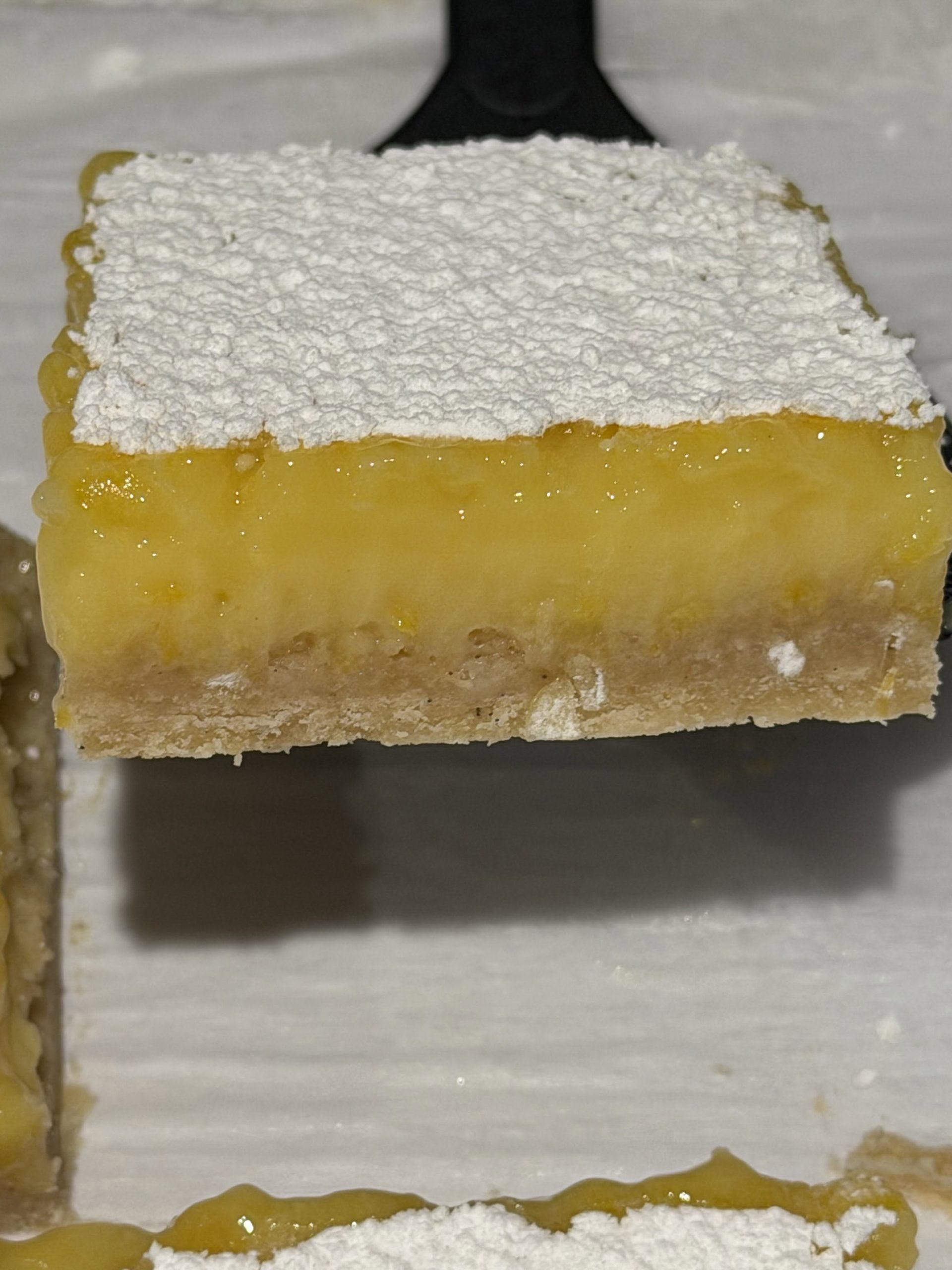
Classic Lemon Bars feature a buttery shortbread crust topped with a smooth, bright lemon custard. The crust is tender and lightly sweet, while the lemon filling delivers a refreshing balance of sweetness and citrus tartness.
A generous dusting of powdered sugar completes the dessert, giving each square a simple and elegant appearance.
The bars are best served chilled, when the lemon layer is firm enough to hold its shape while remaining soft and creamy.
Nutritional Information
Nutritional values are approximate and will vary depending on the size of each serving and the exact ingredients used.
One average lemon bar may provide approximately:
- Calories: 220–280
- Protein: 3–4 g
- Fat: 9–12 g
- Carbohydrates: 32–40 g
- Sugar: 22–28 g
- Fiber: 0–1 g
- Calcium: 20–40 mg
- Sodium: 80–130 mg
The final nutritional content will depend on how many pieces the pan is divided into and the amount of powdered sugar used for finishing.
Conclusion
Classic Lemon Bars are a simple yet elegant dessert that perfectly balances buttery richness with fresh citrus flavor. The shortbread crust provides a tender foundation, while the lemon filling creates a smooth, bright layer that makes every bite refreshing.
The recipe requires only basic ingredients and straightforward techniques, making it accessible for both beginner and experienced bakers.
Once chilled and dusted with powdered sugar, these golden lemon squares are ready to become a favorite addition to any dessert table.
Recommendation
For the best flavor, use fresh lemons and grate the zest before squeezing the juice. This captures the aromatic oils from the lemon peel and gives the filling a more vibrant citrus character.
Serve the bars chilled with a cup of tea or coffee. For a dessert platter, arrange them alongside fresh berries or other small pastries.
For especially neat presentation, chill the bars thoroughly and clean the knife between cuts.
Embracing Healthful Indulgence
Classic Lemon Bars are a sweet dessert made with butter, sugar, eggs, and flour, with fresh lemons providing their distinctive citrus flavor.
The fresh lemon juice and zest contribute natural citrus compounds and flavor, allowing the dessert to have a bright character without needing complicated ingredients.
Enjoying a small square alongside fresh fruit, tea, or coffee can make for a pleasant dessert experience. As with any rich baked treat, these bars are best appreciated as one enjoyable part of a varied and balanced eating pattern.