
1. Introduction
Homemade Gourmet Sushi Rolls are an elegant and flavorful Japanese-inspired dish featuring seasoned sushi rice, nori seaweed, fresh seafood, creamy fillings, and colorful toppings.
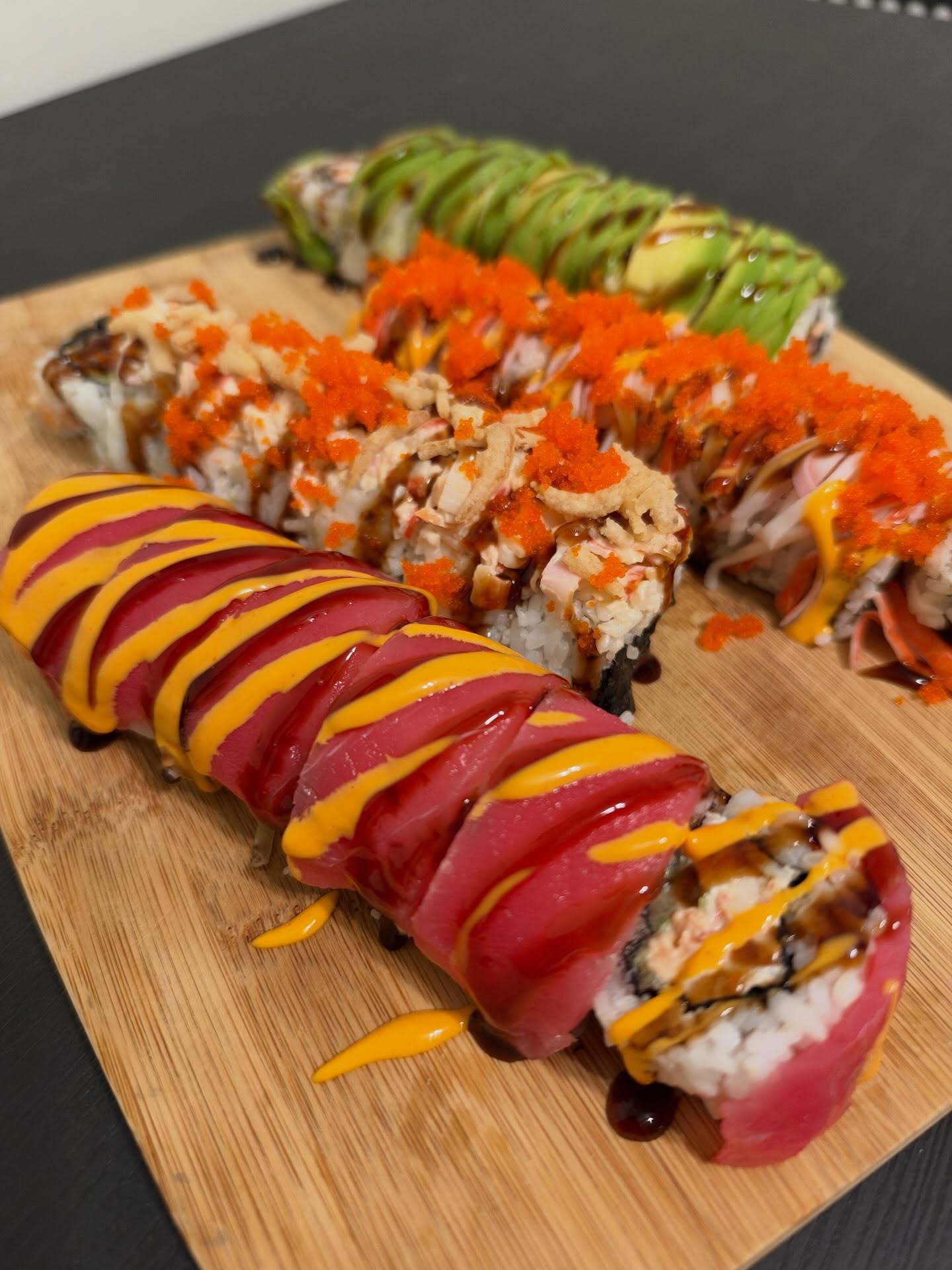
This recipe recreates the restaurant-style sushi platter shown in the photograph, featuring three different sushi roll variations: a tuna-covered roll with spicy sauce, a roll topped with orange fish roe and crispy flakes, and an avocado-covered roll.
The combination of tender seafood, perfectly seasoned rice, creamy fillings, and savory sauces creates an exciting balance of flavors and textures.
These sushi rolls are ideal for homemade sushi nights, dinner parties, special occasions, and entertaining guests.
2. Origin and Cultural Significance
Sushi originated in Japan and developed over centuries from traditional methods of preserving fish with fermented rice.
Modern sushi evolved into different preparations, including nigiri, maki, temaki, and uramaki.
Maki sushi consists of rice and fillings wrapped in nori seaweed, while uramaki, commonly called inside-out sushi, places the rice on the outside and seaweed around the filling.
Contemporary sushi restaurants have introduced numerous creative variations, combining traditional Japanese techniques with ingredients such as avocado, cream cheese, spicy mayonnaise, tempura shrimp, and different seafood toppings.
The sushi platter shown in the photograph reflects this modern fusion approach, combining traditional sushi rice and seaweed with colorful seafood toppings, sauces, and decorative garnishes.
3. Ingredients and Quantities
Sushi Ingredients: What You Need and How to Use Each One
Preparation time: 40 minutes
Cooking time: 20 minutes
Total time: Approximately 1 hour
Servings: 3 large sushi rolls (18–24 pieces)
A. For the sushi rice
| Ingredient | Quantity |
|---|---|
| Japanese short-grain sushi rice | 300 g |
| Water | 360 ml |
| Rice vinegar | 4 tablespoons |
| Sugar | 2 tablespoons |
| Salt | 1 teaspoon |
B. For the sushi fillings
| Ingredient | Quantity |
|---|---|
| Nori seaweed sheets | 3 |
| Cooked shrimp or imitation crab sticks | 150 g |
| Fresh cucumber | ½ medium |
| Avocado | 2 medium |
| Cream cheese | 100 g |
| Cooked shrimp, tempura-style (optional) | 6 pieces |
| Japanese mayonnaise | 3 tablespoons |
C. For the tuna topping
| Ingredient | Quantity |
|---|---|
| Sushi-grade tuna | 150 g |
| Soy sauce | 1 tablespoon |
| Sesame oil | 1 teaspoon |
| Lemon juice | 1 teaspoon |
D. For the spicy seafood filling
| Ingredient | Quantity |
|---|---|
| Cooked shrimp or imitation crab | 150 g |
| Japanese mayonnaise | 2 tablespoons |
| Sriracha sauce | 1 teaspoon |
| Sesame oil | ½ teaspoon |
| Chopped spring onions | 1 tablespoon |
E. For the toppings and decoration
| Ingredient | Quantity |
|---|---|
| Orange tobiko or masago | 50 g |
| Crispy tempura flakes | ¼ cup |
| Black and white sesame seeds | 1 tablespoon |
| Unagi sauce | 2 tablespoons |
| Spicy mayonnaise | 2 tablespoons |
| Avocado slices | 1 medium avocado |
| Soy sauce | For serving |
| Pickled ginger | For serving |
| Wasabi | For serving |
4. Optional Additions
You can customize these sushi rolls with different ingredients to create additional flavors and textures.
- Fresh salmon: Use thin slices of sushi-grade salmon as an exterior topping.
- Yellowtail: Introduces a delicate seafood flavor.
- Mango: Adds natural sweetness and a tropical touch.
- Jalapeños: Provide additional heat and crunch.
- Tempura shrimp: Creates a crispy seafood filling.
- Cucumber: Adds freshness and a refreshing crunch.
- Cream cheese: Provides a smooth, creamy texture.
- Sweet potato tempura: Offers a slightly sweet vegetarian filling.
- Scallions: Add a mild onion flavor.
- Furikake: Provides additional Japanese-inspired seasoning.
- Chili oil: Adds a stronger spicy flavor.
- Black sesame seeds: Create an attractive contrast against the rice.
- Eel sauce: Adds a sweet and savory glaze.
- Lemon zest: Provides a refreshing citrus aroma.
5. Tips for Success
- Use Japanese short-grain rice: Its sticky consistency helps sushi rolls maintain their shape.
- Wash the rice thoroughly: This removes excess surface starch.
- Season the rice while warm: The vinegar mixture distributes more evenly.
- Allow the rice to cool: Hot rice can soften the nori and affect the fillings.
- Use a bamboo sushi mat: It makes rolling easier and helps create uniform shapes.
- Avoid overfilling: Too much filling makes the rolls difficult to close.
- Keep your hands slightly wet: This prevents the sticky rice from adhering to your fingers.
- Use a sharp knife: A clean, sharp blade produces attractive sushi slices.
- Wipe the knife between cuts: This prevents rice and filling from sticking.
- Slice avocado carefully: Thin, even slices create a professional appearance.
- Use food-safe seafood: Raw tuna must be specifically suitable for raw consumption and handled under appropriate refrigeration.
- Add sauces at the end: This preserves the appearance of the toppings and prevents the rolls from becoming soggy.
6. Instructions
Get ready to prepare a delightful Sushi Roll using only the freshest and finest ingredients
How to Make Uramaki Sushi Rolls Without Bamboo Mat: Step-by-Step Guide
9
Step 1: Prepare the sushi rice
- Place the sushi rice in a large bowl.
- Rinse several times with cold water until the water becomes relatively clear.
- Drain thoroughly.
- Transfer the rice into a saucepan or rice cooker.
- Add the measured water.
- Cook according to the rice package instructions.
- Once cooked, allow the rice to rest covered for approximately 10 minutes.
Step 2: Season the rice
- Combine rice vinegar, sugar, and salt in a small saucepan.
- Warm gently until the sugar and salt dissolve.
- Do not boil.
- Transfer the cooked rice into a wide bowl.
- Gradually pour the vinegar mixture over the rice.
- Fold gently using a rice paddle.
- Allow the rice to cool to room temperature.
Step 3: Prepare the fillings
- Cut the cucumber into long, thin strips.
- Peel and slice the avocado.
- Cut the cream cheese into narrow strips.
- Prepare the cooked shrimp or imitation crab.
- If using imitation crab, shred it into small pieces.
- Mix the crab or shrimp with Japanese mayonnaise and Sriracha.
- Set aside.
Step 4: Prepare the spicy seafood mixture
How to Make Sushi Crab Mix for Spicy Crab Sushi Roll – Went Here 8 This
- Place the cooked shrimp or imitation crab in a bowl.
- Add Japanese mayonnaise.
- Add Sriracha sauce.
- Add sesame oil.
- Sprinkle chopped spring onions.
- Mix until the seafood is evenly coated.
- Refrigerate until needed.
Step 5: Prepare the first sushi roll
- Place a bamboo sushi mat on a clean work surface.
- Cover it with plastic wrap.
- Place one nori sheet on the mat, shiny side down.
- Spread approximately one-third of the seasoned rice evenly over the nori.
- Leave a small uncovered border at the top.
- Turn the nori over if preparing an inside-out roll.
- Place cucumber strips along the center.
- Add cream cheese.
- Add the prepared seafood filling.
Step 6: Roll the sushi
Maki Sushi (Sushi Roll) | Zojirushi.com
- Lift the edge of the bamboo mat closest to you.
- Fold it over the filling.
- Apply gentle pressure to form a compact cylinder.
- Continue rolling forward.
- Keep the filling centered.
- Seal the roll by pressing gently along its length.
- Remove the bamboo mat carefully.
Step 7: Prepare the tuna-covered roll
- Prepare another sushi roll using the same rice and filling technique.
- Slice the sushi-grade tuna into thin, even pieces.
- Arrange the tuna slices over the exterior of the prepared roll.
- Cover the roll with plastic wrap.
- Use the bamboo mat to press the tuna gently into place.
- Remove the plastic wrap.
Step 8: Prepare the avocado-covered roll
Easy Caterpillar Roll Recipe | Cozymeal
- Prepare the third sushi roll.
- Cut the avocado into thin slices.
- Arrange the slices slightly overlapping across the top of the roll.
- Cover with plastic wrap.
- Press gently using the bamboo mat.
- Remove the plastic wrap carefully.
Step 9: Add the orange fish roe and crispy topping
- Prepare the remaining seafood-topped roll.
- Spread a small amount of Japanese mayonnaise over the surface.
- Add orange tobiko or masago.
- Sprinkle crispy tempura flakes.
- Distribute the toppings evenly.
- Press gently so they adhere to the rice.
Step 10: Prepare the decorative sauces
- Place Japanese mayonnaise in a small squeeze bottle.
- Add a little Sriracha if preparing spicy mayonnaise.
- Transfer unagi sauce into another squeeze bottle.
- Ensure both sauces have a smooth consistency.
Step 11: Slice the sushi rolls
- Use a sharp, slightly damp knife.
- Trim the ends if necessary.
- Cut each roll into approximately 6–8 equal pieces.
- Wipe the blade between cuts.
- Arrange the pieces carefully on a wooden serving board.
Step 12: Decorate and serve
- Drizzle unagi sauce over the seafood rolls.
- Add decorative lines of spicy mayonnaise.
- Sprinkle additional sesame seeds.
- Add a little more tobiko if desired.
- Arrange the avocado roll at the back of the platter.
- Position the tuna roll prominently in the foreground.
- Serve with soy sauce, pickled ginger, and wasabi.
7. Description
Homemade Gourmet Sushi Rolls are an attractive Japanese-inspired seafood dish featuring three different sushi preparations, each with its own distinctive appearance, texture, and flavor.
The first variation is covered with thin slices of tuna and finished with decorative yellow and dark savory sauces. Its interior contains seasoned rice and a creamy seafood filling.
The second variation features a generous topping of bright orange fish roe, shredded seafood, crispy tempura flakes, and savory sauce.
The third variation is decorated with overlapping slices of fresh avocado, creating a smooth green exterior and a creamy contrast to the seasoned rice and seafood filling.
Appearance: Colorful sushi rolls decorated with red tuna, green avocado, orange fish roe, crispy flakes, and contrasting sauces.
Texture: Soft, sticky rice, tender seafood, creamy fillings, and crispy toppings.
Flavor: Savory, mildly sweet, creamy, slightly tangy, and optionally spicy.
Aroma: Fresh seafood, seasoned rice, sesame, nori, and Japanese sauces.
Serving style: Arranged on a wooden sushi board and decorated with sauces, sesame seeds, and fresh garnishes.
8. Nutritional Information
The following values are approximate estimates per serving, assuming six servings from the complete recipe.
Estimated nutrition per serving
| Nutrient | Approximate amount |
|---|---|
| Calories | 350–450 kcal |
| Protein | 18–25 g |
| Carbohydrates | 45–55 g |
| Total fat | 10–16 g |
| Saturated fat | 2–4 g |
| Dietary fiber | 3–5 g |
| Sugar | 3–6 g |
| Sodium | 500–850 mg |
Actual nutritional values depend on the seafood, mayonnaise, fish roe, sauces, and quantities used.
Nutritional benefits
- Tuna: Provides high-quality protein, selenium, and vitamin B12.
- Shrimp: Supplies protein, iodine, and selenium.
- Avocado: Provides monounsaturated fats, potassium, and dietary fiber.
- Seaweed: Contains iodine and other minerals.
- Cucumber: Contributes water and small amounts of vitamins.
- Sesame seeds: Supply minerals and unsaturated fats.
- Fish roe: Provides protein and certain omega-3 fatty acids.
- Japanese rice: Provides carbohydrates for energy.
Sushi can be part of a varied diet, although sauces and mayonnaise can increase its sodium, fat, and calorie content.
9. Conclusion
Homemade Gourmet Sushi Rolls with Tuna, Avocado, and Spicy Seafood Filling are a delicious and visually impressive seafood dish inspired by contemporary Japanese sushi cuisine.
The combination of seasoned rice, nori, fresh avocado, seafood, orange fish roe, crispy toppings, and decorative sauces creates a variety of flavors and textures.
Their colorful appearance and restaurant-style presentation make them particularly suitable for special dinners, sushi nights, celebrations, and entertaining guests.
The recipe is also highly customizable, allowing different seafood, vegetables, sauces, and toppings to be incorporated according to personal preferences.
10. Recommendation
For the best results, use good-quality Japanese short-grain rice, fresh avocado, properly handled seafood, and authentic sushi seasonings.
I recommend preparing three distinct varieties to recreate the appearance of the photograph:
- Tuna roll: Cover the exterior with thin tuna slices and finish with alternating lines of yellow and dark sauce.
- Tobiko seafood roll: Add shredded seafood, orange fish roe, crispy tempura flakes, and spicy mayonnaise.
- Avocado roll: Arrange overlapping avocado slices along the top and finish with a little unagi sauce.
For a professional presentation:
- Use a wooden sushi serving board.
- Arrange the rolls diagonally.
- Alternate the different colors and toppings.
- Keep the sauce decorations neat.
- Sprinkle sesame seeds where appropriate.
- Serve with soy sauce, pickled ginger, and wasabi.
For an accompanying meal, consider:
- Miso soup.
- Seaweed salad.
- Edamame.
- Japanese cucumber salad.
- Vegetable tempura.
- Fresh green tea.
11. Embracing Healthful Indulgence
Sushi rolls can be incorporated into a balanced eating pattern through thoughtful ingredient choices and moderate portions.
Consider these modifications:
- Use brown sushi rice for additional dietary fiber.
- Increase the quantity of cucumber and avocado.
- Choose lean seafood fillings.
- Reduce the amount of spicy mayonnaise.
- Use low-sodium soy sauce.
- Limit sweet decorative sauces.
- Include additional vegetables.
- Choose cooked shrimp or other cooked seafood if preferred.
- Use moderate amounts of cream cheese.
- Avoid excessive fried tempura toppings.
For food safety, keep seafood refrigerated, use properly handled sushi-grade fish when serving raw tuna, and prepare sushi close to serving time.
Final serving recommendation: Arrange three varieties of gourmet sushi rolls on a wooden serving board. Feature the tuna-covered roll in the foreground, the seafood and orange tobiko roll in the middle, and the avocado-covered roll at the back. Finish with decorative lines of spicy mayonnaise and unagi sauce, crispy tempura flakes, and sesame seeds. Serve immediately with soy sauce, pickled ginger, and wasabi for a colorful restaurant-style sushi experience.