
1. Introduction
Basque Burnt Cheesecake is a rich, creamy, and beautifully caramelized dessert known for its distinctive dark golden-brown top and exceptionally soft interior.
Originating from the Basque region of Spain, this famous cheesecake is made with cream cheese, sugar, eggs, heavy cream, and a little flour. Unlike traditional cheesecakes, it is baked at a high temperature to develop its characteristic burnt-looking surface while maintaining a smooth, custard-like center.
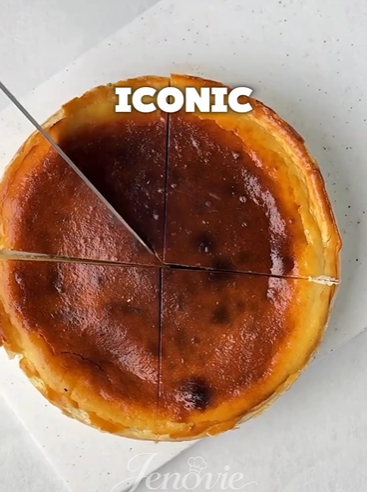
As shown in the photograph, the cheesecake has a deeply caramelized top, golden edges, and a soft, creamy interior. Its rustic appearance and luxurious texture make it one of the most recognizable modern cheesecake varieties.
It is perfect for dessert menus, celebrations, afternoon coffee, and special occasions.
2. Origin and Cultural Significance
Miguel Maestre’s Burnt Basque Cheesecake
Basque Burnt Cheesecake, also known as Tarta de Queso Vasca or San Sebastian Cheesecake, originated in San Sebastián, a coastal city in Spain’s Basque Country.
The dessert became famous through La Viña, a restaurant in San Sebastián that developed its recognizable crustless cheesecake in the early 1990s.
Unlike traditional European cheesecakes, which often have biscuit bases and carefully controlled baking temperatures, Basque cheesecake is intentionally baked at high heat.
This creates a deeply caramelized exterior while preserving a soft, creamy center.
Its rustic appearance, simple ingredients, and distinctive texture helped it gain international popularity, making it a favorite in bakeries, cafés, and restaurants worldwide.
3. Ingredients and Quantities
Easy Basque Cheesecake Recipe – Little Sunny Kitchen
Preparation time: 15 minutes
Cooking time: 40–50 minutes
Cooling time: 4–6 hours
Total time: Approximately 5–7 hours
Servings: 8–10 slices
A. For the cheesecake batter
| Ingredient | Quantity |
|---|---|
| Full-fat cream cheese | 600 g |
| Granulated sugar | 200 g |
| Large eggs | 4 |
| Heavy cream (35% fat) | 300 ml |
| All-purpose flour | 20 g |
| Vanilla extract | 1 teaspoon |
| Salt | ¼ teaspoon |
| Lemon zest (optional) | ½ teaspoon |
B. Optional additions
- 1 tablespoon cornstarch for a slightly more structured texture.
- 2 tablespoons sour cream for additional tanginess.
- ½ teaspoon almond extract for a subtle nutty aroma.
- 100 g white chocolate for a sweeter variation.
- 1 tablespoon lemon juice for a refreshing citrus note.
- ½ teaspoon espresso powder for a coffee-inspired version.
C. For serving
- Fresh strawberries.
- Fresh raspberries.
- Blueberries.
- Powdered sugar.
- Caramel sauce.
- Chocolate sauce.
- Fresh whipped cream.
4. Tips for Success
- Use full-fat cream cheese: It provides the rich texture associated with authentic Basque cheesecake.
- Bring ingredients to room temperature: This helps create a smooth, lump-free batter.
- Avoid overmixing: Mix until the ingredients are combined to prevent incorporating excessive air.
- Use parchment paper: Allow it to extend above the baking tin to accommodate the cheesecake as it rises.
- Choose the correct temperature: High-temperature baking creates the characteristic caramelized surface.
- Do not worry about the dark top: The deep brown surface is an intentional feature of this dessert.
- Avoid overbaking: The center should retain a gentle wobble when the cheesecake is removed from the oven.
- Allow sufficient cooling: The cheesecake becomes firmer as it cools.
- Refrigerate before slicing: Chilling improves the structure and makes cutting easier.
- Use a warm knife: Dip the knife in warm water and wipe it between slices for clean cuts.
- Do not add a biscuit base: Traditional Basque cheesecake is naturally crustless.
- Use a springform pan: It makes removing the cheesecake easier.
5. Instructions
Tarta de queso y manzana – Receta FÁCIL
New Book Serves Up Eli’s Cheesecake History, Recipes | Chicago News | WTTW
Master Class: The easiest way to burnt Basque cheesecake – Los Angeles Times
7
Step 1: Prepare the baking pan
- Preheat the oven to 220°C.
- Prepare a round 20 cm springform cake pan.
- Cut two large sheets of parchment paper.
- Place them inside the pan, allowing the paper to extend above the edges.
- Press the parchment gently against the sides.
- Set aside.
Step 2: Prepare the cream cheese mixture
- Place the softened cream cheese in a large mixing bowl.
- Add the granulated sugar.
- Beat using an electric mixer on medium-low speed.
- Continue mixing until smooth and creamy.
- Scrape down the sides of the bowl.
- Make sure there are no large cream cheese lumps.
Step 3: Add the eggs
- Add the eggs one at a time.
- Mix gently after each addition.
- Wait until each egg is incorporated before adding the next.
- Scrape the sides of the bowl when necessary.
- Continue until the mixture becomes smooth.
Step 4: Add the heavy cream
- Pour the heavy cream gradually into the mixture.
- Add the vanilla extract.
- Add the salt.
- Mix on low speed until everything is combined.
- Avoid overmixing.
Step 5: Incorporate the flour
- Sift the flour into the cheesecake mixture.
- Add lemon zest if desired.
- Fold gently using a spatula.
- Mix until no visible flour remains.
- The batter should be smooth, creamy, and relatively fluid.
Step 6: Pour the batter into the pan
Basque Cheesecake Recipe (Crustless Burnt Cheesecake) | The Kitchn
- Pour the prepared batter into the lined baking pan.
- Spread evenly.
- Gently tap the pan against the countertop to release large air bubbles.
- Smooth the surface using a spatula if necessary.
Step 7: Bake the cheesecake
- Place the pan in the preheated oven.
- Bake at 220°C for approximately 40–50 minutes.
- Watch the surface as it gradually develops a deep golden-brown color.
- The top should become dark brown and caramelized.
- The center should remain slightly wobbly when the pan is gently moved.
Baking time depends on the oven and the desired center consistency. Avoid waiting until the entire cheesecake becomes completely firm.
Step 8: Cool the cheesecake
- Remove the cheesecake from the oven.
- Place the pan on a cooling rack.
- Allow it to cool at room temperature for approximately 1–2 hours.
- The cheesecake will gradually settle as it cools.
- Do not remove it from the pan while it is still very hot.
Step 9: Refrigerate
- Transfer the cooled cheesecake to the refrigerator.
- Refrigerate for at least 4 hours.
- For the best slicing consistency, leave it overnight.
- Keep the cheesecake covered once completely cooled.
Step 10: Remove from the pan
Whole Baked Basque Burnt Cheesecake Unwrapped from Parchment Paper on Table
- Remove the springform pan carefully.
- Peel away the parchment paper.
- Place the cheesecake on a serving plate.
- Keep the dark caramelized surface facing upward.
- Allow it to stand briefly before serving if you prefer a softer texture.
Step 11: Slice the cheesecake
- Use a sharp knife.
- Dip the blade into warm water.
- Wipe it clean before cutting.
- Cut the cheesecake into 8–10 equal portions.
- Repeat the cleaning process between slices.
Step 12: Serve
- Arrange the cheesecake slices on individual dessert plates.
- Add fresh berries if desired.
- Dust lightly with powdered sugar.
- Serve plain to appreciate its natural caramelized flavor or accompany it with a little caramel sauce.
6. Description
Burnt Basque Cheesecake (La Viña Origin — High Temperature, No Crust) — Provenance Technique Library
Basque Burnt Cheesecake is a visually distinctive dessert characterized by its deeply caramelized surface, golden sides, and exceptionally creamy interior.
The exterior develops a rich roasted flavor during high-temperature baking, while the center remains soft, smooth, and custard-like.
Unlike conventional cheesecakes, it has no biscuit crust, allowing the cream cheese mixture to provide the entire structure and flavor.
Appearance: Deeply caramelized dark brown surface with golden edges and a creamy interior.
Texture: Smooth, velvety, rich, and slightly custard-like.
Flavor: Sweet, tangy, buttery, creamy, and delicately caramelized.
Aroma: Roasted sugar, vanilla, baked cream cheese, and caramel.
Serving style: Cut into triangular slices and served with fresh berries or enjoyed plain.
7. Nutritional Information
Estimated nutrition per slice
The following values are approximate estimates based on 10 servings.
| Nutrient | Approximate amount |
|---|---|
| Calories | 380–430 kcal |
| Protein | 7–9 g |
| Carbohydrates | 28–33 g |
| Total fat | 27–32 g |
| Saturated fat | 16–20 g |
| Dietary fiber | Less than 1 g |
| Sugar | 25–29 g |
| Sodium | 250–350 mg |
Actual nutritional values depend on the cream cheese, heavy cream, and serving size.
Nutritional benefits
- Cream cheese: Provides calcium, protein, and vitamin A.
- Eggs: Supply high-quality protein, choline, and vitamin B12.
- Heavy cream: Contributes fat and gives the cheesecake its rich texture.
- Vanilla: Adds aromatic flavor without requiring additional sugar.
- Lemon zest: Provides aromatic plant compounds and small amounts of vitamin C.
This is a rich dessert best enjoyed as an occasional treat.
8. Conclusion
Basque Burnt Cheesecake is an iconic dessert that combines simple ingredients with a distinctive baking technique to create an exceptionally rich and creamy result.
Its dark caramelized exterior, golden sides, and soft custard-like center make it different from conventional cheesecakes.
The recipe is relatively simple to prepare, requires no complicated decoration, and delivers a sophisticated bakery-style dessert.
Whether served plain or accompanied by fresh berries, it is an excellent choice for celebrations, afternoon coffee, and special occasions.
9. Recommendation
For the closest result to the photograph, I recommend using full-fat cream cheese, heavy cream, and a 20 cm round baking pan.
Pay particular attention to the baking temperature and timing because the contrast between the dark exterior and creamy interior is the defining characteristic of this cheesecake.
For an elegant presentation:
- Keep the top deeply caramelized.
- Avoid covering the surface with frosting.
- Cut clean triangular slices.
- Serve on white ceramic dessert plates.
- Add a few fresh raspberries or strawberries.
- Accompany with espresso or freshly brewed coffee.
The cheesecake is particularly delicious when chilled overnight and served slightly cool.
10. Embracing Healthful Indulgence
Basque Burnt Cheesecake is naturally rich in cream cheese, sugar, and saturated fat. However, a few ingredient adjustments can create a lighter variation while maintaining much of its characteristic texture.
Consider these modifications:
- Reduce the sugar slightly.
- Replace a portion of the heavy cream with plain Greek yogurt.
- Use a moderate amount of cream cheese.
- Serve smaller dessert portions.
- Accompany slices with fresh berries.
- Avoid excessive caramel or chocolate toppings.
- Choose a lightly sweetened fruit sauce instead of additional frosting.
These adjustments can help create a more balanced dessert without losing the pleasure of its creamy texture and caramelized flavor.
Final serving recommendation: Present the Basque Burnt Cheesecake whole, showcasing its beautifully dark caramelized top. Cut it into generous triangular slices to reveal the smooth, creamy center. Serve on simple white plates with fresh berries and a cup of coffee for an authentic bakery-style dessert experience.