
1. Introduction
Korean Dakjuk (닭죽) is a traditional, comforting chicken and rice porridge known for its creamy texture, delicate savory flavor, and nourishing combination of tender chicken, soft rice, aromatic garlic, and warm chicken broth.
This beloved Korean dish is especially appreciated for its simplicity and soothing qualities.
Unlike ordinary steamed rice dishes, Dakjuk is prepared by slowly simmering rice in a generous amount of broth until the grains soften, expand, and release their starches.
The result is a thick, velvety porridge that is both satisfying and easy to eat.
The chicken provides a savory foundation, while garlic and ginger add gentle aromatic warmth.
Toasted sesame oil contributes a rich, nutty fragrance that complements the mild flavor of the rice.
Finely minced carrots can be added for a touch of sweetness and color.
Fresh scallions and toasted sesame seeds provide a simple finishing garnish.
One of the most appealing characteristics of Dakjuk is its versatility.
It can be prepared with chicken breasts or thighs, depending on personal preference.
Chicken breasts create a leaner version, while thighs provide a richer flavor and slightly more tender texture.
Short-grain white rice is traditionally well suited to porridge because of its starch content and ability to create a creamy consistency.
Sweet or glutinous rice can also be used for an especially thick, sticky texture.
The preparation begins by rinsing and soaking the rice.
The chicken is then gently simmered with garlic and ginger to create a flavorful broth.
After the chicken is cooked and shredded, the soaked rice is briefly sautéed in sesame oil before being simmered in the reserved broth.
As the rice cooks, it gradually transforms into a soft and creamy porridge.
The shredded chicken and optional carrots are added near the end.
The finished dish is seasoned with salt and black pepper and served hot with scallions, sesame seeds, and an optional drizzle of sesame oil.
With approximately 10 minutes of active preparation, one hour of rice soaking, and about 40–50 minutes of cooking, Dakjuk is a wonderful choice for breakfast, lunch, dinner, or a comforting homemade meal.
2. Origin and Cultural Significance
Dakjuk is part of Korea’s long-standing tradition of preparing rice porridge, known as juk (죽).
Rice porridge has been enjoyed in Korean cuisine for generations and appears in many different forms.
The Meaning of Dakjuk
The Korean word dak (닭) means chicken.
The word juk (죽) means porridge.
Together, dakjuk refers to chicken porridge.
The Korean Juk Tradition
Juk is a broad category of Korean porridge dishes prepared by simmering grains, usually rice, in water or broth.
Different versions incorporate vegetables, seafood, meat, beans, nuts, or other ingredients.
Some varieties are savory, while others are sweet.
Chicken Porridge in Korean Homes
Dakjuk is a familiar home-style dish.
It is often associated with comforting meals, family cooking, and times when someone prefers soft, warm food.
Its mild flavor makes it adaptable to different tastes.
Rice as a Culinary Foundation
Rice has long been an important staple in Korean cuisine.
In Dakjuk, rice is not simply an accompaniment.
It forms the main body of the dish.
As the rice cooks in broth, it releases starch and develops the porridge’s characteristic creamy texture.
The Importance of Chicken Broth
Chicken broth contributes savory flavor and richness.
Simmering chicken with garlic and ginger creates an aromatic cooking liquid that becomes the foundation of the porridge.
Garlic and Ginger
Garlic is widely used in Korean savory cooking.
Ginger is also used in broths and meat preparations for its distinctive aroma.
In this recipe, both ingredients provide gentle flavor without overpowering the rice and chicken.
Sesame Oil and Garnishes
Toasted sesame oil is a familiar ingredient in Korean cuisine.
Its nutty aroma adds depth to the porridge.
Scallions and sesame seeds provide freshness and visual contrast.
Dakjuk as Comfort Food
Dakjuk is frequently enjoyed as a comforting meal because of its warm temperature, soft texture, and mild flavor.
It is also a convenient way to transform simple ingredients into a satisfying dish.
The recipe below is a streamlined home-style version that uses boneless chicken for easier preparation.
3. Ingredients
This recipe makes approximately 2–3 servings.
A. Rice
| Ingredient | Quantity |
|---|---|
| Short-grain white rice | 1 cup |
| Cold water | As needed for rinsing and soaking |
Sweet or glutinous rice may be used as an alternative, although it will produce a stickier texture.
B. Chicken and Broth
| Ingredient | Quantity |
|---|---|
| Boneless chicken breasts or thighs | 1 pound (approximately 450 g) |
| Water or low-sodium chicken broth | 6 cups |
| Garlic cloves, peeled | 6–8 |
| Fresh ginger, sliced | 1 small piece |
C. Porridge Ingredients
| Ingredient | Quantity |
|---|---|
| Toasted sesame oil | 1 tablespoon |
| Carrot, finely minced | ⅓ cup, optional |
D. Seasoning and Garnish
| Ingredient | Quantity |
|---|---|
| Scallions, thinly sliced | 1–2 stalks |
| Salt | To taste |
| Black pepper | To taste |
| Toasted sesame seeds | For garnish |
| Additional toasted sesame oil | Optional, for finishing |
E. Equipment
- Medium or large heavy-bottomed pot
- Saucepan lid
- Fine-mesh strainer
- Large heatproof bowl
- Cutting board
- Sharp kitchen knife
- Measuring cups and spoons
- Wooden spoon or silicone spatula
- Two forks for shredding chicken
- Ladle
- Serving bowls
- Instant-read meat thermometer
4. Optional Additions
Dakjuk can be customized with additional vegetables, seasonings, and garnishes.
Extra Garlic: Add another garlic clove for a stronger savory flavor.
Extra Ginger: Increase slightly for a more noticeable ginger aroma.
Shiitake Mushrooms: Add finely chopped mushrooms for extra umami.
Button Mushrooms: Use sliced or chopped mushrooms for a mild earthy flavor.
Zucchini: Add finely diced zucchini near the end of cooking.
Spinach: Stir in chopped spinach during the final minutes.
Green Peas: Add a small amount for sweetness and color.
Sweet Corn: Include a few tablespoons of corn kernels.
Extra Carrots: Increase the carrot quantity for a sweeter porridge.
White Pepper: Use instead of black pepper for a different aromatic finish.
Seaweed Flakes: Sprinkle over the finished porridge.
Roasted Gim: Add thin strips of Korean roasted seaweed.
Soy Sauce: Serve a small amount on the side for additional seasoning.
Extra Scallions: Add more sliced green onions for freshness.
Sesame Seeds: Increase slightly for a nuttier garnish.
Shredded Rotisserie Chicken: Use plain, fully cooked chicken as a shortcut, adjusting the broth preparation accordingly.
Chicken Thighs: Choose thighs for a richer texture.
Chicken Breasts: Choose breasts for a leaner preparation.
Glutinous Rice: Replace some or all of the short-grain rice for a thicker consistency.
These additions are optional and are not required for the original recipe.
5. Tips for Success
Use Short-Grain Rice
Short-grain rice releases starch readily and creates a creamy texture.
Rinse Thoroughly
Rinsing removes loose surface starch and impurities.
Soak the Rice
Soaking for one hour allows the grains to absorb moisture before cooking.
Drain Well
Excess soaking water can affect the consistency of the porridge.
Simmer the Chicken Gently
Gentle cooking helps keep the chicken tender.
Use Low-Sodium Broth
Low-sodium broth provides better control over the final seasoning.
Check the Chicken Temperature
Chicken must reach an internal temperature of 165°F (74°C).
Reserve the Cooking Broth
The broth contains much of the chicken, garlic, and ginger flavor.
Shred the Chicken Finely
Thin pieces distribute evenly throughout the porridge.
Toast the Rice Briefly
Sautéing the soaked rice in sesame oil adds a subtle nutty aroma.
Avoid Browning the Rice
The goal is to coat and warm the grains, not fry them until golden.
Stir Frequently
Rice porridge can stick to the bottom of the pot as it thickens.
Adjust the Liquid
Add warm water or broth if the porridge becomes too thick.
Cook Until Very Soft
The rice should be tender and swollen.
Add Carrots Near the End
Finely minced carrots cook quickly and provide color.
Season Gradually
The flavor should remain delicate and balanced.
Serve Hot
Dakjuk is especially enjoyable when freshly prepared.
6. Step-by-Step Instructions
Part A: Preparing the Ingredients
Step 1: Gather all ingredients and equipment.
Step 2: Measure 1 cup short-grain white rice.
Step 3: Prepare the chicken breasts or thighs.
Step 4: Measure 6 cups water or low-sodium chicken broth.
Step 5: Peel the garlic cloves.
Step 6: Slice the fresh ginger.
Step 7: Measure the sesame oil.
Step 8: Prepare the optional carrot.
Step 9: Wash the scallions.
Step 10: Set aside the salt, pepper, and sesame seeds.
Part B: Rinsing the Rice
Step 11: Place the rice in a large bowl.
Step 12: Add cold water.
Step 13: Gently move the rice grains with your fingers.
Step 14: Pour off the cloudy water.
Step 15: Add fresh cold water.
Step 16: Repeat the rinsing process.
Step 17: Continue until the water becomes mostly clear.
Step 18: Drain the rice.
Part C: Soaking the Rice
Step 19: Transfer the rinsed rice to a clean bowl.
Step 20: Add enough fresh cold water to cover it completely.
Step 21: Make sure the rice is fully submerged.
Step 22: Leave the rice to soak for approximately one hour.
Step 23: Check that the grains have absorbed some water.
Step 24: Pour the rice into a fine-mesh strainer.
Step 25: Drain thoroughly.
Step 26: Set the soaked rice aside.
Part D: Preparing the Chicken
Step 27: Place the boneless chicken on a clean cutting board.
Step 28: Trim excess fat if desired.
Step 29: Check that the chicken pieces are similar in thickness.
Step 30: Transfer the chicken to a medium pot.
Step 31: Add the peeled garlic cloves.
Step 32: Add the sliced ginger.
Step 33: Pour in the 6 cups water or broth.
Part E: Poaching the Chicken
Step 34: Place the pot over high heat.
Step 35: Bring the liquid to a boil.
Step 36: Reduce the heat to medium-low.
Step 37: Allow the broth to simmer gently.
Step 38: Skim off any foam that rises to the surface if desired.
Step 39: Continue simmering for approximately 15–20 minutes.
Step 40: Check the chicken for doneness.
Step 41: Insert a meat thermometer into the thickest part.
Step 42: Confirm that the temperature reaches 165°F (74°C).
Step 43: Continue simmering if necessary.
Step 44: Turn off the heat once the chicken is fully cooked.
Part F: Removing the Chicken
Step 45: Carefully lift the chicken from the broth.
Step 46: Transfer it to a clean plate or cutting board.
Step 47: Remove the garlic cloves from the pot.
Step 48: Set the garlic aside if you wish to mash some into the porridge later.
Step 49: Allow the chicken to cool slightly.
Step 50: Keep the cooking broth warm.
Part G: Straining the Broth
Step 51: Place a fine-mesh strainer over a heatproof bowl.
Step 52: Carefully pour the hot broth through the strainer.
Step 53: Remove the ginger slices and any remaining solids.
Step 54: Reserve the strained broth.
Step 55: Check the amount of broth remaining.
Step 56: Add a little warm water if needed to replace liquid lost during poaching.
Step 57: Set the broth aside.
Part H: Shredding the Chicken
Step 58: Place the cooled chicken on a clean cutting board.
Step 59: Use two forks or clean hands to pull the meat apart.
Step 60: Shred into thin bite-sized ribbons.
Step 61: Continue until all the chicken is shredded.
Step 62: Remove any tough pieces if present.
Step 63: Transfer the shredded chicken to a clean bowl.
Step 64: Set aside.
Part I: Preparing the Carrot
Step 65: Wash the carrot.
Step 66: Peel if desired.
Step 67: Cut into thin slices.
Step 68: Finely mince the slices.
Step 69: Measure approximately ⅓ cup.
Step 70: Set aside.
Part J: Preparing the Scallions
Step 71: Wash the scallions.
Step 72: Trim the root ends.
Step 73: Remove damaged outer layers.
Step 74: Thinly slice the white and green portions.
Step 75: Transfer to a small bowl.
Step 76: Set aside for garnish.
Part K: Toasting the Rice
Step 77: Wipe out the cooking pot.
Step 78: Return it to medium heat.
Step 79: Add 1 tablespoon toasted sesame oil.
Step 80: Allow the oil to warm gently.
Step 81: Add the drained soaked rice.
Step 82: Stir continuously.
Step 83: Sauté for approximately 1–2 minutes.
Step 84: Watch for the edges of the grains to become slightly translucent.
Step 85: Avoid browning the rice.
Part L: Adding the Broth
Step 86: Carefully pour the reserved chicken broth into the pot.
Step 87: Stir to separate the rice grains.
Step 88: Scrape the bottom of the pot gently.
Step 89: Increase the heat to medium.
Step 90: Bring the mixture to a gentle simmer.
Step 91: Reduce the heat to low.
Part M: Simmering the Porridge
Step 92: Partially cover the pot with a lid.
Step 93: Allow the rice to simmer gently.
Step 94: Stir frequently.
Step 95: Scrape the bottom to prevent sticking.
Step 96: Continue cooking as the grains absorb the broth.
Step 97: Watch the rice begin to swell.
Step 98: Stir again to prevent clumping.
Step 99: Reduce the heat if the porridge bubbles too vigorously.
Step 100: Continue simmering for approximately 25–30 minutes.
Step 101: Check the rice texture.
Step 102: The grains should become very soft.
Step 103: The broth should gradually thicken.
Step 104: Add a little warm water or broth if the mixture becomes too thick.
Step 105: Continue stirring until creamy.
Part N: Checking the Consistency
Step 106: Lift a spoonful of porridge.
Step 107: Check that the rice grains are soft and plump.
Step 108: Observe the thickness of the liquid.
Step 109: The porridge should be creamy and spoonable.
Step 110: If too thin, simmer uncovered for a few more minutes.
Step 111: If too thick, add warm broth or water.
Step 112: Stir until the desired consistency is achieved.
Part O: Adding the Chicken
Step 113: Add the shredded chicken to the porridge.
Step 114: Stir gently.
Step 115: Distribute the chicken evenly throughout the rice.
Step 116: Make sure no large clumps remain.
Step 117: Keep the heat low.
Part P: Adding the Carrots
Step 118: Add the finely minced carrot if using.
Step 119: Stir until combined.
Step 120: Allow the mixture to simmer for approximately 5 minutes.
Step 121: Check that the carrot is tender.
Step 122: Continue cooking briefly if necessary.
Step 123: Stir occasionally.
Part Q: Finishing the Porridge
Step 124: Taste a small spoonful carefully.
Step 125: Add salt gradually.
Step 126: Sprinkle with black pepper.
Step 127: Stir thoroughly.
Step 128: Taste again.
Step 129: Adjust the seasoning if necessary.
Step 130: Mash some of the reserved cooked garlic into the porridge if a stronger garlic flavor is desired.
Step 131: Stir until incorporated.
Step 132: Turn off the heat.
Part R: Preparing the Garnish
Step 133: Place the sliced scallions in a small bowl.
Step 134: Prepare the toasted sesame seeds.
Step 135: Set aside additional sesame oil if desired.
Step 136: Prepare clean serving bowls.
Part S: Serving the Dakjuk
Step 137: Stir the porridge once more.
Step 138: Ladle a generous portion into the first bowl.
Step 139: Fill the remaining serving bowls.
Step 140: Sprinkle sliced scallions over each portion.
Step 141: Add a light sprinkle of toasted sesame seeds.
Step 142: Drizzle with a little extra toasted sesame oil if desired.
Step 143: Add a small pinch of black pepper.
Step 144: Serve immediately while hot.
7. Description
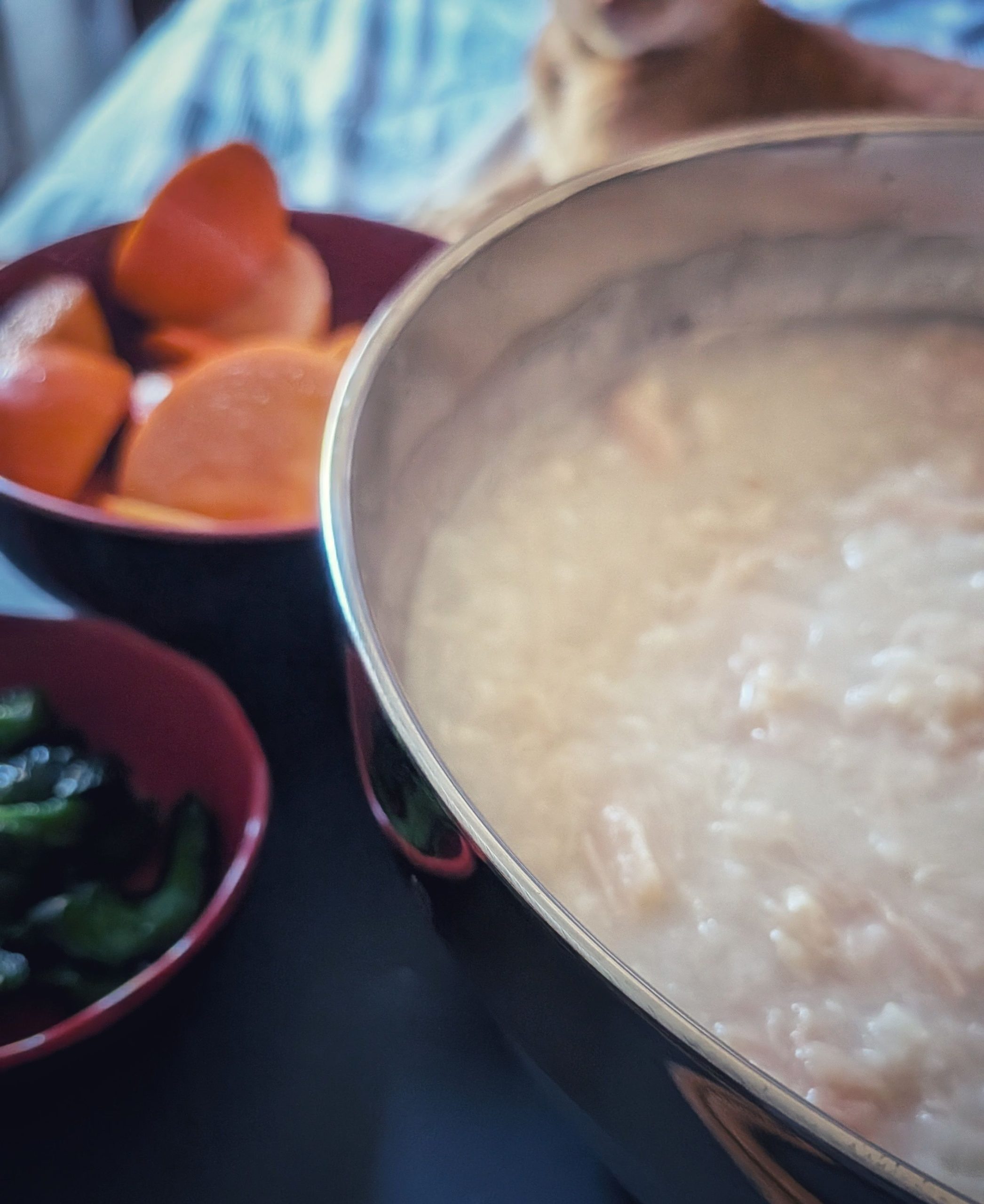
Korean Dakjuk is a warm, creamy chicken and rice porridge with a smooth, velvety consistency and delicate savory flavor.
The rice grains are soft and swollen after slowly simmering in chicken broth.
Some grains begin to break down, releasing starch that thickens the liquid naturally.
The chicken is tender and shredded into thin pieces, allowing it to blend evenly throughout the porridge.
Garlic contributes a gentle savory aroma.
Ginger provides subtle warmth and freshness.
Toasted sesame oil adds a nutty fragrance that complements the chicken and rice.
Optional carrots introduce a mild sweetness and small flecks of orange color.
The finished porridge has a pale cream-colored appearance with visible pieces of chicken and rice.
Fresh scallions add bright green contrast.
Toasted sesame seeds provide a delicate nutty finish.
The flavor is mild, savory, aromatic, and comforting.
Unlike spicy Korean dishes, Dakjuk is intentionally gentle and can be seasoned according to personal preference.
Its soft texture and warm temperature make it especially appealing as a comforting homemade meal.
8. Nutritional Information
Approximate nutritional values per serving, assuming the recipe makes three servings:
| Nutrient | Estimated Amount |
|---|---|
| Calories | 400–520 kcal |
| Protein | 30–40 g |
| Carbohydrates | 50–60 g |
| Total Fat | 8–16 g |
| Saturated Fat | 1.5–4 g |
| Fiber | 1–3 g |
| Sugar | 1–3 g |
| Sodium | Variable |
| Iron | Present |
| Potassium | Present |
| Vitamin B12 | Present |
| Selenium | Present |
These are approximate estimates. Values depend on whether chicken breast or thigh is used, the type of broth, the rice variety, and the amount of sesame oil added.
9. Recipe Details
| Category | Details |
|---|---|
| Recipe Name | Korean Dakjuk |
| Korean Name | 닭죽 |
| English Name | Korean Chicken and Rice Porridge |
| Cuisine | Korean |
| Preparation Time | 10 Minutes |
| Rice Soaking Time | 1 Hour |
| Cooking Time | Approximately 40–50 Minutes |
| Total Time | Approximately 1 Hour 50 Minutes–2 Hours |
| Servings | 2–3 |
| Difficulty | Easy |
| Main Protein | Chicken Breast or Thigh |
| Main Grain | Short-Grain White Rice |
| Main Liquid | Chicken Broth or Water |
| Aromatics | Garlic and Ginger |
| Main Oil | Toasted Sesame Oil |
| Optional Vegetable | Carrot |
| Garnishes | Scallions and Sesame Seeds |
| Cooking Method | Poaching, Sautéing, Simmering |
| Chicken Internal Temperature | 165°F (74°C) |
| Flavor Profile | Mild, Savory, Nutty, Aromatic |
| Texture | Soft, Thick, Creamy |
| Course | Breakfast / Lunch / Dinner |
| Best For | Comfort Meals, Family Cooking |
| Potential Allergens | Sesame; Check Broth Ingredients |
10. Conclusion
Korean Dakjuk is a comforting and flavorful chicken porridge that transforms simple ingredients into a warm, satisfying meal.
The recipe combines short-grain rice, tender chicken, garlic, ginger, and chicken broth.
Toasted sesame oil adds a gentle nutty aroma, while optional carrots contribute color and sweetness.
The rice is first soaked to help it soften during cooking.
Chicken is gently simmered with garlic and ginger to create a flavorful broth.
The cooked chicken is shredded, and the broth is reserved.
The soaked rice is briefly sautéed in sesame oil before being simmered in the chicken broth until thick and creamy.
Shredded chicken and carrots are added near the end.
The porridge is finished with salt, black pepper, scallions, and toasted sesame seeds.
The result is a soft, velvety dish with delicate savory flavor and a comforting aroma.
Dakjuk is especially suitable for anyone looking for a simple homemade meal that is warm, filling, and easy to customize.
11. Serving and Storage Recommendations
Serve Hot: Dakjuk is best enjoyed warm.
Fresh Scallions: Add sliced green onions immediately before serving.
Toasted Sesame Seeds: Sprinkle over the porridge for a nutty finish.
Extra Sesame Oil: Add a small drizzle for additional aroma.
Black Pepper: Sprinkle lightly over the finished dish.
Soy Sauce: Serve a little on the side if desired.
Roasted Seaweed: Garnish with thin strips of roasted Korean seaweed.
Kimchi: Serve separately for those who enjoy a spicy contrast.
Cooked Vegetables: Pair with lightly seasoned vegetables.
Adjusting Thickness: Add warm broth or water if the porridge becomes too thick.
Refrigeration: Cool the porridge promptly and store in airtight containers.
Storage Duration: For conservative rice-safety practices, refrigerate promptly and consume within 24 hours.
Freezing: Freeze individual portions for approximately 1–2 months for best quality.
Reheating: Reheat thoroughly until steaming hot, stirring frequently.
Adding Liquid: Add a little water or broth during reheating because the rice continues absorbing moisture.
Avoid Repeated Reheating: Reheat only the portion needed.
Food Safety: Refrigerate within 2 hours of cooking, cool rice-containing dishes quickly, and avoid leaving the porridge at room temperature for extended periods.
12. Embracing Healthful Indulgence
Korean Dakjuk is a satisfying dish that combines protein, carbohydrates, and aromatic ingredients in a soft, comforting preparation.
Protein from Chicken
Chicken provides complete protein, which supports muscle maintenance, tissue repair, and normal body functions.
Chicken breast is generally leaner, while chicken thigh provides a richer flavor and somewhat higher fat content.
Energy from Rice
Rice provides carbohydrates that supply energy.
Short-grain rice is particularly suitable for porridge because it softens and releases starch during cooking.
Garlic and Ginger
Garlic and ginger contribute aromatic flavor.
They are commonly used in savory cooking and help create the distinctive taste of the broth.
Although both ingredients contain naturally occurring plant compounds, this dish should be enjoyed as food rather than regarded as a medical treatment.
Sesame Oil
Toasted sesame oil provides a nutty flavor and contains unsaturated fats.
Because its aroma is concentrated, a small amount can add noticeable flavor.
Optional Vegetables
Finely minced carrots contribute color, fiber, and beta-carotene.
Additional vegetables such as zucchini, spinach, or mushrooms can increase the variety of nutrients in the dish.
A Soft and Comforting Texture
The long simmering process creates a soft porridge that requires little chewing.
This texture may be appealing when someone prefers gentle, warm meals.
However, people with medical swallowing difficulties may require professionally recommended food textures rather than ordinary porridge.
Portion Balance
The recipe provides approximately two to three servings.
Portion sizes can be adjusted according to appetite and individual energy needs.
A Versatile Homemade Meal
Dakjuk can be prepared with different vegetables, adjusted in thickness, and seasoned according to preference.
Its combination of rice, chicken, broth, and aromatic ingredients makes it a practical choice for everyday cooking.
With its velvety texture, tender shredded chicken, and delicate sesame-garlic aroma, Korean Dakjuk is a comforting dish that highlights the simplicity and warmth of traditional Korean home-style cuisine.