
1. Introduction
Slow-Braised Beef in Rich Tomato Sauce with Tagliatelle is a comforting, hearty meal that combines tender chunks of beef, soft baby potatoes, and a rich tomato sauce served over ribbons of pasta. Slowly simmered with garlic, onion, paprika, oregano, and thyme, the beef becomes wonderfully tender while the sauce develops a deep, savory flavor.
This recipe is ideal for anyone who enjoys rustic pasta dishes with a satisfying homemade touch. The beef chuck benefits from gentle, slow cooking, allowing it to soften while enriching the tomato sauce. Meanwhile, the potatoes absorb some of the cooking liquid, adding texture and making the dish even more substantial.
Served over tagliatelle and finished with fresh parsley, this slow-braised beef dinner is perfect for family gatherings, cozy weekends, or any occasion when you want a warm, flavorful meal that feels special without requiring complicated techniques.
2. Origin
Slow-Braised Beef in Rich Tomato Sauce with Tagliatelle is inspired by traditional European slow-cooked meat dishes and Italian-style pasta preparations. Although this particular combination is a modern recipe rather than a specific regional classic, it uses techniques that have long been popular in home cooking.
Slow braising allows tougher cuts of beef to become tender over time, while tomatoes, garlic, onion, and dried herbs create a flavorful cooking liquid. Tagliatelle, a ribbon-shaped pasta associated with the Emilia-Romagna region of Italy, is especially well suited to hearty sauces because its broad surface holds the sauce beautifully.
The addition of baby potatoes makes this version particularly filling, bringing together the comfort of a slow-cooked beef stew and the appeal of a generous pasta dinner.
3. Cultural Significance
Slow-cooked beef dishes have a long history in family kitchens because they transform simple ingredients into deeply flavorful meals. Gentle cooking gives the meat time to become tender and allows the herbs, vegetables, and broth to develop a cohesive sauce.
Pasta is also an important part of many Italian-inspired meals, often bringing family and friends together around the table. Tagliatelle offers a satisfying base for rich meat sauces, making it a natural companion for braised beef.
This recipe combines those familiar traditions in a practical, family-style dish. It is well suited to weekend cooking, shared dinners, and occasions when a warm meal is worth taking a little extra time to prepare.
4. Ingredients and Quantities
For the Braised Beef and Tomato Sauce
- 1½ pounds beef chuck, cut into large chunks
- 2 tablespoons olive oil
- 1 small onion, finely chopped
- 3 garlic cloves, minced
- 2 tablespoons tomato paste
- 1 can (14 ounces) crushed tomatoes
- 2 cups beef broth
- 1 teaspoon paprika
- 1 teaspoon dried oregano
- ½ teaspoon dried thyme
- 1 bay leaf
- Salt and black pepper, to taste
For the Potatoes and Pasta
- 1 pound small potatoes, scrubbed
- 12 ounces tagliatelle
- Salt, for the pasta water
For Garnishing
- 2 tablespoons chopped fresh parsley
Ingredient Notes
Beef chuck: This cut is well suited to slow braising because its connective tissue gradually softens during extended cooking, producing tender, flavorful beef.
Crushed tomatoes: These create the base of the sauce and contribute a balanced tomato flavor. Choose plain crushed tomatoes or a variety with no added seasoning so you can control the final taste.
Tomato paste: Cooking tomato paste briefly with the onion and garlic helps deepen its flavor before adding the liquids.
Beef broth: Broth provides savory depth and helps the beef cook gently. Low-sodium broth is a useful option if you prefer greater control over the salt level.
Baby potatoes: Small potatoes hold their shape well when simmered. If using larger potatoes, cut them into evenly sized chunks.
Tagliatelle: The broad pasta ribbons pair especially well with thick tomato sauce and tender pieces of beef. Fettuccine or pappardelle can also work if tagliatelle is unavailable.
Fresh parsley: Parsley adds color and a fresh herbal finish that balances the richness of the sauce.
5. Optional Additions
This recipe is easy to personalize while preserving its comforting, savory character.
- Carrots: Add diced carrots with the onion for natural sweetness.
- Celery: Finely chopped celery creates a more traditional stew-like flavor base.
- Red wine alternative: Replace a small portion of the beef broth with additional broth if you want a deeper sauce without using wine.
- Red pepper flakes: Add a pinch for gentle heat.
- Fresh rosemary: A small sprig can add a fragrant herbal note during braising. Remove it before serving.
- Mushrooms: Add sliced mushrooms during the onion-cooking stage for extra savory flavor.
- Parmesan cheese: Finish each serving with freshly grated Parmesan.
- Fresh basil: A few torn basil leaves can provide a fresh, tomato-friendly finish.
- Different pasta shapes: Use pappardelle, fettuccine, or rigatoni if you prefer another pasta texture.
If adding extra vegetables, cut them into similar-sized pieces so they cook evenly and do not overwhelm the beef or pasta.
6. Tips for Success
Dry the beef before browning. Pat the chunks dry with paper towels. Removing surface moisture helps the meat brown instead of steaming.
Brown the beef in batches. Give each piece enough space in the pot. Overcrowding reduces browning and can make the meat release too much moisture at once.
Develop the tomato flavor. Cook the tomato paste with the onion and garlic for about one minute before adding the crushed tomatoes and broth. This helps build a richer sauce.
Maintain a gentle simmer. Once the beef is added to the sauce, keep the heat low. Vigorous boiling can cause uneven cooking and make the sauce reduce too quickly.
Allow enough cooking time. Beef chuck becomes tender through slow cooking, so do not rely on the clock alone. The beef is ready when a fork slides into it easily and the meat breaks apart with little resistance.
Add the potatoes at the right time. Adding them after the beef has simmered for about 1½ hours helps prevent them from becoming overly soft during the full braising period.
Check the liquid level. If the sauce becomes too thick before the beef is tender, add a little broth or water. The meat should remain surrounded by enough liquid to cook gently.
Cook the pasta separately. Boiling the tagliatelle in salted water allows you to control its texture and prevents the pasta from absorbing too much sauce during the long braising process.
Reserve pasta water. The starchy water can help loosen the sauce and encourage it to cling to the tagliatelle.
Remove the bay leaf. Always discard it before serving.
7. Instructions
Step 1: Prepare and Season the Beef
Pat the beef chuck dry with paper towels and cut it into large, evenly sized chunks if it has not already been prepared.
Season generously with salt and black pepper.
Step 2: Brown the Beef
Heat the olive oil in a large, heavy-bottomed pot or Dutch oven over medium-high heat.
Add the beef in batches, leaving space between the pieces. Brown on all sides, working in batches as necessary to prevent overcrowding.
Transfer the browned beef to a plate and set aside.
Step 3: Cook the Onion and Garlic
Reduce the heat to medium. Add the chopped onion to the same pot and cook for 4–5 minutes, stirring occasionally, until softened.
Add the minced garlic and tomato paste. Stir and cook for about one minute, allowing the tomato paste to darken slightly without burning.
Step 4: Build the Tomato Sauce
Pour in the crushed tomatoes and beef broth. Add the paprika, dried oregano, dried thyme, and bay leaf.
Stir well, scraping up the browned bits from the bottom of the pot. Return the beef and any accumulated juices to the sauce.
Bring the mixture to a gentle simmer.
Step 5: Braise the Beef
Cover the pot and reduce the heat to low. Simmer gently for approximately 1½ hours, stirring occasionally.
Check that the sauce is not boiling too vigorously. If it becomes too thick, add a little more broth or water.
Step 6: Add the Potatoes
Add the scrubbed baby potatoes to the pot and stir them into the sauce.
Cover and continue simmering for another 30–40 minutes, or until the beef is fork-tender and the potatoes are cooked through.
The total cooking time may vary depending on the size of the beef chunks and the cut of meat. Continue cooking gently if the beef needs more time to become tender.
Step 7: Cook the Tagliatelle
Near the end of the braising time, bring a large pot of salted water to a boil.
Add the tagliatelle and cook according to the package directions until al dente. Before draining, reserve about ½ cup of the pasta water.
Drain the pasta without rinsing it.
Step 8: Finish the Sauce
Remove the bay leaf from the beef sauce. Taste and adjust the seasoning with additional salt and black pepper if needed.
If the sauce is too thin, simmer it uncovered for a few minutes. If it is too thick, add a splash of beef broth or reserved pasta water.
Toss the tagliatelle with a little of the tomato sauce so the ribbons are lightly coated.
Step 9: Plate and Serve
Divide the tagliatelle among four serving plates or shallow bowls. Spoon the braised beef and potatoes over the pasta, then add plenty of tomato sauce.
Finish with chopped fresh parsley and serve hot. Freshly grated Parmesan can be offered at the table if desired.
8. Description
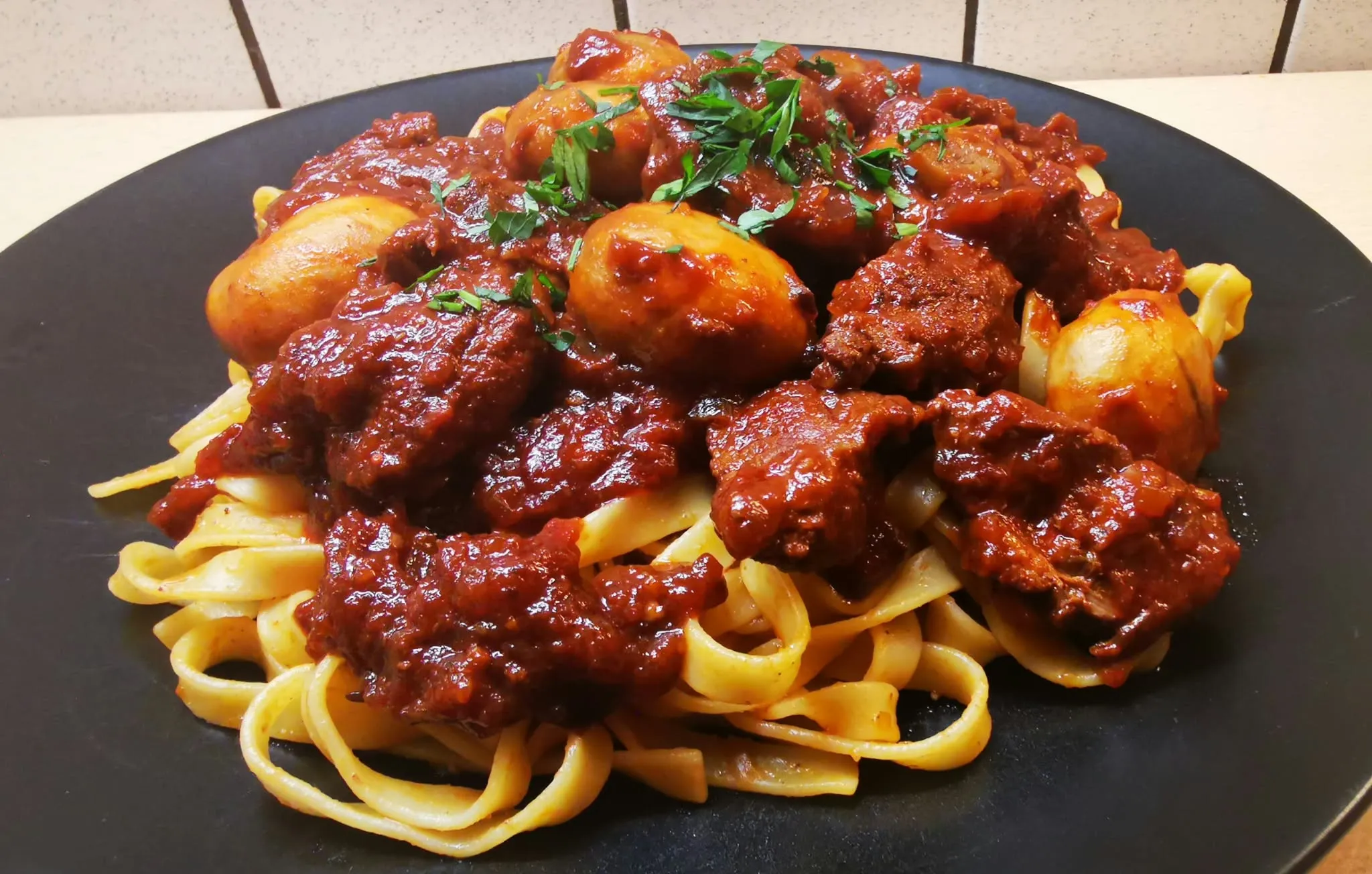
Slow-Braised Beef in Rich Tomato Sauce with Tagliatelle is a rustic, comforting dish featuring tender chunks of beef, soft baby potatoes, and broad ribbons of pasta coated in a thick tomato sauce.
The sauce combines crushed tomatoes, garlic, onion, beef broth, paprika, oregano, and thyme. Slow cooking allows the flavors to deepen while the beef becomes tender and the potatoes absorb the savory cooking liquid.
Tagliatelle provides a satisfying base for the sauce, while fresh parsley adds a bright finish. Each serving brings together tender meat, hearty potatoes, and pasta for a filling meal with plenty of traditional home-cooked appeal.
This recipe is especially enjoyable on cool evenings, during family dinners, or whenever you have time to let a pot of beef slowly develop its flavor.
9. Nutritional Information
The following values are approximate estimates per serving, assuming the recipe serves four people and includes the beef, potatoes, pasta, sauce, and olive oil. Actual values vary according to the beef’s fat content, the pasta brand, portion sizes, and the amount of sauce served.
- Calories: approximately 760
- Protein: approximately 46 g
- Carbohydrates: approximately 75–85 g
- Fat: approximately 25–32 g
- Fiber: approximately 6–9 g
- Sodium: varies according to the broth, canned tomatoes, and added salt
Beef provides protein, iron, and vitamin B12. Potatoes contribute carbohydrates and potassium, while tomatoes provide flavor and nutrients. Tagliatelle supplies energy and helps make the dish a substantial meal.
These values are general estimates rather than exact laboratory measurements. Different ingredients and serving sizes will affect the final nutritional content.
10. Conclusion
Slow-Braised Beef in Rich Tomato Sauce with Tagliatelle is a comforting meal that rewards simple preparation and patient cooking. Tender beef, soft potatoes, and a rich tomato sauce combine with ribbon pasta to create a satisfying dinner suitable for family meals and special weekends.
The slow-braising method develops deep flavor while transforming beef chuck into tender, succulent pieces. Meanwhile, the potatoes absorb the savory sauce and the tagliatelle provides the perfect base for serving everything together.
Although the cooking time is longer than that of a quick pasta dish, the process is straightforward and mostly hands-off. The result is a hearty homemade meal that feels warm, generous, and memorable.
11. Recommendation
For the best presentation, serve the tagliatelle in shallow bowls and arrange the beef and potatoes on top. Spoon extra tomato sauce over the pasta and finish with fresh parsley.
A simple green salad or steamed green beans can provide a fresh contrast to the rich sauce. Crusty bread is another good option for enjoying any remaining sauce.
If you want to prepare the dish ahead of time, make the braised beef and tomato sauce in advance, then refrigerate it promptly in a suitable container. Reheat it thoroughly before serving and cook the pasta fresh for the best texture.
Leftovers can also be stored in the refrigerator and reheated with a splash of broth or water to loosen the sauce. Store the pasta separately when possible to help it retain its texture.
12. Embracing Healthful Indulgence
A hearty meal can be enjoyed as part of a varied eating pattern, and this recipe brings together several familiar ingredients in a satisfying way. Beef supplies protein and important nutrients, potatoes contribute energy, and tomatoes provide flavor and additional nutrients.
You can add carrots, celery, or other vegetables to the sauce for extra variety. Choosing lower-sodium broth and seasoning gradually also allows you to control the salt level while preserving the rich tomato flavor.
Serving portions according to appetite and adding a fresh vegetable side can help create a meal that feels complete and enjoyable. There is no need to give up comforting pasta dishes to include variety in everyday meals.
With tender slow-braised beef, a savory tomato sauce, and silky ribbons of tagliatelle, this recipe celebrates the pleasure of home cooking and the simple satisfaction of sharing a warm meal around the table.