
Introduction
Homemade New York-style bagels are known for their chewy interiors, shiny golden crusts, and deliciously dense texture. Made with simple pantry ingredients, these bakery-inspired bagels are boiled before baking to create their signature bite and beautiful finish.
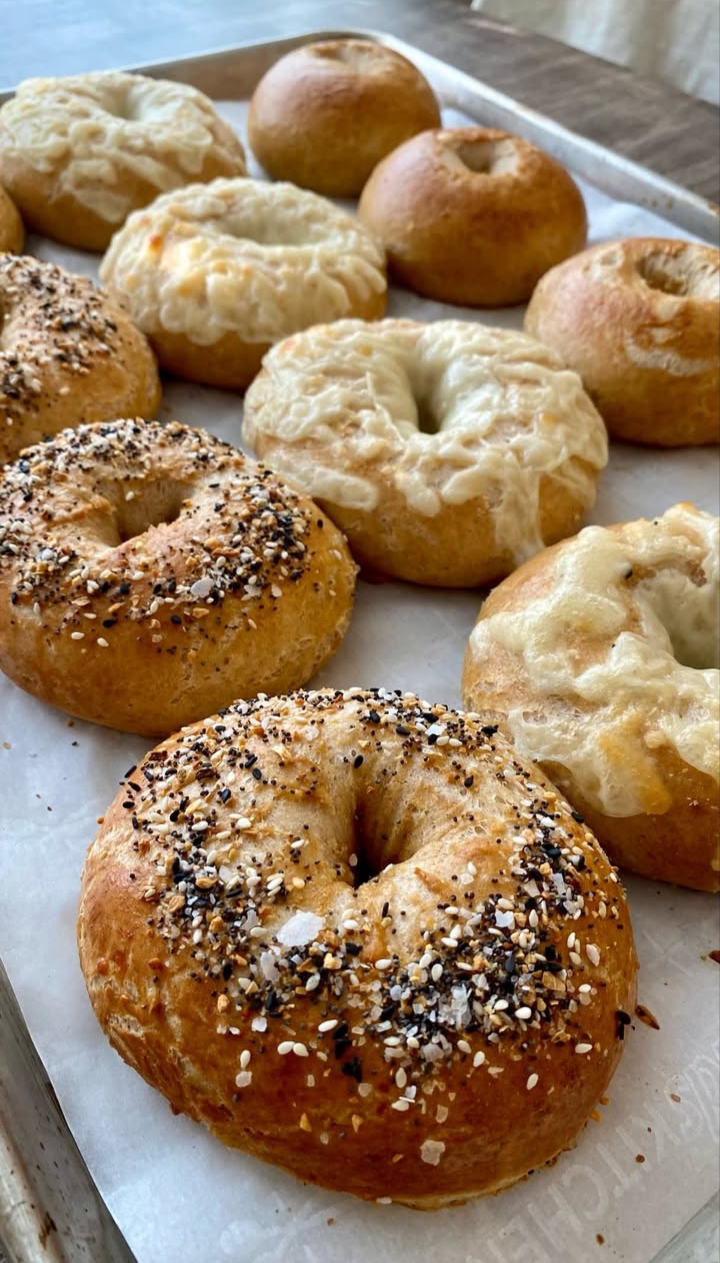
This recipe makes eight large bagels in three delicious varieties: classic plain, everything-seasoned, and cheesy Asiago or cheddar. Enjoy them fresh from the oven with cream cheese, butter, or your favorite sandwich fillings.
Origin and Cultural Significance
Bagels have roots in Eastern European Jewish communities and became an iconic food in New York City through Jewish immigration in the late 19th and early 20th centuries. New York-style bagels are especially famous for their chewy texture, traditionally achieved through a firm dough and a boiling step before baking.
Today, bagels are a popular breakfast and brunch staple, enjoyed with cream cheese, smoked salmon, eggs, or a variety of savory and sweet toppings.
Ingredients
For the Bagel Dough
- 4 cups (520 g) bread flour
- 1 tablespoon instant yeast
- 1¼ cups (300 ml) warm water, approximately 105–110°F (40–43°C)
- 1 tablespoon granulated sugar or brown sugar
- 1½ teaspoons salt
- 1 teaspoon vegetable oil, for greasing the bowl
For the Boiling Bath
- Water, enough to fill a large pot halfway
- 2 tablespoons honey or barley malt syrup
- 1 teaspoon baking soda
For the Toppings
- 3 tablespoons everything bagel seasoning
- ½ cup freshly grated Asiago or cheddar cheese
- 1 large egg white
- 1 tablespoon water
Optional Additions
- Sesame seeds: Add a nutty flavor and extra crunch.
- Poppy seeds: A classic topping for traditional bagels.
- Minced dried garlic and onion: Enhance the savory flavor of everything bagels.
- Flaky salt: Sprinkle lightly over the seasoned bagels.
- Cream cheese: Serve as a classic spread.
- Fresh herbs: Mix chopped chives or parsley into cream cheese for a flavorful topping.
- Cinnamon and raisins: For a sweeter variation, add raisins and a little cinnamon to the dough.
Tips for Success
- Use bread flour: Its higher protein content helps create the characteristic chewy texture of New York-style bagels.
- Measure the flour accurately: Too much flour can make the dough excessively dry. Weighing the flour is the most reliable method.
- Keep the dough firm: Bagel dough should be stiffer than ordinary bread dough, but it should still knead into a smooth, elastic ball.
- Avoid overheating the water: Water that is too hot can damage the yeast. Aim for approximately 105–110°F (40–43°C).
- Check the dough rather than relying only on time: Rising times vary with room temperature. The dough should become noticeably larger and lighter.
- Do not skip boiling: This step helps create the distinctive chewy crust and gives the bagels their traditional texture.
- Apply toppings while the bagels are tacky: The egg wash helps cheese and seasoning adhere during baking.
- Leave enough space in the center: The holes shrink as the bagels rise and bake, so make them larger than you think necessary.
- Use parchment suitable for high heat: Check the manufacturer’s temperature rating before baking at 425°F (218°C).
Instructions
Step 1: Prepare the Dough
- Combine the warm water, sugar, and instant yeast in a large mixing bowl or the bowl of a stand mixer. Let the mixture sit for about 5 minutes.
- Add the bread flour and salt. Mix until a rough, stiff dough forms.
- Knead with a dough hook for 8–10 minutes, or by hand for approximately 12–15 minutes, until the dough is smooth and elastic.
- Lightly grease a clean bowl with vegetable oil. Place the dough inside, cover, and let it rise in a warm place for 60–90 minutes, or until approximately doubled in size.
Step 2: Shape the Bagels
- Gently press down the risen dough to release excess air.
- Transfer it to a clean work surface and divide it into eight equal portions.
- Roll each portion into a smooth ball.
- Press a finger through the center of each ball to create a hole. Gently stretch the opening until it measures approximately 2 inches across.
- Arrange the bagels on a parchment-lined baking sheet, leaving space between them.
- Cover loosely with a clean towel and let them rest for about 20 minutes.
Step 3: Prepare the Boiling Bath
- Preheat the oven to 425°F (218°C).
- Bring a large pot of water to a gentle boil.
- Stir in the honey or barley malt syrup and baking soda.
- Carefully lower three or four bagels into the water at a time, making sure not to overcrowd the pot.
- Boil for 45–60 seconds on the first side, then flip and boil for another 45–60 seconds.
- Remove the bagels with a slotted spoon, allow excess water to drain, and return them to the prepared baking sheet.
Step 4: Add the Toppings
- Whisk the egg white with one tablespoon of water to make the egg wash.
- Lightly brush the tops of the boiled bagels with the egg wash.
- For everything bagels, sprinkle the tops generously with everything seasoning.
- For cheese bagels, distribute the grated Asiago or cheddar over the tops.
- Leave the remaining bagels plain, or add a light sprinkle of sesame seeds if desired.
Step 5: Bake the Bagels
- Place the baking sheet in the preheated oven.
- Bake for 20–25 minutes, until the bagels are deeply golden brown and the cheese is melted and lightly crisp around the edges.
- If the bagels brown unevenly, rotate the baking sheet partway through baking.
- Transfer the finished bagels to a wire rack and cool for at least 10–15 minutes before slicing.
Description
These homemade New York-style bagels have a glossy, golden exterior and a satisfyingly chewy center. The plain variety offers a classic bakery flavor, the everything bagels deliver a savory blend of seeds and seasonings, and the cheese-topped bagels provide a rich, salty finish.
Their sturdy texture makes them ideal for breakfast sandwiches, lunch, or a simple toasted bagel with cream cheese.
Nutritional Information
Approximate values per bagel, before spreads or sandwich fillings:
- Calories: 280–340
- Protein: 9–12 g
- Carbohydrates: 52–62 g
- Fat: 2–6 g
- Fiber: 2–3 g
- Sugar: 2–4 g
- Sodium: 450–700 mg
Values vary depending on the flour, toppings, cheese quantity, and size of each bagel. Cheese-topped bagels and heavily seasoned varieties may contain more fat and sodium.
Recipe Details
- Prep Time: 25 minutes
- Rising and Resting Time: 80–110 minutes
- Cook Time: 20–25 minutes, plus boiling time
- Total Time: Approximately 2 hours to 2 hours 30 minutes
- Yield: 8 large bagels
- Cuisine: New York-style American
- Course: Breakfast, brunch, or snack
- Cooking Method: Boiling and baking
- Difficulty: Intermediate
Conclusion
Making New York-style bagels at home is a rewarding way to enjoy fresh, bakery-quality bread with your favorite toppings. The combination of firm dough, a quick boiling bath, and a hot oven creates the signature chewy texture and golden crust that make bagels so popular.
With three topping options in one batch, this recipe offers something for everyone, whether you prefer a classic plain bagel, a savory everything bagel, or a cheesy Asiago version.
Recommendation
Serve the bagels slightly warm with cream cheese, butter, avocado, scrambled eggs, or smoked salmon. For sandwiches, slice them horizontally and toast lightly before adding your fillings.
Store completely cooled bagels in an airtight bag at room temperature for up to 2 days. For longer storage, freeze them for up to 3 months. Slice before freezing for easier preparation, then toast directly from frozen or thaw before reheating.
To refresh a bagel that has become firm, slice it and toast until warm and crisp. Avoid storing bagels in the refrigerator, as refrigeration can make them stale more quickly.
Embracing Healthful Indulgence
Homemade bagels can be part of a balanced diet when paired with nutritious toppings. Enjoy one with eggs for additional protein, avocado for unsaturated fats, or vegetables for extra fiber and freshness.
You can also experiment with whole-wheat flour by replacing part of the bread flour, keeping in mind that this may produce a denser texture. Whether enjoyed plain or loaded with your favorite toppings, these bagels offer a satisfying homemade alternative to store-bought varieties.